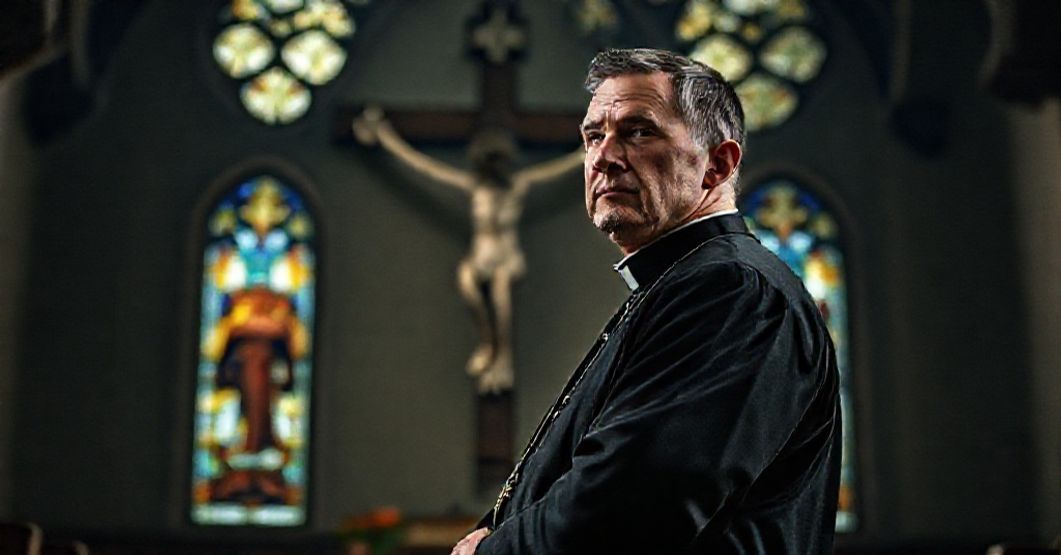
Cardinal Müller’s False Unity and the Eclipse of Catholic Identity
The Catholic News Agency portal reports (November 11, 2025) that “Cardinal” Gerhard Müller, former prefect of the Congregation for the Doctrine of the Faith, advocates for overcoming “ideological divisions” in the Church, rejecting labels like “conservative” or “traditionalist.” He claims the Church is defined by sacramental unity rather than “political” categories, while condemning “instrumentalization” of abuse cases and defending the Valle de los Caídos as a monument to reconciliation. This presentation masks a dangerous theological indifferentism that corrodes the Church’s divine constitution.
Ideological Neutrality as Apostasy From Truth
Müller’s rejection of “conservative” and “traditionalist” labels echoes the modernist heresy condemned in Pascendi Dominici Gregis (St. Pius X, 1907), which exposed how Modernists reduce faith to “vital immanence” detached from objective truth. When he states:
“We must overcome these divisions that stem from the French Revolution… these are political and ideological concepts, not Christian ones,”
he commits three grave errors:
1. Equating heresy with legitimate defense of dogma: The Church has always distinguished truth from error, as St. Paul commanded: “A man that is a heretic, after the first and second admonition, avoid” (Titus 3:10). To suggest that resisting modernists constitutes “Jacobin” factionalism blasphemously parallels St. Athanasius’ fight against Arianism with secular partisanship.
2. Denying the Church’s right to judge doctrines: The First Vatican Council infallibly declared that pastors must “anathematize those who assert that the conditions of these times require a different exposition of the Catholic faith” (Dei Filius, Ch.4). Müller’s call to abandon doctrinal categories rejects the Church’s judicial authority.
3. Reducing the Church to sacramental mechanism: His claim that “the sacraments are valid for everyone, and we are united in love, faith, and hope” ignores St. Augustine’s distinction between validity and fruitfulness. The Council of Trent (Session VII, Can.11) anathematizes those who deny sacraments require proper disposition. Unity without truth is satanic parody.
Naturalistic Handling of Abuse Scandals
Müller’s approach to abuse cases exemplifies the naturalism condemned in Pius IX’s Syllabus of Errors (1864), which rejected the notion that “the Church ought to be separated from the State, and the State from the Church” (Error 55). By asserting:
“The state must not decide on the value of the lives of others or the thoughts or beliefs of others. The state must remove itself from the conscience of people,”
while ignoring the Church’s duty to discipline her ministers, Müller:
– Reduces clerical crimes to individual morality, ignoring how the post-conciliar destruction of seminary discipline (Optatam Totius disregarded) and moral theology bred this crisis. Pius XI’s Ad Catholici Sacerdotii (1935) mandated rigorous priestly formation precisely to prevent such scandals.
– Equates false accusations with martyrdom: His comparison of accused priests to Christ betrayed by Judas blasphemously implies God permits sacrilegious ministers as part of divine economy. The Council of Elvira (306 AD) decreed lifelong penance for scandalous clerics, showing the Church’s severity against predators.
– Neglects the victims’ supernatural good: While paying lip service to justice, he omits the need for sacramental reparation. True Catholic response would emulate Pius V, who ordered the execution of priest-rapist Girolamo Cardano in 1570.
Subversion of Martyrdom’s Meaning
Müller’s comments on Spain’s martyrs reveal post-conciliarism’s historical revisionism. By framing the Valle de los Caídos as generic “reconciliation” while ignoring that 6,832 clergy were martyred by Marxist forces (1934-1939), he:
– Equates perpetrators with victims: The Decree on Martyrdom (Urban VIII, 1642) requires martyrs die “in odium fidei” (out of hatred for the faith). Communist butchers who tortured nuns and desecrated Eucharists (Barcelona, 1936) cannot share memorials with their victims.
– Denies the State’s duty to honor Christ the King: Pius XI’s Quas Primas (1925) established Christ’s social kingship, demanding states “submit to the rule of our Savior”. Müller’s claim that “the state is not God in the world” falsely dichotomizes civil and religious spheres, rejecting the doctrina de regalitate sociali Christi.
– Omits persecution of today’s faithful: While lamenting past martyrs, Müller says nothing about the Spanish government’s current confiscation of churches and persecution of Catholics resisting abortion laws – a silence complicit with tyranny.
The cardinal’s errors flow from the conciliar rupture with Integral Catholicism, where faith governs reason and Church disciplines State. Until Rome returns to professing “Extra Ecclesiam Nulla Salus” without ambiguity and condemns Vatican II’s religious liberty apostasy (contra Mirari Vos, Gregory XVI), such speeches will keep accelerating the Church’s self-destruction.
Source:
Cardinal Müller calls for overcoming ideological divisions in the Church (catholicnewsagency.com)
Date: 11.11.2025