Neo-Church Exploits African Martyr to Promote Syncretism and Modernist Agenda
Neo-Church Exploits African Martyr to Promote Syncretism and Modernist Agenda
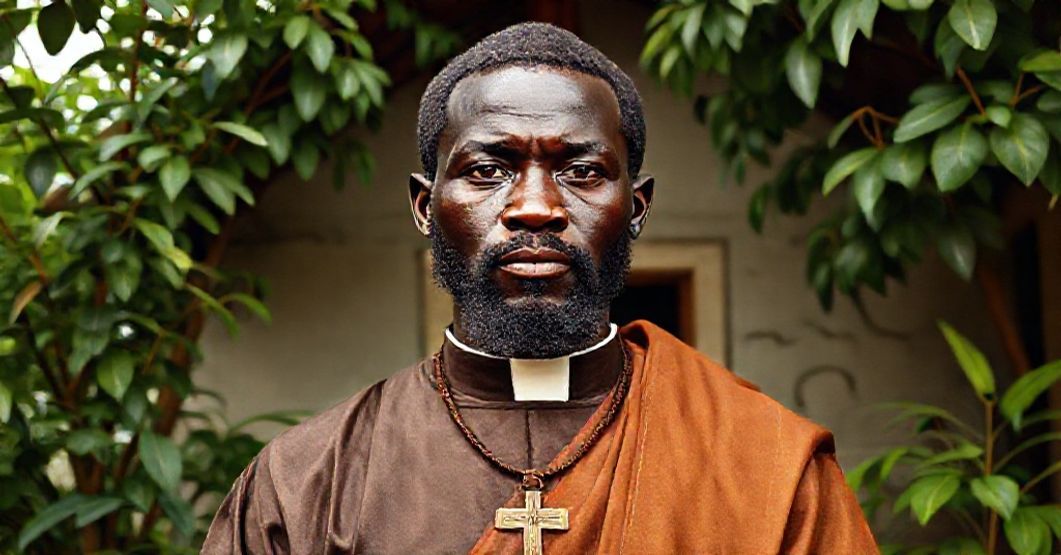
The VaticanNews portal (November 11, 2025) reports on “Pope” Leo XIV’s Jubilee Audience praising Blessed Isidore Bakanja as a model for “perseverance in faith.” The antipope declared: “We have much to learn from our persecuted brothers and sisters in Africa”, framing Bakanja’s martyrdom as mere psychological resilience rather than supernatural grace. This modernist distortion omits the martyr’s explicit rejection of colonialist apostasy while promoting ecumenical indifference to doctrinal truth.
Naturalistic Reduction of Martyrdom to Human Struggle
The article reduces Bakanja’s witness to a sociological conflict between a “European-owned plantation” supervisor and indigenous workers. Nowhere does it identify the true battlefield: the eternal war between the Church and Satan. The conciliar sect’s narrative mirrors Freemason Albert Pike’s dialectic – pitting European against African while erasing the regnum Christi that transcends all nations. Pius XI’s Quas primas condemns this naturalism: “The peace of Christ can only be achieved in the Kingdom of Christ” (1925), yet “Leo XIV” peddles Marxist class struggle disguised as piety.
Scapular Devotion Weaponized Against True Asceticism
Bakanja’s Brown Scapular becomes a tribal totem rather than armor against heresy. The article states he wore it as “an expression of his Christian faith, especially of his devotion to Mary,” but suppresses how post-conciliar Mariology denies Our Lady’s role as Terribilis ut castrorum acies ordinata (Canticles 6:9). True Marian devotion crushes modernism, as Pius X taught in Pascendi: “Modernists mask the Virgin’s power to confound their errors” (1907). By contrast, the neo-church promotes scapulars as multicultural accessories – identical to the Masonic “Fatima” operation’s distortion of sacramentals into syncretic symbols.
Canonical Invalidity of Beatification by Apostates
The article notes Bakanja was “beatified by Pope Saint John Paul II” – a theological impossibility. No heretic can exercise jurisdiction (Bellarmine, De Romano Pontifice 2:30), and Wojtyła’s heresies – from Assisi abominations to canonizing false mystics like Faustina Kowalska – render all his acts void. Canon 2261 §2 of the 1917 Code declares: “Those excommunicated cannot validly perform any juridic act of ecclesiastical power.” The conciliar sect’s “beatifications” are theatrical spectacles advancing the Antichurch’s agenda.
Omission of Sacramental Reality in Martyrdom
Crucially, the article never mentions whether Bakanja received valid sacraments. The Trappist missionaries he encountered in 1906 would have still offered true Mass and valid Holy Orders. Today’s conciliar “sacraments” – especially post-1968 ordinations – doubtfully convey grace. Pius XII’s Sacramentum Ordinis (1947) established immutable matter and form for ordination, which Paul VI’s Pontificalis Romani (1968) destroyed. Thus, when “Leo XIV” urges imitation of Bakanja, he deceitfully equates pre-conciliar sacramental efficacy with neo-church rituals that St. Pius X would condemn as “invalid mummeries” (Lamentabili, 1907).
Persecution Narrative Inverts True Ecclesial Crisis
“Leo XIV” claims “we have much to learn from our persecuted brothers and sisters in Africa,” while suppressing that the primary persecutors are his own apostate hierarchy. In Congo, conciliar bishops collaborate with Communist Chinese mining interests that enslave Catholics – the exact antithesis of Bakanja’s resistance to colonialist modernism. True persecution comes from the Vatican II sect’s destruction of altars and replacement of catechism with heretical documents like Christus Vivit – cited here to corrupt youth. As Pius IX’s Syllabus condemns: “The Church is an enemy of human liberty and progress” (Error 40) – a slander the neo-church embraces by equating Tradition with oppression.
Forgiveness Distorted as Passivity Toward Evil
Bakanja’s dying words – “I shall pray for him very much” – are twisted into quietism. The article omits that forgiveness presupposes repentance (Luke 17:3). True martyrs like St. Edmund Campion prayed for England’s conversion while denouncing Elizabeth I’s heresy. “Leo XIV” instead promotes universal salvationism, echoing Bergoglio’s “Who am I to judge?” – condemned by Pius XII as “the heresy of indifferentism” (Humani Generis, 1950). This perversion enables the conciliar sect’s collaboration with Communist persecutors across Africa.
Source:
We have much to learn from our persecuted brothers and sisters in Africa (vaticannews.va)
Date: 11.11.2025