The Transfiguration of Modernist Nonsense
Leo XIV’s Angelus: The Transfiguration of History According to Modernism
[VaticanNews] portal reports that “Pope” Leo XIV, in his Angelus catechesis for the Second Sunday of Lent, reflected on the Gospel of the Transfiguration, stating that Christ “transfigures the wounds of history” and “reveals God’s gift of salvation.” The article presents a reflection that, while using traditional scriptural language, is fundamentally permeated with the modernist errors condemned by St. Pius X and Pope Pius IX. It reduces the supernatural mystery of the Transfiguration to a naturalistic metaphor for historical progress and pastoral sensitivity, omitting the core Catholic doctrines of satisfaction, the Real Presence, and the Final Judgment, thereby promoting the “synthesis of all heresies”: Modernism.
1. Factual Deconstruction: A Reflection Without Dogma
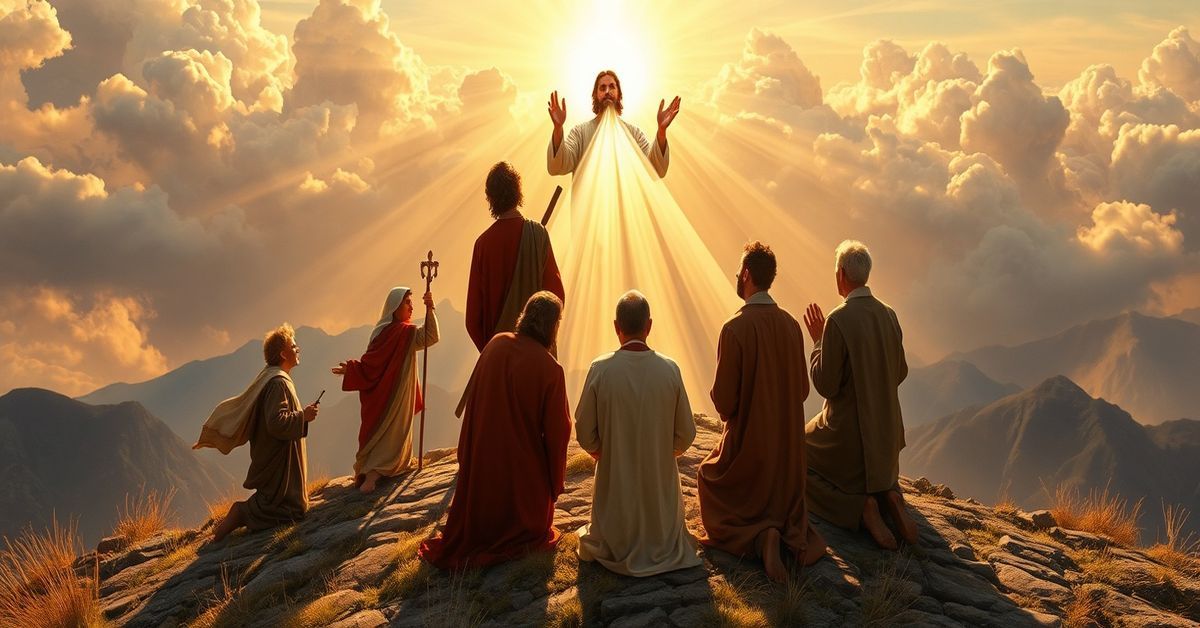
The article quotes Leo XIV: “Jesus’ Transfiguration… foreshadows the light of Easter: an event of death and resurrection, of darkness and new light that Christ radiates on all bodies scourged by violence, crucified by pain, or abandoned in misery.” This statement is a deliberate reduction of the Transfiguration’s purpose. The Gospel account (Matt. 17:1-9) is not a generic symbol of hope for the suffering, but a concrete, historical manifestation of Christ’s divine glory and a confirmation of His messianic identity. The primary purpose, as taught by the Church Fathers, was to strengthen the faith of the apostles for the approaching scandal of the Cross and to reveal the future glory of the resurrection of the body. Leo XIV’s focus on “bodies scourged by violence” shifts the emphasis from the dogma of the resurrection of the flesh to a social justice narrative, a hallmark of the post-conciliar “option for the poor” divorced from supernatural ends.
He further states the Transfiguration shows Christ “transfigures the wounds of history, enlightening our minds and hearts; his revelation is a gift of salvation.” The phrase “wounds of history” is pure modernist jargon, implying that history itself is a wounded entity to be healed through a vague “enlightenment.” This contradicts the Catholic doctrine that history is the stage for the struggle between the City of God and the City of Man, culminating in the Final Judgment. The “gift of salvation” is presented as an internal, psychological illumination rather than the objective, sacramental grace won by Christ’s Blood and applied through the Church’s sacraments. This aligns perfectly with the condemned proposition from Lamentabili sane exitu: “Faith, as assent of the mind, is ultimately based on a sum of probabilities” (Prop. 25) and “The dogmas of faith should be understood according to their practical function, i.e., as binding in action, rather than as principles of belief” (Prop. 26).
2. Linguistic & Rhetorical Analysis: The Tone of Naturalistic Humanism
The language employed is consistently vague, immanentist, and therapeutic. Key phrases like “humble glory,” “solemn intimacy,” “gift of salvation,” and “enlightening our minds and hearts” are devoid of precise theological content. They evoke feelings rather than proclaim dogmas. The “humble glory” is a contradiction in terms if understood in its proper Catholic sense: God’s glory is infinite and transcendent. The attempt to domesticate it to “solemn intimacy” reflects the modernist desire to make God palatable, to reduce the awe-inspiring tremendum of the Transfiguration to a comfortable spiritual experience. This is the “cult of man” condemned by Pius IX in the Syllabus of Errors (Error 40: “The teaching of the Catholic Church is hostile to the well-being and interests of society”).
Leo XIV’s concluding questions—“Does this captivate us? Do we see the true face of God with a gaze of wonder and love?”—place the subjective response of the individual at the center. The focus is on whether the mystery “captivates” us, not on what the Church definitively teaches about the event. This anthropocentric approach is the essence of Modernism, which, as St. Pius X taught in Pascendi Dominici gregis, makes the believer’s experience the criterion of truth, not the objective revelation of God.
3. Theological Confrontation: Omissions That Speak Volumes
A thorough analysis must highlight the systematic omissions that expose the apostasy:
- The Person of Christ: No mention is made of the Transfiguration as a revelation of Christ’s consubstantiality with the Father, the dogma defined at Nicaea and referenced in the encyclical Quas Primas of Pius XI. Leo XIV speaks of “the human splendour of God” but avoids the clear doctrine of the Hypostatic Union. This silence echoes the condemned errors of Lamentabili: “The Gospels do not prove the Divinity of Jesus Christ, but it is a dogma which Christian consciousness has derived from the concept of the Messiah” (Prop. 27).
- The Role of Moses and Elijah: The Law (Moses) and the Prophets (Elijah) represent the Old Covenant. Their appearance with Christ signifies that He is the fulfillment of the Law and the Prophets. This is a core typological meaning, completely ignored. The focus is on a vague “intimacy” rather than on Christ as the terminus of the Old Law.
- The Sacramental Context: The article makes no connection between the Transfiguration and the Holy Sacrifice of the Mass. In Catholic theology, the Mass is an unbloody representation of the one sacrifice of Calvary. The Transfiguration prefigures the glorified Christ who will offer Himself. The omission of any reference to the Most Holy Sacrifice is a damning indicator of the post-conciliar Church’s shift from worship to “celebration” and from sacrifice to “meal.”
- The Final Judgment: The Transfiguration points to the future resurrection and the final glorification of the just. There is zero mention of the Four Last Things: Death, Judgment, Heaven, Hell. The article’s “gift of salvation” is presented as a present, psychological reality, not a future hope requiring penance and perseverance. This omission is a direct rejection of the Catholic preaching of the necessitas poenitentiae (necessity of penance).
- The Church’s Authority: The reflection is entirely personal and “pastoral,” with no reference to the Church’s Magisterium as the sole interpreter of Scripture. This embodies Error #6 from the Syllabus: “The faith of Christ is in opposition to human reason and divine revelation not only is not useful, but is even hurtful to the perfection of man,” and Error #11: “The Church not only ought never to pass judgment on philosophy, but ought to tolerate the errors of philosophy, leaving it to correct itself.” The “pope” here acts as a popular speaker, not a teaching authority.
4. Symptomatic Analysis: The Fruit of the Conciliar Revolution
This Angelus reflection is a textbook product of the conciliar revolution’s “hermeneutics of discontinuity.” The language of “transfiguring wounds of history” directly mirrors the secular, historicist mindset of Modernism condemned by Pius X. It treats “history” as an autonomous reality to be transformed, rather than as the field of God’s providential action where the Church must convert souls to Christ the King. This is a capitulation to the “errors of our time” listed in the Syllabus, particularly the secularist errors (Section I) that place human reason and history in opposition to divine revelation.
The response to atheism and agnosticism is framed in therapeutic terms: “the Father’s reply to the despair of atheism is the gift of his Son,” “the Holy Spirit redeems us from the loneliness of agnosticism.” This reduces the Church’s mission to offering “communion of life and grace” as an alternative to loneliness, not as the exclusive path to salvation defined by dogmatic truth. This is indifferentism in action, condemned in the Syllabus (Errors 15-18). The article implies that atheism’s problem is “despair” and agnosticism’s is “loneliness,” not the mortal sin of rejecting the one true God and His Church. This is a pastoral adaptation to the “spirit of the age,” precisely what Pius X called “the synthesis of all heresies.”
The entire reflection operates within the “Church of the New Advent” paradigm, where the Church’s primary role is dialogue, accompaniment, and healing “wounds” (a term borrowed from psycho-social discourse). It is a Church that “transfigures history” through presence and witness, not one that submits all human societies to the reign of Christ the King as Pius XI demanded in Quas Primas. Pius XI wrote that the feast of Christ the King was established “to provide a special remedy against the plague that poisons human society,” namely secularism, by “reminding states that not only private individuals, but also rulers and governments have the duty to publicly honor Christ and obey Him.” Leo XIV’s reflection contains not a single word about the social reign of Christ, the duty of states, or the condemnation of secularism as a public apostasy. It is a purely interiorized, spiritualized, and thus neutered, version of the Gospel.
5. The Necessary Catholic Correction: Christ the King, Not a Therapist
From the unchangeable perspective of integral Catholic faith, the Transfiguration is first and foremost a dogmatic event. It is the authentic, historical manifestation of the gloria Christi, the visible revelation of the divine nature of the Word made flesh. It confirms the prophecies (Moses and Elijah) and the Father’s voice declares Christ’s unique Sonship. Its purpose is to strengthen the apostles’ faith in the face of the scandal of the Cross and to give them a glimpse of the future resurrection glory promised to all who persevere.
The Catholic Church, built upon the rock of Peter, teaches authoritatively that this event is a pillar of our faith. Its fruits are: 1) strengthened faith in Christ’s divinity and messianic mission; 2) hope in the resurrection and eternal life; 3) the call to listen to Christ (“Hear ye Him”) as the sole and supreme lawgiver; and 4) a foretaste of the beatific vision. None of these are “gifts” to be discerned through subjective wonder; they are objective truths to be believed, hoped for, and loved through the grace of the sacraments, especially Penance and the Eucharist.
The “wounds of history” are healed not by a vague “transfiguration” but by the application of the merits of Christ’s Blood through the Church’s sacraments and the conversion of individuals and societies to the Social Reign of Christ the King. As Pius XI taught in Quas Primas: “If men were ever to recognize Christ’s royal authority over themselves, both privately and publicly, then unheard-of blessings would flow upon the whole society.” The “plague” is secularism, and the remedy is the public confession of Christ’s Kingship, not a private, psychological “gift of salvation.”
The silence on the sacraments, on the necessity of the Church as the sole ark of salvation, on the reality of hell for those who reject Christ, and on the binding character of divine law in society, is not an oversight. It is the very essence of the modernist infection. It creates a “Catholicism” without dogma, without sacrifice, without judgment, and without kingship—a “broad and liberal Protestantism” as Pius X warned in Lamentabili (Prop. 65).
Conclusion: Leo XIV’s Angelus is not a Catholic catechesis on the Transfiguration. It is a piece of theological malware, designed to inoculate the faithful against the true, supernatural, dogmatic, and socially revolutionary meaning of the Gospel. It replaces the Mysterium Fidei with a Mysterium Psychologiae. It is a clear sign that the conciliar sect occupying the Vatican continues its relentless work of deconstructing the Catholic faith from within, replacing the unchanging doctrine of the Ecclesia Catholica with the evolving, naturalistic, and ultimately empty doctrines of Modernism. The faithful must reject this nonsense and cling to the integral Catholic faith as it was believed, taught, and practiced before the revolution of 1958.
Source:
Pope at Angelus: The Redeemer transfigures wounds of history (vaticannews.va)
Date: 01.03.2026