Catholic Activism Masked as Faith: Rwanda Case Exposes Modernist Errors
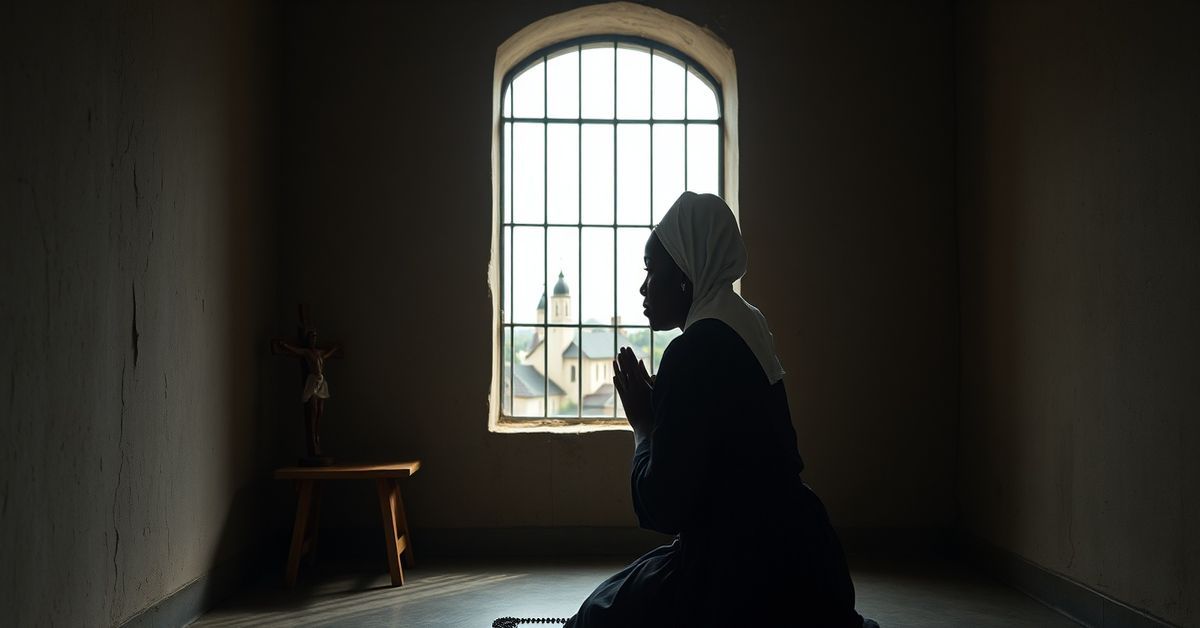
The cited EWTN News article from March 4, 2026, portrays Victoire Ingabire Umuhoza, a Rwandan opposition leader and self-described Catholic, as a pious woman whose political activism is driven by her faith and compassion for her people. Her daughter describes her as a former aspirant to religious life who turned to politics because her heart was “moved for the Rwandan people,” and emphasizes her contemplative prayer life in prison. The article frames her struggle as one for “true democracy,” “rule of law,” and human rights against an “authoritarian regime,” citing support from secular human rights organizations and highlighting the closure of churches by the Rwandan government as evidence of oppression. The central thesis is that Umuhoza’s Catholic faith is the wellspring of her political dissent and endurance.
This narrative, however, represents a profound and dangerous synthesis of Modernist errors, fundamentally contradicting the integral Catholic faith as it was universally held before the revolution of Vatican II. It promotes a naturalistic, human-centered activism under a Catholic veneer, directly opposing the Church’s teaching on the social reign of Christ the King, the nature of legitimate authority, and the supernatural end of the Church.
The Heresy of “Faith-Driven” Political Activism
The article’s core premise—that Umuhoza’s political opposition is a legitimate expression of her Catholic faith—is a direct repudiation of Catholic doctrine. Pope Pius XI, in his encyclical Quas Primas (1925), on the Feast of Christ the King, explicitly defined the nature and scope of Christ’s reign. Christ’s kingdom is “primarily spiritual and relates mainly to spiritual matters”. While His authority extends over all creation, He “completely refrained from exercising this authority” during His earthly life and left temporal affairs to their owners. The Pope states: “He who gives the Kingdom of Heaven does not take away earthly things!”. The role of the Church, as the Kingdom of Christ on earth, is to lead souls to eternal salvation, not to agitate for specific political systems like “true democracy” or “rule of law” as understood by modern secular humanism.
Umuhoza’s advocacy for pluralistic democracy and her coalition, the “United Democratic Forces of Rwanda,” aligns perfectly with the errors condemned by Pope Pius IX in the Syllabus of Errors. Error #39 states: “The State, as being the origin and source of all rights, is endowed with a certain right not circumscribed by any limits.” This is the foundational principle of modern liberal democracy, which Umuhoza implicitly accepts by seeking to “represent all different groups” in government. Error #77 is equally relevant: “In the present day it is no longer expedient that the Catholic religion should be held as the only religion of the State, to the exclusion of all other forms of worship.” Her push for a state where all groups feel “honored and respected” in government is a call for religious indifferentism and the secularization of public life, which Pius IX condemned as a “pest” (cf. Syllabus, Preface). Her collaboration with organizations like the Lantos Foundation, a secular human rights group, further demonstrates her adherence to the naturalistic “cult of man” that Pius XI in Quas Primas identified as the root of societal decay: “When God and Jesus Christ… were removed from laws and states… the foundations of that authority were destroyed.”
The Subversion of Legitimate Authority and the Sin of Rebellion
The article presents Umuhoza’s arrest and trials as the persecution of a political dissident by an “authoritarian regime.” From the pre-1958 Catholic perspective, this framing is heretical. Catholic doctrine holds that all legitimate authority, even from a non-Catholic or imperfect ruler, derives from God and must be obeyed unless it commands something intrinsically evil (cf. Romans 13:1-7; St. Robert Bellarmine, De Romano Pontifice). The Syllabus of Errors explicitly condemns the notion that it is lawful to rebel against legitimate princes (Error #63). Umuhoza’s stated mission to “create a criminal organization to destabilize the country” and her party’s study of “how to resist an authoritarian regime” constitute, under Catholic teaching, the mortal sin of sedition and rebellion, regardless of the regime’s imperfections.
The article’s sympathetic portrayal of her actions ignores the gravity of this sin. It also ignores the context of the Rwandan genocide, a horrific event that necessarily created a complex security situation. To advocate for the dismantling of the state structure that prevented a recurrence, without proposing a just and Catholic alternative (which would require the explicit social reign of Christ the King, not pluralistic democracy), is to gamble with the lives of the innocent. The article’s silence on this is deafening. It treats “democracy” as an absolute good, whereas Catholic teaching, as seen in Quas Primas, holds that the state’s primary duty is to publicly honor and obey Christ: “Let rulers of states therefore not refuse public veneration and obedience to the reigning Christ… For what we wrote at the beginning of Our Pontificate about the diminishing authority of law and respect for power, the same can be applied to the present times: ‘When God and Jesus Christ were removed from laws and states… the entire human society had to be shaken.'”. Umuhoza’s program is the very secularism Pius XI lamented.
The Illusion of a “Catholic” Opposition and the Denial of the Church’s Mission
The article repeatedly emphasizes Umuhoza’s Catholic identity—her desire to be a nun, her prayer life, her deprivation of the Eucharist. This is used to sanctify her political project. This is a classic Modernist tactic: to conflate personal piety (which can exist even in heretics) with orthodoxy of belief and action. Her faith is described as being “at the center” of her politics, but the content of that politics is never measured against the immutable doctrines of the Church. Instead, her faith is reduced to a personal motivational force for a worldly goal. This is the essence of the “hermeneutics of continuity” rejected by sedevacantists: the attempt to make the Church’s supernatural mission conform to the world’s naturalistic ideals.
The article mentions the closure of thousands of churches in Rwanda
Source:
Catholic Rwandan opposition leader’s daughter speaks out ahead of her mother’s trial (ewtnnews.com)
Date: 04.03.2026