Fox’s “The Faithful” Naturalizes Salvation History
Reduction of Sacred History to Emotional Naturalism
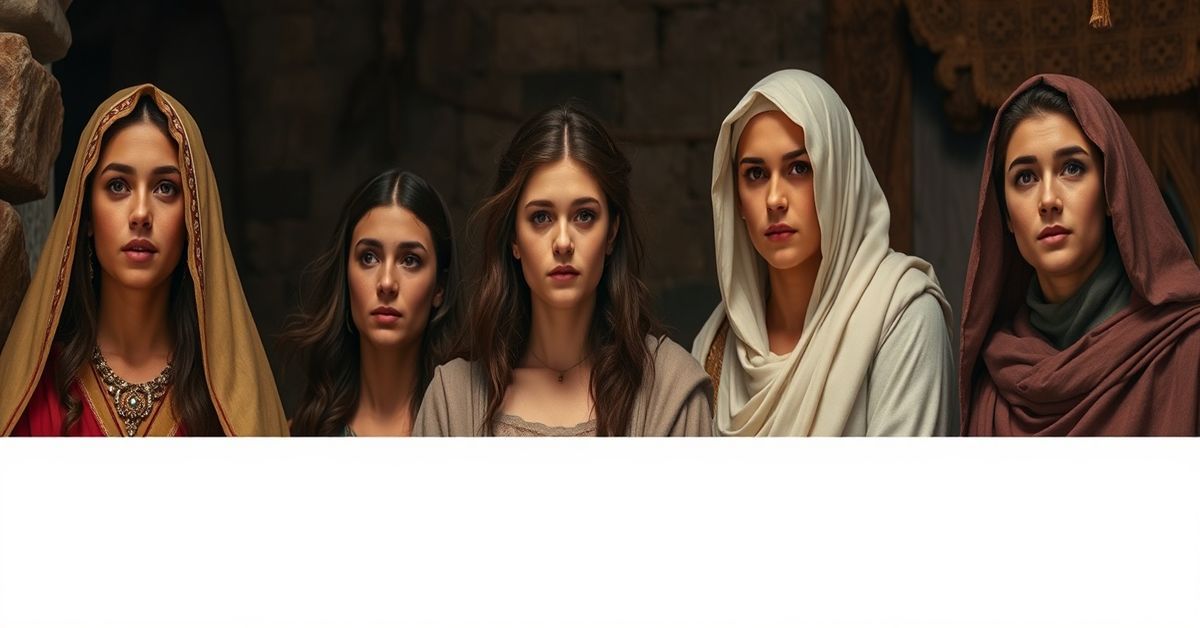
The cited article from EWTN News reports on Fox Broadcasting’s new series “The Faithful: Women of the Bible,” which dramatizes Genesis narratives through the perspectives of Sarah, Hagar, Rebekah, Leah, and Rachel. Executive producer René Echevarria states the creators aimed to tell these stories “in an emotionally grounded way” and understand the characters’ “emotional lives,” presenting them as “flawed, strong, people dealing with extraordinary circumstances.” The series is scheduled to air during Lent, concluding on Easter Sunday. This production, emanating from a secular network and promoted by a purported Catholic news outlet, epitomizes the conciliar sect’s systematic desacralization of Scripture, reducing the supernatural history of salvation to a psychological drama of human relatability.
The Naturalistic Hermeneutic: A Direct Assault on Divine Revelation
The series’ stated goal of “emotional grounding” and “filling in the gaps” of biblical silences through historical research about “life at that time” is a flagrant violation of the Catholic principle of scriptural integrity. Lamentabili sane exitu, promulgated by St. Pius X in 1907, condemns the proposition that “the interpretation of Holy Scripture given by the Church, while not to be scorned, is nevertheless subject to more exact judgments and corrections by exegetes” (Proposition 2). More directly, it anathematizes the view that “an exegete who wishes to fruitfully engage in biblical studies should especially reject any preconceived opinion about the supernatural origin of Holy Scripture, which he should interpret just like other purely human documents” (Proposition 12). Echevarria’s methodology—prioritizing “emotional lives” and “complicated circumstances” over the divine authorial intent and supernatural teleology—is the very “pursuit of novelty” St. Pius X condemned as leading to “deplorable consequences” and “the most grievous errors” in sacred sciences (Preamble, Lamentabili).
The producer’s personal analogy—comparing Sarah and Abraham’s decades of infertility to his own wife’s struggle—exemplifies the modernist error of reducing divine pedagogy to contemporary human experience. This is the “hermeneutics of continuity” in practice: interpreting the immutable Word of God through the shifting lens of modern sentiment. The Syllabus of Errors of Pope Pius IX (1864) condemns the notion that “human reason, without any reference whatsoever to God, is the sole arbiter of truth and falsehood” (Error 3). By making human emotion the “North Star,” the series subordinates divine revelation to subjective, naturalistic criteria, thereby implying that the sacred text requires “improvement” or “humanization” to be meaningful.
The Omission of the Supernatural: The Gravest Sin
The analysis must focus not only on what the article says, but on its profound silences. There is no mention of the theological significance of these women as types of the Church and the Blessed Virgin Mary. Sarah, the barren woman who bears the child of promise, is a direct prefiguration of the supernatural fecundity of the Church and Mary. Hagar and her son Ishmael are explicitly used by St. Paul in Galatians 4:21-31 to allegorize the contrast between the Sinai covenant (bondage) and the covenant of grace (freedom). Rebekah, Leah, and Rachel are integral to the formation of the twelve tribes of Israel, the theocratic foundation of the Messianic people. The series’ focus on “emotional lives” and “complicated circumstances” systematically evacuates these narratives of their soteriological purpose: the unfolding of God’s redemptive plan.
This silence is theological bankruptcy. Pope Pius XI, in Quas Primas (1925), establishes that Christ’s kingship is not a metaphor but a proper dominion: “Christ the Lord is King of hearts because of His love… because of the gentleness and sweetness with which He draws souls to Himself.” The Genesis narratives are not about human emotional journeys; they are about God drawing souls to Himself through covenant, promise, and often painful providence. To omit this is to preach a “Christ” who is merely a moral exemplar or a therapeutic companion, not the Rex Regum whose sovereign will shapes history. The article’s language— “shaped the story of salvation”—is deliberately vague, devoid of the Catholic understanding that salvation is a supernatural reality wrought by grace, not a human story of “flawed” people.
The Sacrilege of Temporal Alignment
The decision to schedule this series to conclude on Easter Sunday is a profound sacrilege, reducing the solemnity of the Resurrection—the “heart of our faith,” as Echevarria correctly notes—to a television ratings event. The Code of Canon Law (1917) and the perennial liturgical law treated the Sacred Triduum with absolute solemnity, prohibiting any profane entertainment during that time. The conciliar sect’s abolition of most liturgical laws and its embrace of the “domestic church” concept have made such commercialization of salvation history seem normal. This is the “abomination of desolation” (Matt. 24:15) standing in the holy place: the place of sacred mystery is now a slot in a programming schedule.
Echevarria’s statement that these stories are “the beginning of the Easter story in a sense” reveals a naturalistic, evolutionary view of revelation. The “Easter story” does not “begin” 4,000 years prior in a human drama; it begins in the eternal decree of God and is historically accomplished in the Passion, Death, and Resurrection of Jesus Christ. The Genesis accounts are preparatio evangelica, but they are not the “beginning” of Easter; they are its prophetic shadows. To conflate them is to blur the unique, supernal event of the Resurrection into a vague “unfolding story.”
The Symptom: The Conciliar Sect’s War on the Supernatural
This series is not an isolated incident but a symptom of the systemic apostasy of the post-1958 “church.” The methodology mirrors the condemned errors of Lamentabili: treating Scripture as a “profound” text with “silences” to be filled by human imagination (Prop. 14, 15), and prioritizing the “emotional level” over the doctrinal. It reflects the “indifferentism” condemned by Pius IX’s Syllabus (Errors 15-18), where all religious narratives are reduced to relatable human experiences, stripping them of their exclusive claim to supernatural truth.
The promotion of this series by EWTN News—a flagship institution of the conciliar sect—demonstrates the complete infiltration of Catholic media by Modernism. St. Pius X, in Pascendi Dominici gregis (1907), described the Modernist as one who “seeks to make the doctrine of the Gospel evolve into a system of philosophical and sociological evolution.” Here, the “system” is secular storytelling; the “evolution” is the transformation of sacred history into a human interest drama. The “faithful” are not called to adore the Mysterium Fidei but to “relate” to ancient characters.
Doctrinal Weapons: The Unchanging Standard
The unchanging Catholic faith, as defined before the revolution of John XXIII, demands a radically different approach:
1. Scripture is the inspired Word of God, inerrant in all that it affirms for the sake of salvation. The First Vatican Council (1870) defined that “the books of the Old and New Testament, with all their parts, have been written by the inspiration of the Holy Spirit” (Dei Filius, Ch. 2). Therefore, the “silences” are not gaps to be filled but are part of the divine pedagogy.
2. The primary purpose of salvation history is the glorification of God and the salvation of souls through Christ. As Pope Pius XI taught in Quas Primas, “the Kingdom of our Redeemer encompasses all men… He is the source of salvation for individuals and for the whole.” The Genesis narratives are about God’s actions, not human emotions.
3. The Lenten and Easter seasons are for penance, reflection, and solemn celebration of the Passion and Resurrection, not for the broadcast of dramatizations that risk profaning the mysteries. The 1917 Code of Canon Law (Canons 1247-1248) imposed strict obligations of fasting and abstinence and reserved the Easter Vigil and Easter Sunday to the sacred liturgy alone.
Conclusion: A Call to Reject the Conciliar Spectacle
“The Faithful: Women of the Bible” is a product of the conciliar sect’s theological and spiritual bankruptcy. It presents a naturalistic, human-centered version of salvation history that is antithetical to the Catholic faith. The series, by focusing on emotional relatability and filling scriptural silences with human invention, commits the errors condemned by St. Pius X and Pius IX. Its timing during Lent and conclusion on Easter Sunday is a desecration of the liturgical season. The promotion by EWTN News confirms the total capitulation of supposed “Catholic” media to the spirit of the world.
The faithful remnant, clinging to the integral Catholic faith as it existed before 1958, must reject this series and all its kind as dangerous Modernist propaganda. We must instead turn to the authentic interpretation of Scripture provided by the Church Fathers, the Councils, and the pre-conciliar Magisterium, which always reads the Old Testament in the light of Christ and His Church, never reducing it to a mirror for contemporary sentiment. The only “faithful” are those who submit their intellects to the sensus plenior of the Holy Spirit as guarded by the unchanging Church, not those who “relate” to ancient stories through a lens of naturalistic psychology.
Source:
New biblical series depicts Book of Genesis through eyes of its best-known women (ewtnnews.com)
Date: 14.03.2026