February 2026

Antichurch

Opus Dei’s Reform: The Conciliar Sect’s Experiment in Lay Autonomy

The Pillar reports that “Pope” Leo XIV received the leadership of the personal prelature Opus Dei on February 16, 2026, stating that the reform of its statutes “continues in its study phase and that no publication date can yet be foreseen.” The article details the ongoing canonical restructuring initiated under “Pope” Francis, which shifted Opus Dei’s oversight from the Dicastery for Bishops to the Dicastery for Clergy and removed the requirement for its prelate to be a bishop. It also addresses recent criminal allegations of human trafficking and exploitation by former members in Argentina, which Opus Dei denies, claiming the women freely chose their vocation after an initial educational phase. The prelature emphasizes its identity as a predominantly lay institution, with over 90% lay members, and its mission of “holiness in their ordinary lives, especially through their everyday work.”

This entire narrative—from the reform process to the abuse allegations and the institution’s self-understanding—represents a profound rupture with Catholic tradition and a capitulation to the naturalistic humanism condemned by the pre-conciliar Magisterium. The so-called “reform” is not an update but a systematic dismantling of Catholic religious life in favor of a lay-centric, secularized model that places “ordinary life” and “work” at the center of sanctification, thereby reducing the supernatural to the natural. The abuse scandals are the inevitable fruit of a structure that has abandoned the clear hierarchical, sacramental, and ascetical framework of the true Church, replacing it with a psychologically manipulative system that confuses formation with indoctrination and vocation with institutional capture.

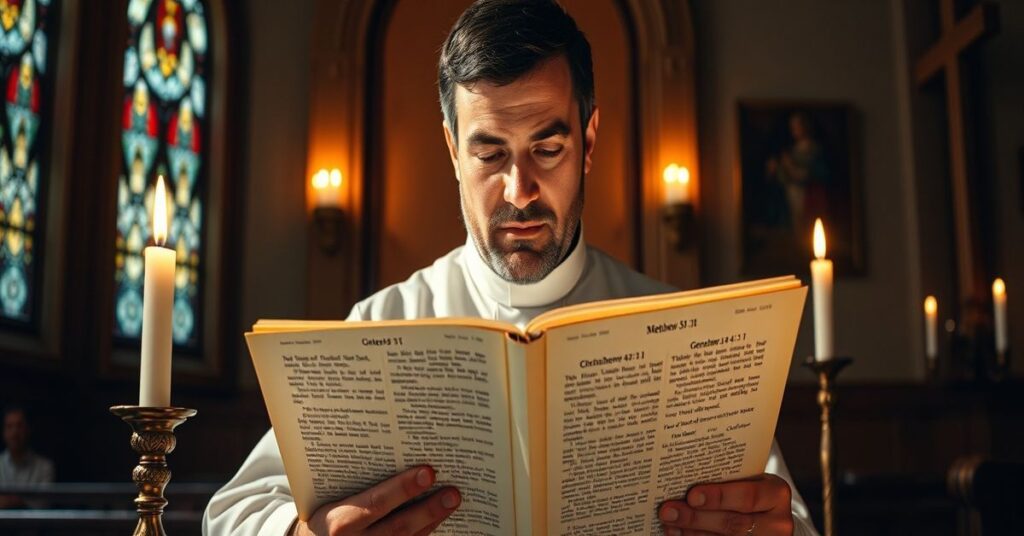
A Catholic priest studying Genesis and Matthew in a traditional chapel, highlighting divine truths against modernist distortions.
Antichurch

Lenten Exegesis: The Naturalistic Distortion of Sacred Scripture

[Pillar Catholic] Adam and the Ganache: A Lenten Bible Study. In a recent episode of the “Sunday School; A Pillar Bible Study” podcast, dated February 18, 2026, Dr. Scott Powell, JD Flynn, and Kate Olivera discuss the readings for the First Sunday of Lent—Genesis 2:7-9; 3:1-7, Psalm 51, Romans 5:12-19, and Matthew 4:1-11. The discussion frames the Genesis creation and fall narrative and Christ’s temptation in the wilderness through a lens of moral exemplarity and psychological insight, systematically omitting the supernatural, dogmatic, and juridical truths that constitute the integral Catholic faith. This approach is not mere simplification but a deliberate evacuation of sacred doctrine, aligning perfectly with the Modernist errors condemned by St. Pius X and the apostate spirit of the post-conciliar sect.

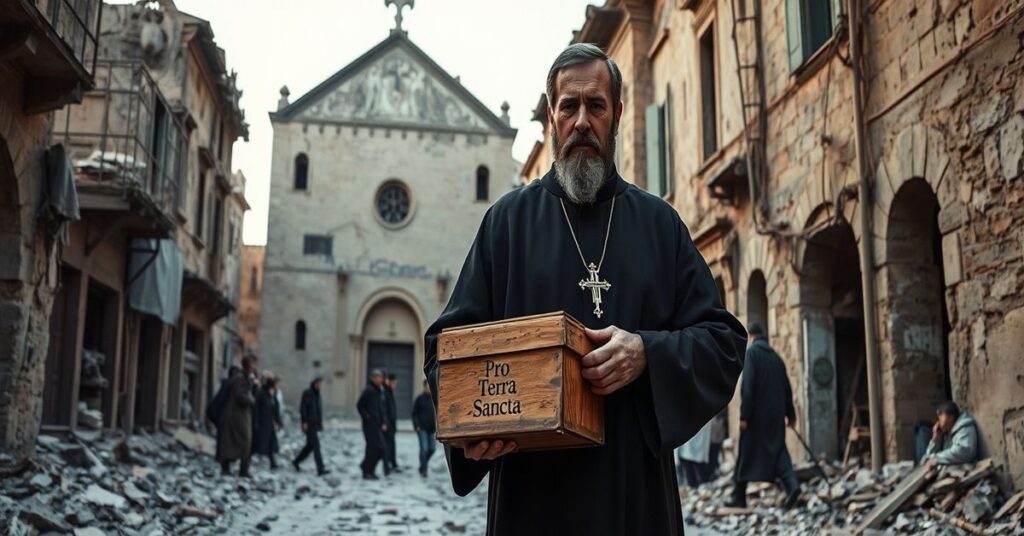
A traditional Catholic image depicting the Holy Land with a Franciscan friar amidst war-torn streets, symbolizing modernist ecumenism and the loss of true Catholic communion.
Antichurch

Holy Land Collection: Modernist Pity Masquerading as Catholic Communion

The Vatican News portal reports on a letter from the Custos of the Holy Land, Fr. Francesco Ielpo, OFM, dated February 18, 2026, urging support for the annual Good Friday “Pro Terra Sancta” Collection. The letter frames the collection as “a concrete sign of communion with the Church of Jerusalem” amid war and economic hardship in the Holy Land, emphasizing material support for schools, parishes, and charitable works to “keep alive the Christian presence.” The “Pontifical” collection is presented as a response to the “Pope’s” call for prayer and fasting for peace, with the goal of “rebuild[ing] relations, trust, hope” through education and “a culture of encounter and peace.” This entire narrative is a catastrophic abandonment of the Catholic Church’s supernatural mission, reducing the Faith to a naturalistic humanitarian project and promoting false communion with schismatic entities.

Scroll to Top
Antichurch.org
Privacy Overview

This website uses cookies so that we can provide you with the best user experience possible. Cookie information is stored in your browser and performs functions such as recognising you when you return to our website and helping our team to understand which sections of the website you find most interesting and useful.