
February 2026

A Kenyan bishop in liturgical vestments addresses a crowd outside a modest church under an African sun.
Antichurch

Kenyan Bishops’ Lenten Campaign: Naturalism Masquerading as Catholicism

The Kenya Conference of Catholic Bishops (KCCB), operating within the post-conciliar structure, has launched its 2026 Lenten Campaign under the theme “Building a Just, Peaceful and United Kenya: Upholding Human Dignity.” The statement, delivered by Archbishop Maurice Muhatia Makumba at the Immaculate Conception Shrine in Lodwar, calls for justice, peace, national cohesion, and electoral preparedness ahead of Kenya’s 2027 elections. Quoting Isaiah 1:17, the bishops frame the campaign as a “spiritual mandate and a national wake-up call,” emphasizing prayer, repentance, reconciliation, and solidarity with the poor. They warn against divisive politics, corruption, and human rights violations, urging ethical leadership and youth engagement in democratic processes. The campaign’s focus remains entirely on socio-political naturalism—human dignity, governance, and national unity—with no reference to the supernatural ends of the Lenten season: the reparation of sin, the conversion of souls, the public and social reign of Christ the King, or the necessity of the Catholic Church for salvation. This omission is not accidental but symptomatic of the modernist apostasy that has infected the conciliar sect.

No Category

Apostasy

Summary: The Pillar reports on the travel schedule of antipope ‘Pope’ Leo XIV, detailing planned trips to Monaco, Algeria, Angola, Equatorial Guinea, Spain, Peru, Argentina, Uruguay, Mexico, Portugal, Australia, and South Korea. The itinerary emphasizes ecumenical dialogue, naturalistic humanitarianism, and modernist devotional celebrations while completely omitting any reference to the supernatural mission of the Catholic Church: the exclusive reign of Christ the King, the salvation of souls through the one true faith, and the duty of states to recognize this reign. What emerges is not a pastoral itinerary but the systematic implementation of Modernism’s synthesis of all errors—a traveling showcase of the conciliar sect’s apostasy from integral Catholic doctrine.

Bishop Andrzej Jeż of Tarnów standing in a Polish courtroom during his abuse trial, symbolizing the spiritual bankruptcy of the Neo-Church.
Antichurch

Polish Bishop’s Abuse Trial Exposes Conciliar Church’s Apostasy

The cited article from Pillar Catholic reports on the impending trial of Bishop Andrzej Jeż of the Diocese of Tarnów, Poland, on charges of failing to promptly report allegations of clerical sexual abuse to civil authorities. The diocese issued a statement defending the bishop’s actions as compliant with both civil and post-conciliar Church law. The article presents this defense and the broader context of abuse scandals in Poland without theological or historical critique. The implicit thesis of the conciliar narrative is that the crisis is one of procedural failure within a fundamentally sound ecclesial structure. From the perspective of integral Catholic faith, this is a catastrophic obfuscation. The entire episode is not a tragic anomaly but the logical, inevitable fruit of the doctrinal, liturgical, and disciplinary revolution inaugurated by Vatican II. It exposes a “church” that has replaced the supernatural ends of the Mystical Body with the naturalistic goals of a human institution, where statistical metrics of “practice” and procedural legality are touted as signs of vitality while the most grave offenses against God and souls are managed as administrative problems.

Antichurch

Pope Leo’s Lenten Call: Naturalistic Piety Over Supernatural Salvation

The Pillar portal reports on Pope Leo’s first Lenten message, Vatican governance shifts, beatification announcements, a bishop’s video on evangelization, and the Vatican’s diplomatic ties with Azerbaijan. The article presents these developments as ordinary events within a functioning Catholic Church, portraying Pope Leo as a legitimate pontiff guiding the faithful through Lent with pastoral solicitude. The underlying thesis, however, is that the article uncritically propagates the theological and structural errors of the post-conciliar sect, reducing Catholic life to naturalistic humanism, validating modernist beatifications, endorsing lay governance, and prioritizing diplomatic compromise over the Church’s supernatural mission—all while omitting the non-negotiable doctrines of the Social Reign of Christ the King, the exclusive authority of the hierarchical priesthood, and the absolute necessity of the Church for salvation.

Antichurch

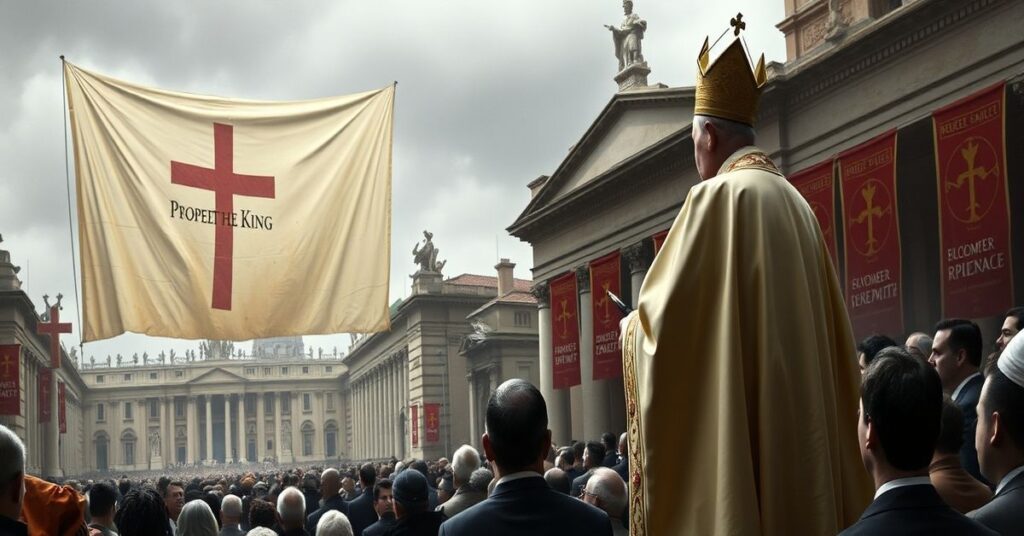
Vatican’s “Peace” Diplomacy Abandons Christ the King

The VaticanNews portal reports that Cardinal Pietro Parolin, Secretary of State of the post-conciliar Vatican structure, stated on February 17, 2026, that the Holy See will not participate in a proposed “Board of Peace” because of its “particular nature, which is evidently not that of other States.” He expressed “perplexity” and “critical points” regarding the initiative, insisting that such crisis management should be handled by the UN. Regarding the Ukraine war, Parolin voiced “considerable pessimism,” noting a lack of “real advances” and “not much hope.” He also thanked the Italian government for attention to “issues close to the Church’s heart” like family, education, and prisons. This diplomatic posture, devoid of any supernatural foundation, epitomizes the apostasy of the conciliar sect: a naturalistic, bureaucratic engagement with the world that explicitly rejects the Social Kingship of Our Lord Jesus Christ and silences the only true source of peace.

Antichurch

Fulton Sheen’s Beatification: A Neo-Church Canonization of Apostasy

The cited article from The Pillar portal reports on the planned beatification of Archbishop Fulton Sheen by the leadership of the Diocese of Peoria, presenting it as a joyous celebration of a beloved American Catholic figure. It frames Sheen’s life and ministry through the lens of modern Catholic sentimentality, emphasizing his “authenticity,” “humor,” and “relatability” while glossing over his profound theological compromises and his active role in the post-conciliar revolution. The article’s thesis is that Sheen’s message of “joy” and “personal relationship with Jesus” remains critically relevant today, and that his beatification is a unifying moment for the post-Vatican II “Church.” This analysis will demonstrate that Sheen’s beatification is not a cause for celebration but a stark manifestation of the neo-church’s apostasy, a blasphemous farce that exalts a key agent of Modernism against the immutable faith of the Catholic Church.

Scroll to Top
Antichurch.org
Privacy Overview

This website uses cookies so that we can provide you with the best user experience possible. Cookie information is stored in your browser and performs functions such as recognising you when you return to our website and helping our team to understand which sections of the website you find most interesting and useful.