
March 2026

Antichurch

Belgian Bishop’s Married Priest Plan: Apostasy in Action

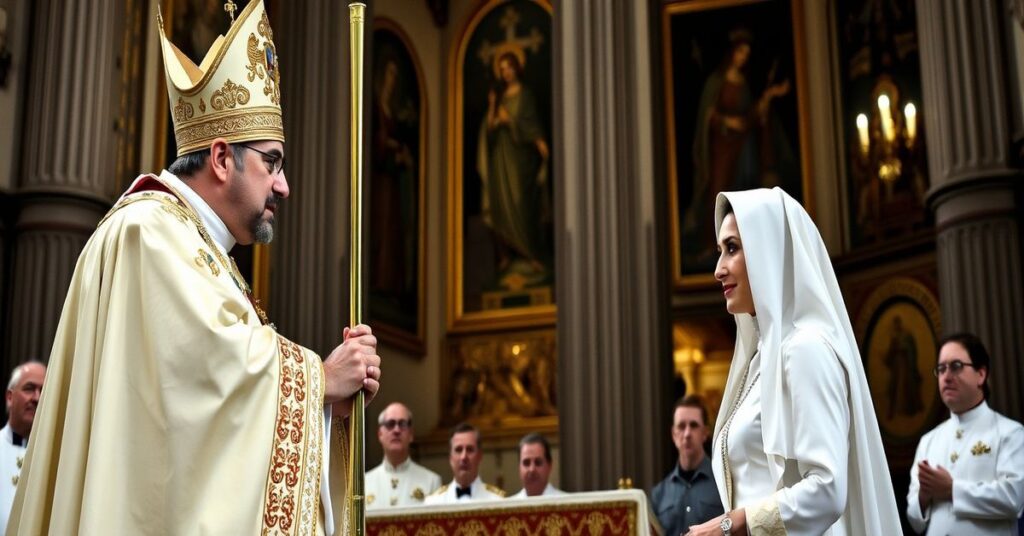
The Pillar Catholic portal reports that Bishop Johan Bonny of Antwerp has published a pastoral letter announcing his intention to ordain married men as priests in his diocese by 2028, framing it as a necessary response to the “synodal-missionary process” and a vocational crisis. Bonny argues that the question is “no longer whether” but “when” the Church will ordain married men, dismisses reliance on foreign priests as unsustainable, and claims inconsistency in allowing married Eastern Catholic clergy and Protestant converts while barring native married vocations. He also laments the “painful” rejection of women’s diaconate and vows further steps toward gender-equal ministry. The article notes Pope Leo XIV’s praise for celibacy but highlights Bonny’s open defiance, positioning his plan as pressure on the “usurper” antipope. This initiative directly contradicts the unchanging divine law of clerical celibacy and represents a seismic shift toward naturalistic humanism, reducing the priesthood to a functional role stripped of its sacrificial, supernatural character.
Antichurch

England’s Dioceses: Modernist Reorganization Masquerading as pastoral care

The Pillar Catholic portal reports on recent appointments by “Pope” Leo XIV (Robert Prevost) in England, where Bishop Marcus Stock of Leeds was appointed apostolic administrator of both the Middlesbrough and Hallam dioceses following the resignations of Bishops Terence Drainey and Ralph Heskett. The article speculates that these moves signal a potential consolidation—either a unio in persona episcopi (shared bishop) or outright merger—of these three dioceses, possibly forming a single entity like “Leeds-Hallam-Middlesbrough.” It provides historical context (restoration of hierarchy in 1850, creation of Hallam in 1980) and demographic data (small Catholic populations in Middlesbrough and Hallam) as reasons for such reorganization. The piece concludes that while no decisions are final, further changes cannot be ruled out due to decades of decline and post-COVID recovery.

This analysis exposes the profound theological and spiritual bankruptcy underlying the article’s assumptions. The Pillar presents diocesan reorganization as a neutral, pragmatic response to demographic shifts, completely omitting the supernatural purpose of diocesan boundaries and the catastrophic reality that the post-conciliar “Church” is a paramasonic structure devoid of legitimate authority. The article’s language of “witness to Christ,” “journeying together in mission,” and “reunification” is the naturalistic jargon of Modernism, which reduces the Church to a human organization adapting to secular decline. In truth, the only legitimate Catholic hierarchy in England ended with the death of the last true bishops in communion with the pre-1958 Magisterium. All subsequent appointments, including those of “Pope” Leo XIV and Bishop Stock, are null and void.

Antichurch

Archbishop Aquila’s ‘Legacy’: Modernist Gratitude for Apostasy in Denver

The National Catholic Register reports that “Archbishop” Samuel Aquila of the Denver Archdiocese will retire after 14 years, expressing “deep gratitude” for growth in faith and sacramental life during his tenure. He highlights his personal spiritual evolution from a God of judgment to one of “deep love,” his advocacy on abortion and immigration, and his promotion of devotional practices like the Surrender Novena. This portrait of a faithful shepherd, however, is a carefully constructed facade that masks the profound theological and spiritual bankruptcy of the conciliar apostasy he has actively served. Aquila’s “legacy” is not one of Catholic fidelity but of active participation in the systematic dismantling of the Church’s supernatural mission, replacing it with a naturalistic, human-centered religion that contradicts every tenet of integral Catholic doctrine.

Scroll to Top
Antichurch.org
Privacy Overview

This website uses cookies so that we can provide you with the best user experience possible. Cookie information is stored in your browser and performs functions such as recognising you when you return to our website and helping our team to understand which sections of the website you find most interesting and useful.