March 2026

Antichurch

USCCB’s Birthright Heresy: Denying Christ’s Kingship for Naturalistic Utopia

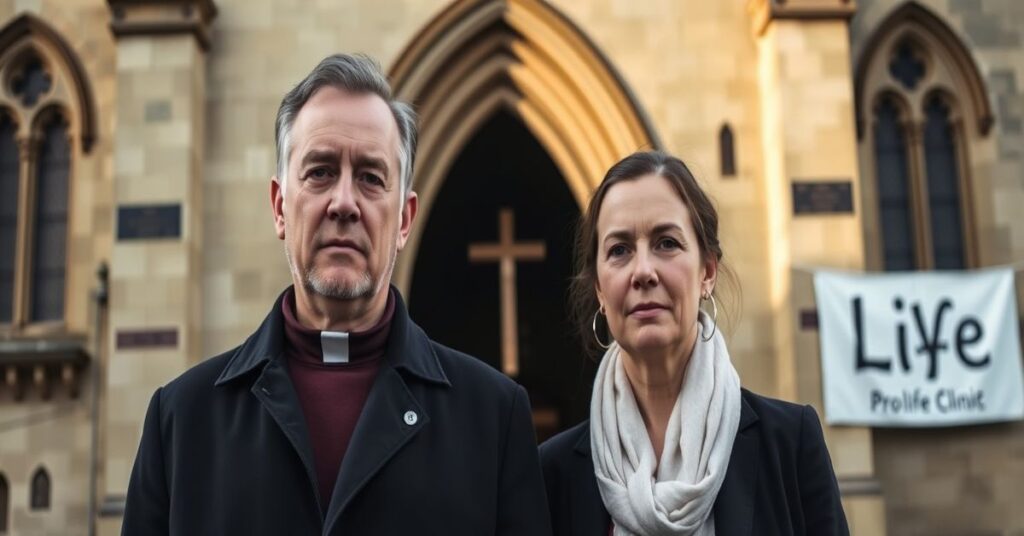
The article from the *National Catholic Register* reports that the U.S. Conference of Catholic Bishops (USCCB) filed an amicus brief before the U.S. Supreme Court arguing that birthright citizenship is not only a constitutional requirement but also a moral imperative grounded in Catholic teaching. Critics, including Catholic scholars, contend the brief inflates Church doctrine and offers weak legal reasoning. Bishop Daniel Flores of Brownsville, Texas, defended the brief as aligned with human dignity, subsidiarity, and the social character of human nature, even equating opposition to the current policy with the infamous *Dred Scott* decision. The brief, however, cites no specific magisterial document requiring birthright citizenship, a point noted by critics who observe that the Church has no explicit teaching on the subject. The legal dispute centers on the interpretation of the 14th Amendment’s phrase “subject to the jurisdiction thereof,” with President Trump’s 2025 executive order challenging automatic citizenship for children of non-permanent residents. The article presents mixed reactions, with some scholars praising the brief as a powerful moral statement and others dismissing it as an incoherent overreach into prudential political matters.

**The USCCB’s brief is a modernist betrayal of integral Catholicism, reducing the Church’s supernatural mission to the promotion of a naturalistic political agenda while remaining silent on the absolute primacy of Christ’s Kingship and the salvation of souls.**

Antichurch

Pope’s Secular Praise Exposes Apostate “Church” of the New Advent

The article reports that the antipope Leo XIV (Robert Prevost) sent a congratulatory letter to the Italian newspaper *Corriere della Sera* for its 150th anniversary, urging it to “respect the role of journalists and the dignity of readers” and to “cultivate the human dimension of the story” in the age of artificial intelligence. The message, dripping with naturalistic humanism, completely omits the supernatural mandate of the Catholic press and the absolute primacy of Christ the King over all media and society. This is not pastoral advice; it is a manifesto of the conciliar sect’s apostasy, reducing the Church’s mission to mere cultural commentary within the secular order.

Antichurch

Scottish Prelates’ Half-Measures on Assisted Suicide Reveal Apostate Hierarchy’s Spiritual Bankruptcy

[National Catholic Register] portal reports that Scottish “Bishop” John Keenan, president of the Bishops’ Conference of Scotland, and other “pro-life” leaders have issued an urgent plea to Scottish politicians (MSPs) to reject the Assisted Dying for Terminally Ill Adults (Scotland) Bill, calling it “a dreadful mess” and “unsafe.” The bill, if passed, would legalize assisted suicide for terminally ill adults. Keenan argues the bill lacks safeguards, puts vulnerable people at risk, and undermines trust in the doctor-patient relationship. He and “pro-life officer” Paul Atkin call for a “meaningful debate on end-of-life care” and increased palliative care instead.

While the surface opposition to murder-by-consent aligns with the natural law written on the human heart, the analysis from the perspective of integral Catholic faith—the immutable doctrine of the pre-1958 Church—reveals a profound and damning spiritual bankruptcy. The statements are not a defense of the lex aeterna but a naturalistic, humanitarian plea that omits the supernatural foundations of Catholic teaching, thereby participating in the apostasy of the conciliar sect. The critique must be ruthless, exposing not only what is said but, more importantly, what is silenced.

Antichurch

The Ballad of Wallis Island: Naturalistic Humanism Disguised as Catholic Insight

The Ballad of Wallis Island, a British comedy, is praised in a commentary by Brendan Towell, Director of Spirituality and Mission for Secondary Schools in the Archdiocese of Philadelphia, for its portrayal of love, grief, and joy. Towell, writing for the National Catholic Register, claims the film reveals something “profoundly human — and quietly Christian” about love that transforms grief. He interprets its themes through a lens of “sacramental perspective,” St. Paul’s hymn to love (1 Cor. 13), and C.S. Lewis’s concept of “Joy,” suggesting the film witnesses to truth through beauty (via pulchritudinis). However, from the perspective of integral Catholic faith — the unchanging doctrine of the Church before the conciliar apostasy — this commentary is a quintessential example of Modernist naturalism, reducing supernatural realities to sentimental human experience and emptying Catholic terminology of its doctrinal content. The analysis exposes the theological and spiritual bankruptcy of such an interpretation, which originates from and serves the post-conciliar “church” that has abandoned the true faith.

Scroll to Top
Antichurch.org
Privacy Overview

This website uses cookies so that we can provide you with the best user experience possible. Cookie information is stored in your browser and performs functions such as recognising you when you return to our website and helping our team to understand which sections of the website you find most interesting and useful.