June 2026

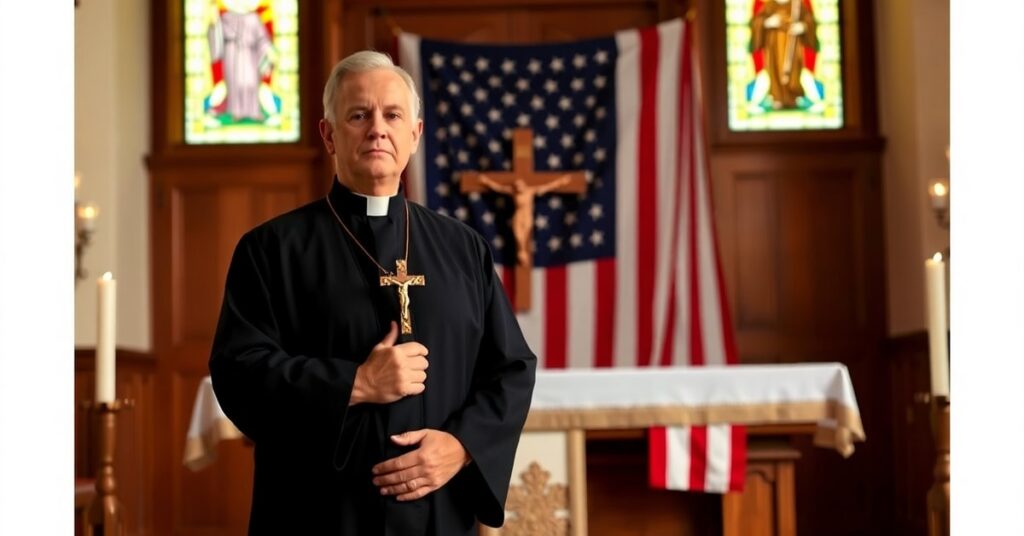
A somber image of a traditional Catholic ordination ceremony in a historic church, reflecting spiritual crisis and loss.
Antichurch

Record Ordinations in Charlotte: A Harvest of Vocations or a Statistical Illusion in a Dying Sect?

The National Catholic Register reports that the Diocese of Charlotte, North Carolina, ordained 10 men to the priesthood on May 30, 2026, marking a record high for the diocese. Bishop Michael Martin expressed gratitude, attributing this “harvest” to families, priests, and long-term vocations programs like St. Joseph’s College Seminary and camps such as “Quo Vadis Days.” The article frames this as a sign of divine blessing and effective pastoral strategy within the post-conciliar structure. However, from the perspective of integral Catholic faith, this narrative is not merely incomplete but fundamentally deceptive, masking a profound spiritual crisis behind the veneer of numerical growth and institutional self-congratulation.

A solemn depiction of the usurper Robert Prevost as 'Pope Leo XIV' before a digital abomination, symbolizing the conciliar sect's betrayal of Catholic truth.
Antichurch

The Usurper on Peter’s Throne Speaks: Magnifica Humanitas and the Digital Abomination

VaticanNews portal reports that the current usurper of the Chair of Peter, Robert Prevost – who styles himself “Pope Leo XIV” – sent a message dated 1 June 2026 to participants in the Third Open Expert Meeting on the revision of the World Medical Association’s Declaration of Taipei. The message, signed on his behalf by Cardinal Pietro Parolin, calls for “stronger safeguards to protect human dignity” in the collection and use of health data, warns against reducing individuals to “exploitable data,” and references his recent encyclical *Magnifica Humanitas*. The conciliar sect’s mouthpiece presents this as a noble defense of human dignity and the common good. Behind the veneer of humanitarian concern, however, lies the same modernist rot that has characterized the post-conciliar abomination: a naturalistic anthropology divorced from supernatural truth, an appeal to “human dignity” stripped of its properly theological content, and the continued legitimization of a heretical structure that has no authority whatsoever to teach on matters of faith or morals.

A Catholic soccer player in a chapel, conflicted between worldly glory and spiritual duty.
World

The Idolatry of Athletic Glory: When Catholic Media Celebrates Worldly Triumph Over Spiritual Warfare

EWTN News portal reports on the celebration of Christian women in South Asian soccer, highlighting Maria Manda, a Catholic from Bangladesh’s Garo Indigenous community, who has been named captain of her country’s women’s national team. The article presents her athletic achievements as a source of “pride” and “inspiration” for the Christian community, while remaining completely silent on the spiritual dangers of elevating worldly sports to the level of Christian witness. This is not journalism—it is the normalization of athletic idolatry dressed in Catholic vocabulary, a symptom of the post-conciliar Church’s capitulation to secular values.

Antichurch

Leo XIV’s Charismatic Renewal: A Flood of Modernist Heresy

The cited article from the National Catholic Register (June 1, 2026) reports on the first meeting of the usurper Robert Prevost, known as Leo XIV, with members of the Catholic Charismatic Renewal (CCR) in the Paul VI Audience Hall at the Vatican. The article presents five “key aspects” of the movement’s spirituality as highlighted by Leo XIV: Baptism in the Spirit, Prayer of Praise, the Word of God, Communion, and Charity. It also notes his encouragement for the movement to serve dioceses and parishes and to cultivate harmony. The article quotes Leo XIV’s statement that “God has indeed blessed your communities with so many gifts, including spiritual vitality” and his reference to the CCR’s growth “in the years following the Second Vatican Council.” This meeting is a brazen showcase of the conciliar sect’s deep entanglement with a movement that is, at its core, a vehicle for modernist subjectivism, ecumenical indifferentism, and the erosion of Catholic doctrinal and liturgical integrity.

Antichurch

The Neocatechumenal Way: A Fruit of the Conciliar Revolution, Not of the Holy Spirit

EWTN News reports that the Neocatechumenal Way, a post-conciliar ecclesial movement founded in the mid-1960s by Kiko Argüello and Carmen Hernández in Madrid, celebrated its 60th anniversary with a Mass at the Almudena Cathedral. The event saw congratulatory messages from “Pope” Leo XIV, who lauded its “missionary work,” and Cardinal Kevin Farrell, who praised its “charism” and “filial obedience.” Kiko Argüello himself explicitly linked the movement’s origins to the Second Vatican Council, stating, “What was being drafted in writing at Vatican II, Carmen and I were putting into practice in the shantytowns of Palomeras Altas.” This direct conciliar lineage, coupled with its emphasis on subjective experience, community, and a distinct liturgy, renders the Neocatechumenal Way a quintessential product of the modernist revolution, fundamentally at odds with the immutable Catholic faith and its traditional catechumenate.

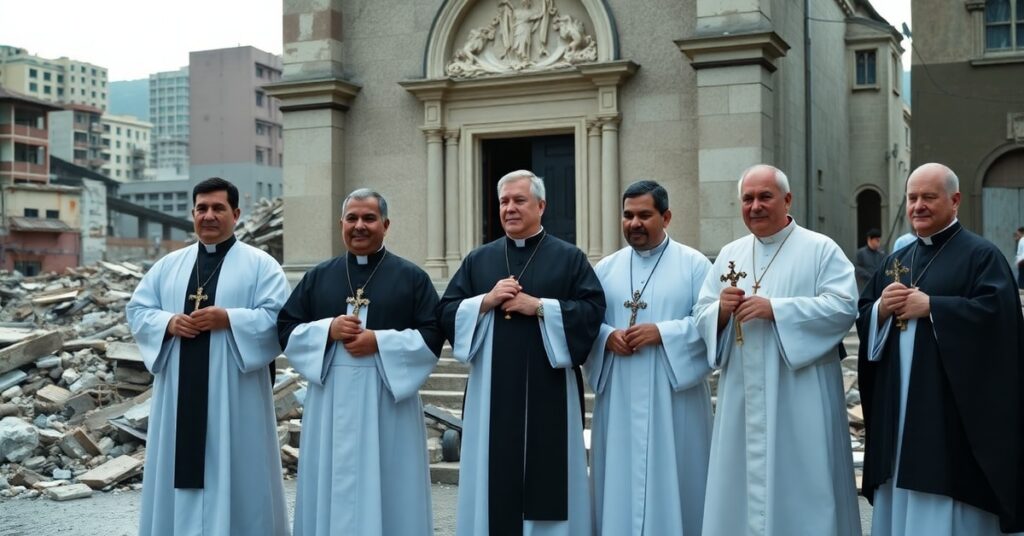
A solemn but subversive depiction of the 2026 ordination of ten men in Charlotte's Diocese, highlighting the absence of traditional Catholic sacramentality.
Antichurch

Ten Men Ordained in Charlotte: A Closer Look at the Conciliar Vocations Crisis

EWTN News reports that on May 30, 2026, Bishop Michael Martin of the Diocese of Charlotte, North Carolina, ordained 10 men to the priesthood, marking the highest number of ordinations in a single year in the diocese’s history. The article celebrates this event as a sign of divine blessing and effective diocesan policy, attributing the increase to family faith, priestly encouragement, and long-term institutional efforts such as St. Joseph’s College Seminary and vocations camps. However, beneath the surface of this seemingly positive development lies a profound theological and ecclesial crisis that demands rigorous scrutiny from the perspective of integral Catholic faith.

A traditional Catholic priest preaching to a divided congregation in a church, with Leo XIV's image in the background promoting Charismatic Renewal.
Antichurch

Leo XIV’s Charismatic Renewal Embraces Modernist Ecumenism and Subjective Experience

EWTN News portal reports on the meeting of the usurper Leo XIV with the Catholic Charismatic Renewal (CCR) on May 30, 2026. The “pope” outlined five “key aspects” of this movement, which is a pillar of the post-conciliar revolution. The meeting is a clear demonstration of the deepening apostasy within the conciliar structures, promoting subjective experience over objective truth and ecumenism over the exclusive salvation found in the Catholic Church.

Chaldean Patriarch Paul III Nona stands solemnly before a war-torn Middle Eastern landscape, reflecting the spiritual crisis of the post-conciliar Church.
Antichurch

Chaldean Patriarch’s Appeal Exposes the Bankruptcy of Post-Conciliar Ecclesiology

EWTN News reports that the newly elected Chaldean “Patriarch” Paul III Nona, in an exclusive interview, called for prayer, peace, and support for Christians in the Middle East. His eminence described the weight of his new responsibility, recalled his years serving in Mosul before and during the ISIS invasion, and spoke about the challenges facing Chaldean Christians in the diaspora. He emphasized the importance of faith, the need to safeguard rights and dignity, and expressed hope for peace and stability in the region. Notably, he cited the “encyclical” of “Pope” Leo XIV, Magnifica Humanitas, on artificial intelligence, and asked Western Catholics to pray for the Chaldean Church and support efforts to keep Christians in the Middle East. This interview, while containing surface-level poignant elements, is a masterclass in the post-conciliar evasion of supernatural reality, reducing the Church’s mission to humanitarian activism and demonstrating a capitulation to the very modernist errors that have precipitated the current ecclesial catastrophe.

A somber depiction of a vacant St. Peter's Basilica with modernist cardinals in discussion, symbolizing the spiritual decay of the conciliar sect.
Antichurch

The Collegial Farce of Leo XIV’s Consistory: A Neo-Church Without Doctrine or Mission

The National Catholic Register portal reports on the second extraordinary consistory of Leo XIV (Robert Prevost), held on May 31, 2026, which notably did not include the creation of new cardinals but was instead convened as a discussion forum. The article, authored by Andrea Gagliarducci, frames this as a novel “method of government,” contrasting it with the practice of previous antipopes. It describes the Pope’s intention to hold biannual discussion consistories, the themes of which center on the Church’s “mission” as “integral,” combining “explicit proclamation, witness, commitment, and dialogue, without giving in to the temptation of proselytism or to a logic of simple institutional preservation or expansion.” The article further notes Leo XIV’s preference for a “more collegial approach” over Francis’s “Council of Cardinals,” and his stated aim to “relaunch Evangelii Gaudium” and reform “paths of Christian initiation” and “ecclesial communication.” This entire spectacle is a masterclass in the conciliar sect’s substitution of bureaucratic process for supernatural mission, a clear manifestation of the abomination of desolation that occupies the Vatican.

A solemn Vatican presentation of Leo XIV's 2026 encyclical Magnifica Humanitas, featuring a panel with atheist tech executive Christopher Olah.
Antichurch

Magnifica Humanitas: Neo-Church Embraces AI Idolatry and Apostate Dialogue

National Catholic Register portal reports on the May 25, 2026 Vatican presentation of Leo XIV’s first encyclical Magnifica Humanitas, “on safeguarding the human person in the time of artificial intelligence.” The event featured a panel including Anthropic co-founder Christopher Olah, an atheist, whom the Pope thanked and invited to “walk together” despite differences over AI’s nature. The encyclical claims AI lacks understanding of love, morality, and spiritual perspective, while Olah countered that AI systems exhibit introspection and internal states mirroring human emotions. The presentation was conducted primarily in English, with the Latin version of the 42,000-word document unreleased at time of reporting. The Vatican kept the text tightly under wraps, providing bishops only with summaries and infographics in advance. The article frames this as a continuation of Francis’ synodality and dialogue with those outside the Church.

Scroll to Top
Antichurch.org
Privacy Overview

This website uses cookies so that we can provide you with the best user experience possible. Cookie information is stored in your browser and performs functions such as recognising you when you return to our website and helping our team to understand which sections of the website you find most interesting and useful.