2026

Antichurch

Leo XIV’s Diplomacy of Betrayal: From Iran Memo to SSPX Threats

Vatican News portal reports on June 16, 2026, that the antipope Leo XIV (Robert Prevost) addressed journalists outside Castel Gandolfo, commenting on the US-Iran Memorandum of Understanding, his recent trip to Spain, migration policy, and the Society of Saint Pius X’s planned episcopal consecrations. The tone is characteristically conciliar: diplomatic platitudes replace doctrinal clarity, naturalistic humanitarianism supplants supernatural truth, and veiled threats against those who defend Tradition expose the authoritarian heart of the post-conciliar sect.

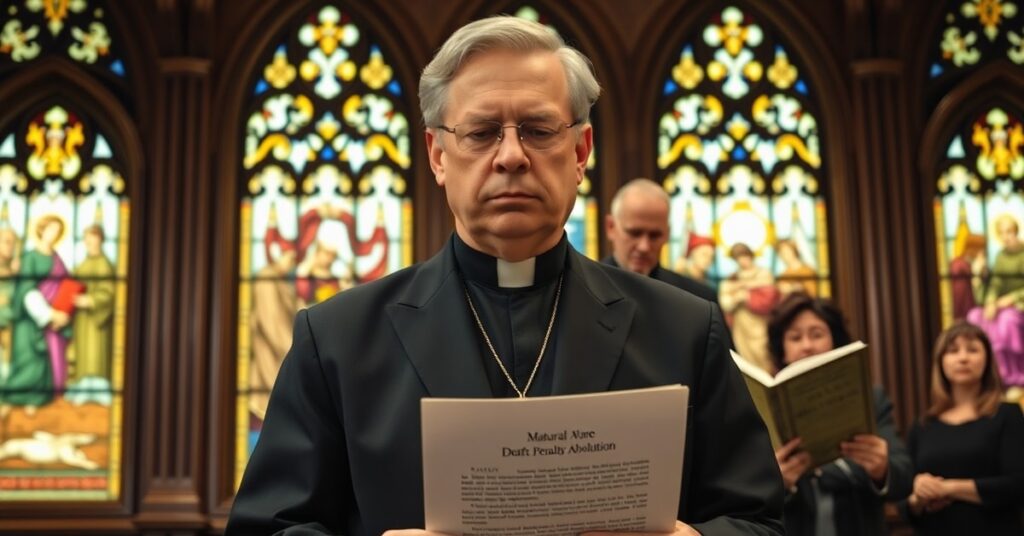
A solemn Catholic church interior with clergy in traditional attire and concerned faithful, highlighting the cover-up of clerical abuse scandals.
Antichurch

Secular Courts, Neo-Church Complicity, and the Ongoing Cover-Up of Clerical Predators

EWTN News reports that a New Jersey appeals court has ruled Seton Hall University need not fully disclose the “Latham report,” an internal investigation into its handling of sex abuse allegations tied to the disgraced Theodore McCarrick. The decision, handed down on June 15, 2026, shields the bulk of the report behind attorney-client privilege, allowing the university—and by extension, the structures occupying the Vatican—to continue obscuring the full extent of institutional complicity in the systematic protection of clerical predators. This ruling is not an anomaly; it is the predictable fruit of a post-conciliar system that has consistently prioritized institutional self-preservation over the protection of souls and the administration of true justice.

Antichurch

Eucharistic Revival or Eucharistic Deception? The Neo-Church’s Banquet Without Sacrifice

National Catholic Register portal reports on a new book by Dominican “Father” Patrick Mary Briscoe, *O Sacred Banquet: Exploring the Eucharistic Mystery with Saint Thomas Aquinas* (Our Sunday Visitor, 2026), which promotes the post-conciliar “Eucharistic Revival” centered on St. Thomas Aquinas’ prayer *O Sacrum Convivium*. The article presents the Eucharist as a “banquet” of “fellowship and friendship,” emphasizing “communion,” “processions,” and “adoration” while systematically omitting the propitiatory sacrifice, the reality of transubstantiation as defined by the Council of Trent, and the necessity of the priestly offering for the remission of sins. This is not a revival of Catholic faith but a modernist reimagining of the Most Holy Sacrifice, stripping it of its sacrificial character and reducing it to a communal meal of emotional experience—precisely the error condemned by Pope St. Pius X in *Pascendi Dominici gregis* and the Council of Trent.

Antichurch

Poland’s Vocations Collapse Exposes the Spiritual Bankruptcy of the Conciliar Sect

The Pillar Catholic portal reports that Poland — long hailed as Europe’s bastion of Catholic vitality — will see fewer than 200 priestly ordinations in 2026 for the first time this century, with only 196 candidates scheduled (130 diocesan, 66 religious). This continues a relentless decline from 208 in 2025 and 235 in 2024. The Archdiocese of Kraków, once a vocations powerhouse under St. John Paul II, will ordain only four priests, down from seven in 2025 and thirteen in 2024. Seven of Poland’s 42 Latin Catholic dioceses will have zero ordinations. The total number of diocesan priests nationwide fell 6.4% between 2018 and 2024, from 24,876 to 23,274. Fr. Jan Frąckowiak, a seminary rector, attributed the collapse to “demographic decline, a lower proportion of believers and practicing Catholics in society, and a reduced ability among the younger generation to make definitive commitments.” Poland’s fertility rate plummeted to 1.068 in 2025, far below replacement level. This catastrophic implosion of vocations in the most “Catholic” country in Europe is not a mystery to be explained by sociology — it is the entirely predictable, divinely permitted fruit of fifty years of conciliar apostasy, liturgical destruction, and doctrinal betrayal.

Portrait of St. John Francis Regis praying in a church with poor souls seeking confession, contrasting with a modern gambling app on a smartphone.
Spiritual

St. John Francis Regis and the Gambling Epidemic: A Call to True Repentance

The Pillar Catholic portal reports on the life of St. John Francis Regis, a 17th-century Jesuit missionary, while also touching upon various contemporary news items, including a significant commentary on the pervasive issue of sports gambling and its societal impact. The article, by JD Flynn, presents St. Regis as a model of priestly zeal and self-sacrifice, particularly in his work among the poor and his efforts to counter Protestantism. However, a critical examination reveals that even within such narratives, the pervasive influence of modernism and a naturalistic worldview can subtly distort the true spiritual lessons, especially when contrasted with the unchanging Catholic doctrine on vice, repentance, and the supernatural mission of the Church.

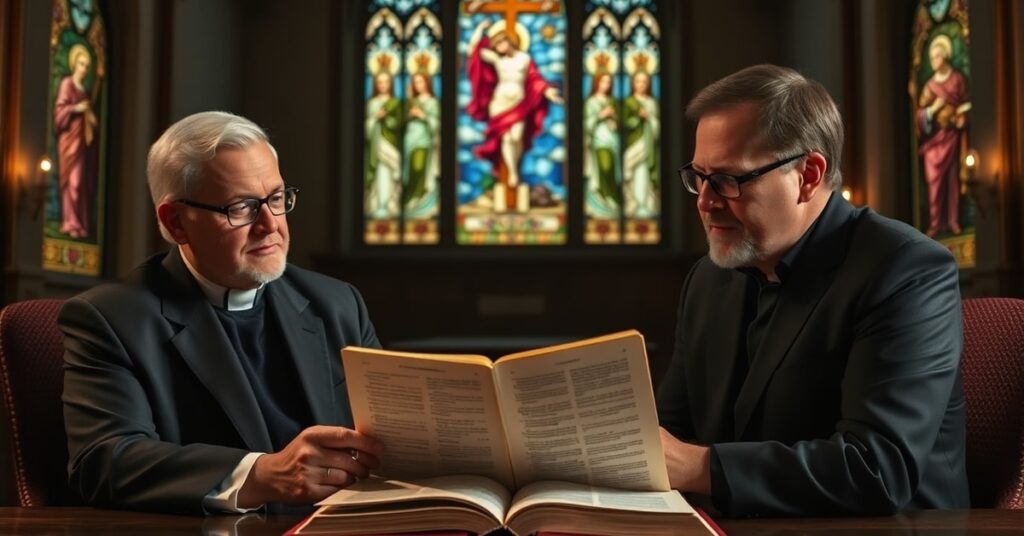
Dr. Scott Powell and JD Flynn of Pillar Catholic discussing Jeremiah's suffering in a traditional study with stained glass depicting Jeremiah and Christ.
Antichurch

The Weeping Prophet and the Door Keeper: A Study in Conciliar Hermeneutical Bankruptcy

The Pillar Catholic portal presents another episode of its “Sunday School” podcast series, featuring JD Flynn and Dr. Scott Powell discussing the readings for the Twelfth Sunday in Ordinary Time (Year A). The episode, titled “The Weeping Prophet and the Door Keeper,” examines Jeremiah 20:10-13, Psalm 69, Romans 5:12-15, and Matthew 10:26-33. While the surface-level discussion appears innocuous, the very framework of analysis employed by these conciliar commentators reveals the fundamental theological impoverishment of the post-conciliar approach to Sacred Scripture—an approach that systematically evacuates the supernatural content of the liturgical readings in favor of psychological self-help and naturalistic moralism.

Antichurch

Mary’s ‘Yes’ as Antidote to AI: A Modernist Distortion of Marian Devotion

National Catholic Register portal reports that Professor Mark Miravalle, a prominent Mariologist in the conciliar sect, discusses the Marian dimension of the encyclical Magnifica Humanitas by the antipope Leo XIV, framing Mary’s “fiat” as a spiritual corrective to the challenges posed by artificial intelligence. The article presents Mary as the model of authentic humanity whose obedience to God contrasts with the dehumanizing tendencies of AI, echoing themes from the International Theological Commission’s document Quo Vadis, Humanitas?. While the piece attempts to link Marian devotion with contemporary technological anxieties, it operates entirely within the framework of post-conciliar modernism, reducing the supernatural reality of the Incarnation and the Church’s social teaching to a humanistic response to secular threats, thereby obscuring the true sources of the crisis: the abandonment of integral Catholic doctrine and the reign of Christ the King.

Antichurch

Papal Addresses to Parliaments: From Diplomatic Courtesy to Modernist Apostasy

The National Catholic Register portal reports on the historical phenomenon of Roman pontiffs addressing secular legislative assemblies, from Paul VI’s 1965 UN speech to Leo XIV’s June 2026 address to the Spanish Parliament. The article presents these addresses as opportunities for popes to “challenge leaders on life, economics, and migration,” framing them within a narrative of papal engagement with the modern world. What this narrative conceals is the progressive transformation of the papal office from a guardian of supernatural truth into a humanitarian lobbyist for the world’s agenda.

Antichurch

Environmentalism as Faith: Leo XIV’s Reduction of Christianity to Secular Activism

The National Catholic Register (June 16, 2026) reports that Pope Leo XIV, in a video message to the Austrian World Summit in Vienna, declared that care for the environment is a “requirement of faith,” quoting Francis’ encyclical Laudato Si’ and calling for international cooperation, financial redistribution from wealthy to poor nations, and a “culture of care” rooted in what he termed “civic and political love.” The summit, an annual gathering focused on climate, sustainability, and environmental policy, provided the stage for this address, which framed ecological concern as inseparable from Christian virtue and called for a “new person-centered international financial framework.” The article presents these statements as a natural extension of Catholic social teaching, without questioning their theological foundations or their alignment with the Church’s immutable doctrine. This address is not a pastoral exhortation rooted in supernatural faith but a manifesto of secularized naturalism dressed in theological vestments — the logical fruit of the conciliar revolution’s capitulation to the spirit of the world.

Scroll to Top
Antichurch.org
Privacy Overview

This website uses cookies so that we can provide you with the best user experience possible. Cookie information is stored in your browser and performs functions such as recognising you when you return to our website and helping our team to understand which sections of the website you find most interesting and useful.