2026

Antichurch

Martyrs of Unity: The Antipope’s Barcelona Sermon and the Erasure of True Martyrdom

The National Catholic Register reports that on June 9, 2026, the usurper Robert Prevost, styling himself “Pope Leo XIV,” delivered a homily in Barcelona’s Cathedral of the Holy Cross and St. Eulalia, calling the faithful to become “martyrs of unity.” The event, saturated with the aesthetics of post-conciliar spectacle, reveals the theological bankruptcy of the neo-church and its systematic distortion of Catholic doctrine. This address, framed by political controversy over the Catalan language and steeped in the rhetoric of “communion,” is not a call to holiness but a summons to surrender the Faith to the spirit of the world.

Antichurch

Humanitarian Aid as Camouflage: The CNEWA’s Naturalistic Mission in a World Rejecting Christ the King

The National Catholic Register reports on Monsignor Peter Vaccari, president of the Catholic Near East Welfare Association (CNEWA), describing his visit to Jerusalem amid Iranian missile attacks and rising humanitarian needs. Vaccari emphasizes the organization’s on-the-ground presence, providing material aid (food, water, medicine) and psychosocial support, working with local Church partners. The article presents CNEWA’s mission as a charitable response to conflict, highlighting the disruption of daily life and the Church’s visible presence among suffering communities. This seemingly benign humanitarian narrative, however, reveals a profound spiritual bankruptcy and a systematic omission of the only true remedy for the world’s ills: the Social Reign of Jesus Christ.

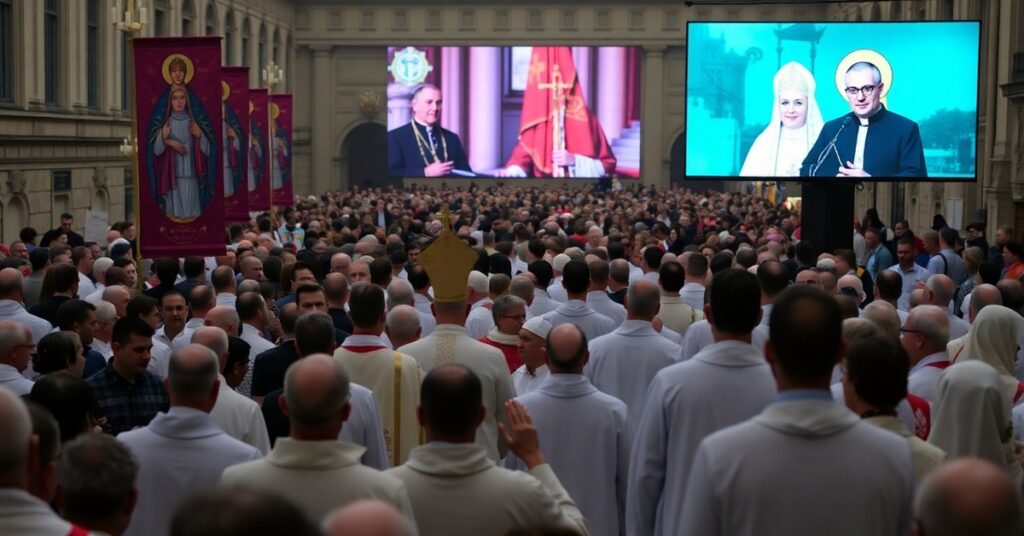
A solemn Eucharistic procession in Vilnius during a neo-church congress on mercy, featuring modernist clergy and ecumenical gestures.
Antichurch

Vilnius Mercy Congress: Neo-Church’s Ecumenical Spectacle Masks Apostasy

EWTN News portal reports that on June 7, 2026, the sixth World Apostolic Congress on Mercy opened in Vilnius, Lithuania, drawing approximately 7,000 pilgrims from over 50 countries. The event, held at sites associated with St. Faustina Kowalska—a figure whose revelations were condemned by the Holy Office and placed on the Index of Forbidden Books—featured a Eucharistic procession, addresses by Lithuanian President Gitanas Nausėda, and a video message from the current usurper of Peter’s throne, Leo XIV. The congress culminated in an ecumenical gesture: Leo XIV extended greetings to Patriarch Bartholomew I of Constantinople, spiritual leader of the schismatic Eastern Orthodox Church, while Archbishop Gintaras Grušas framed the event as a call to “build a city of mercy” through forgiveness, solidarity, and unity of truth with charity. This entire spectacle, draped in the language of compassion and renewal, is not a revival of Catholic life but a carefully orchestrated performance by the conciliar sect to advance its agenda of religious indifferentism, naturalistic humanism, and the systematic erasure of the supernatural mission of the Church.

Antichurch

Leo XIV’s Slavery Apology: Modernist Revisionism Masquerading as Virtue

The National Catholic Register portal reports that the current usurper on Peter’s throne, Leo XIV (Robert Francis Prevost), issued his encyclical *Magnifica Humanitas* on May 15, 2026, in which he apologized for the Catholic Church’s historical role in slavery, citing papal bulls from the 1400s—specifically Pope Eugenius IV’s *Sicut Dudum* and *Etsi Suscepti*, and Pope Nicholas V’s *Dum Diversas* and *Romanus Pontifex*—as examples of when the Holy See “sought to regulate and legitimize” subjugation. The encyclical frames this as a “development of doctrine,” claiming the Church “gradually came to a deeper awareness of the gravity of these issues.” Tom Nash, a staff apologist for Catholic Answers, is quoted defending these statements as consistent with prior magisterial teaching and not representing a change in doctrine. This entire enterprise is a textbook example of the modernist heresy condemned by St. Pius X: the notion that doctrine “evolves” over time, that past popes taught erroneously, and that the Church must apologize for her own sacred history—all while the conciliar sect continues its relentless campaign of self-destruction under the guise of “reform.”

Antichurch

The Usurper in Barcelona: A Martyrdom Without the Cross

EWTN News portal reports that on June 9, 2026, the usurper Robert Prevost, known as “Pope Leo XIV,” delivered a homily in Barcelona’s cathedral, calling the faithful to be “martyrs of unity, welcome, harmony, and peace.” This address, filled with the language of false ecumenism and naturalistic humanism, is a direct assault on the true meaning of martyrdom and the exclusive salvific mission of the Catholic Church, revealing the deep-seated modernist apostasy that has consumed the conciliar sect.

Antichurch

The Neo-Church’s “Unity” Is a Denial of Catholic Truth

Vatican News portal reports on the visit of the antipope Leo XIV to Barcelona, where he presided over midday prayer at the city’s Cathedral of the Holy Cross and Saint Eulalia. In his homily, delivered in a mixture of Spanish and Catalan, the usurper invited the faithful to be “witnesses and prophets of unity” in a divided world, employing the images of the Bride and the Body. He emphasized the Church as a “Beloved Bride” and stressed that “we are strong because we are united, and we are united because we are animated by the same Spirit.” The article presents this as a call for Christians to be “martyrs” of unity, welcome, harmony, and peace. This entire spectacle is yet another manifestation of the post-conciliar apostasy, where the true Catholic understanding of unity—rooted in the one true Faith and submission to Christ the King—is replaced by a naturalistic, ecumenical, and modernist notion that serves the agenda of the Antichurch.

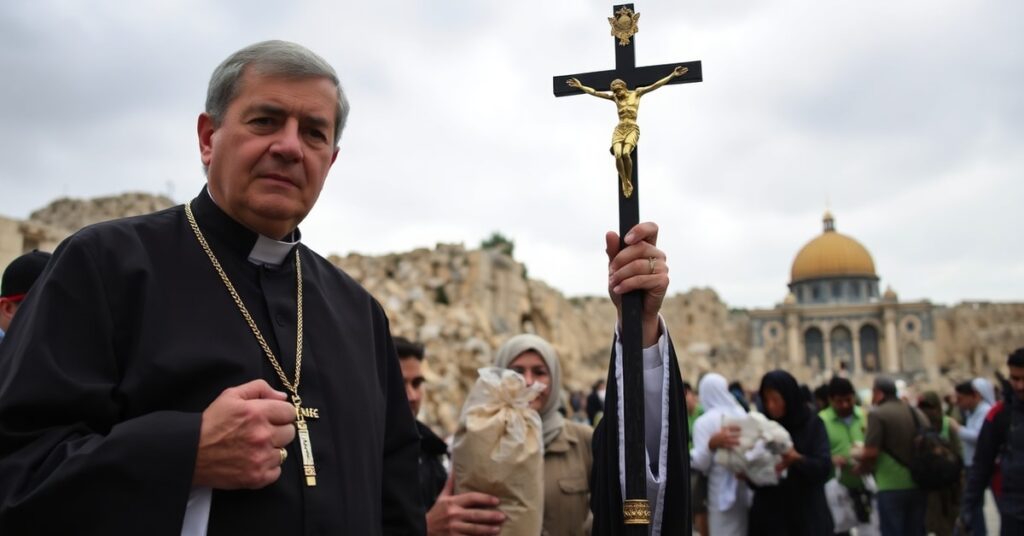
A reverent depiction of a priest in Jerusalem ruins, surrounded by suffering people and CNEWA aid workers distributing material aid, symbolizing the conciliar church's reduction of charity to mere humanitarianism without supernatural elements.
Antichurch

Humanitarian Aid Without the Supernatural: The Conciliar Church’s Reduction of Charity to Mere Materialism

EWTN News Nightly reports on Monsignor Peter Vaccari, president of the Catholic Near East Welfare Association (CNEWA), describing the escalating humanitarian crisis in Jerusalem and the broader Middle East following Iranian missile attacks. Vaccari, speaking from Jerusalem on June 8, 2026, detailed sirens, lockdowns, and the disruption of daily life, while emphasizing CNEWA’s material relief efforts—food, water, medicine, and psychosocial support. What is conspicuously absent from this entire report is any mention of the supernatural mission of the Church, the necessity of conversion, the reality of sin as the root cause of war, or the salvific power of the Most Holy Sacrifice of the Mass. This omission is not accidental; it is the inevitable fruit of the conciliar revolution, which has reduced the Church’s mission to that of a mere humanitarian NGO, indistinguishable from the works of secular agencies or even Masonic philanthropy.

Antichurch

The “Royal Identity” of Christians Without Christ the King

Pillar Catholic portal reports on a June 9, 2026, episode of the “Sunday School” podcast, featuring Dr. Scott Powell, JD Flynn, and Kate Olivera, discussing the Eleventh Sunday in Ordinary Time readings (Exodus 19:2-6a, Romans 5:6-11, Matthew 9:36-10:8). The episode, titled “Kings, queens, and mighty deeds,” focuses on “God’s efforts to build Israel into a nation and St. Paul’s call for Christians in Rome to remember their royal identity.” This seemingly innocuous discussion, however, reveals a profound theological void at the heart of post-conciliar catechesis: the complete omission of the doctrine of Christ the King and His public reign over nations, reducing “royalty” to a purely individualistic and spiritualized metaphor, thereby stripping the Faith of its social and political implications and aligning with the modernist error of separating the spiritual from the temporal.

Antichurch

The Usurper’s Empty Gesture: Exposing the Modernist Apology for Slavery as Historical Revisionism and Doctrinal Subversion

EWTN News reports that the usurper Robert Prevost, styling himself “Pope Leo XIV,” issued an encyclical titled *Magnifica Humanitas* in which he apologized for the Catholic Church’s historical role in slavery, specifically critiquing papal bulls from the 15th century issued by Popes Eugenius IV and Nicholas V. The article explains that while the Church never doctrinally taught slavery was morally good, certain popes “intervened several times in order to regulate and legitimize forms of subjugation” at the request of political leaders. The usurper wrote: “Political and, at times, even economic needs overcame the demands of the Gospel.” The article further notes that a “formal, absolute, and universal condemnation of slavery” was not issued until Pope Leo XIII’s 1888 encyclical, and that Leo XIV added that “we [cannot] deny or diminish” the Church’s delay in its denouncement. Catholic Answers apologist Tom Nash defended the Church by arguing that the bulls in question were not infallible doctrinal pronouncements but rather “prudential judgments” applicable only to specific historical circumstances, and that the Church has never definitively taught that chattel slavery was morally just. The article also references earlier papal condemnations of slavery, including Pope Paul III’s 1537 bull *Sublimis Deus*, Pope Gregory XVI’s 1839 brief *In Supremo Apostolatus*, and St. John Paul II’s apologies for Christian participation in slavery. The article concludes by noting that Christian opposition to slavery is rooted in the teachings of Jesus Christ and the inherent dignity of every human person. This article, far from being a simple historical reflection, is a masterclass in modernist revisionism, historical manipulation, and the systematic undermining of the Church’s doctrinal authority—all hallmarks of the conciliar sect’s ongoing apostasy.

Scroll to Top
Antichurch.org
Privacy Overview

This website uses cookies so that we can provide you with the best user experience possible. Cookie information is stored in your browser and performs functions such as recognising you when you return to our website and helping our team to understand which sections of the website you find most interesting and useful.