Antipope Leo XIV Consecrates Americanist Masonic Myth in ‘Eucharistic Pilgrimage’ Farce
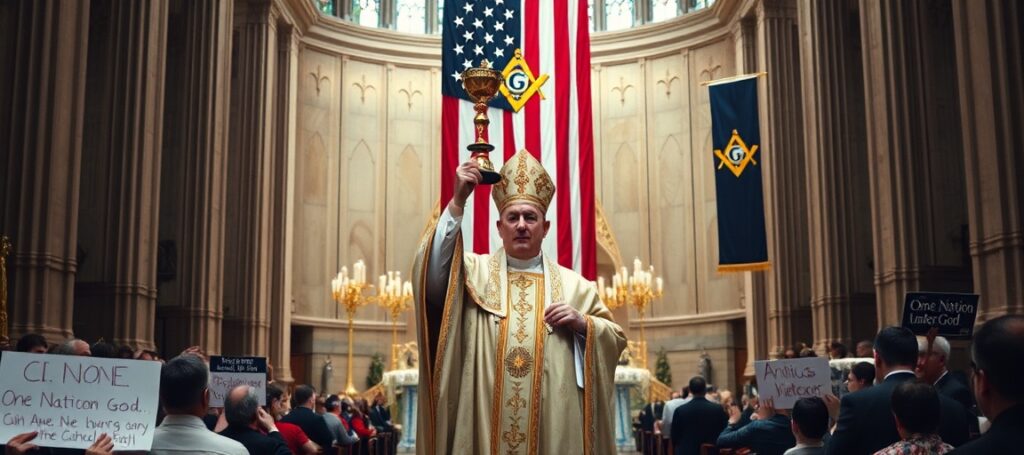
The CNA portal reports that the usurper “Pope” Leo XIV (Robert Prevost) addressed a video message to the concluding “Mass” of the 2026 National Eucharistic Pilgrimage in Philadelphia on July 5, praising the event as a “great legacy of faith” tied to the United States’ 250th anniversary. The pilgrimage, branded with the Masonic slogan “One Nation, Under God,” traced a route through the original thirteen colonies that rebelled against the British Crown in 1776. The antipope cited a 1583 Mass of Thanksgiving in St. Augustine, Florida, to fabricate a “strong Eucharistic heritage” for the Masonic republic, invoking post-conciliar “saints” Elizabeth Ann Seton, Katharine Drexel, and Kateri Tekakwitha as fruits of this heritage. He urged pilgrims to cultivate a “Eucharistic life” in their families and communities as strength for “charitable service to the wider society.” This spectacle is not a Catholic act of worship but the solemn canonization of Americanism, the synthesis of all heresies condemned by Leo XIII, by the very antipope who personifies the abomination of desolation standing in the holy place.