Author name: amdg

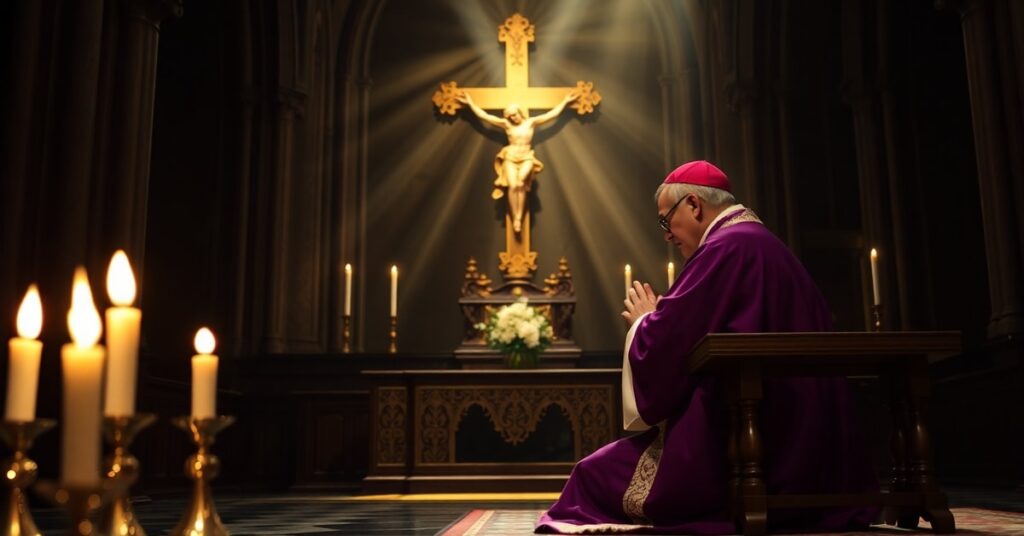
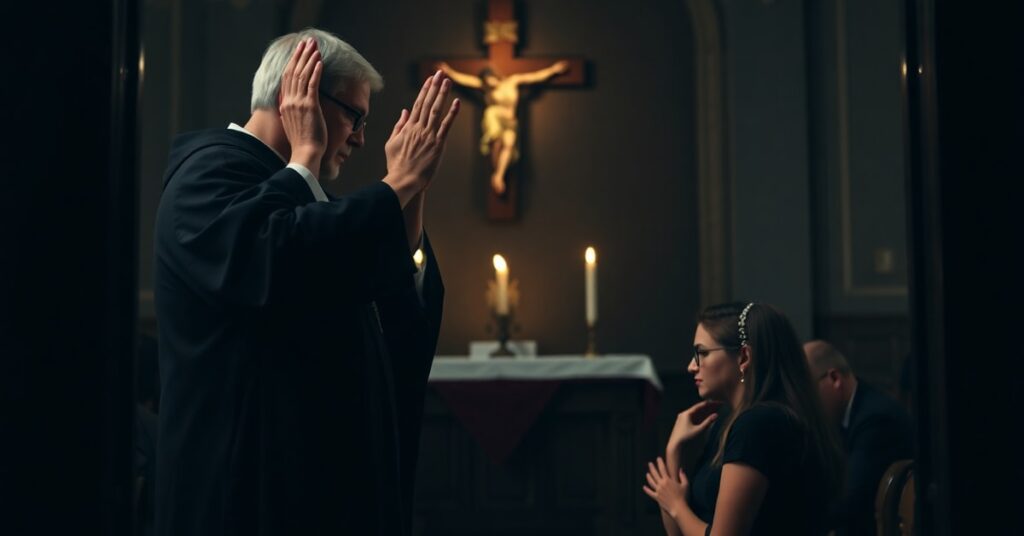
Catholic priest praying solemnly in a church, symbolizing the abomination of mail-order chemical abortions and the spiritual decay of the modern world.
Spiritual

The Abomination of Mail-Order Death: Chemical Abortion and the Apostasy of the Conciliar Sect

The National Catholic Register reports that the U.S. Supreme Court has temporarily paused a lower court order that would have reinstated in-person dispensation requirements for the chemical abortion drug mifepristone, thereby continuing the policy of mail-order abortion pills that was expanded during the COVID-19 pandemic. The 5th Circuit Court of Appeals had ruled that the FDA’s mail-order policy undermined Louisiana state law, but Justice Samuel Alito issued an administrative stay while the full Court considers the matter. The article quotes various pro-life activists and organizations lamenting the situation, calling for enforcement of the Comstock Act and criticizing the Trump administration for failing to act. Chemical abortions now account for 63% of all U.S. abortions, and multiple studies cited in the article point to severe health risks for women and high complication rates.

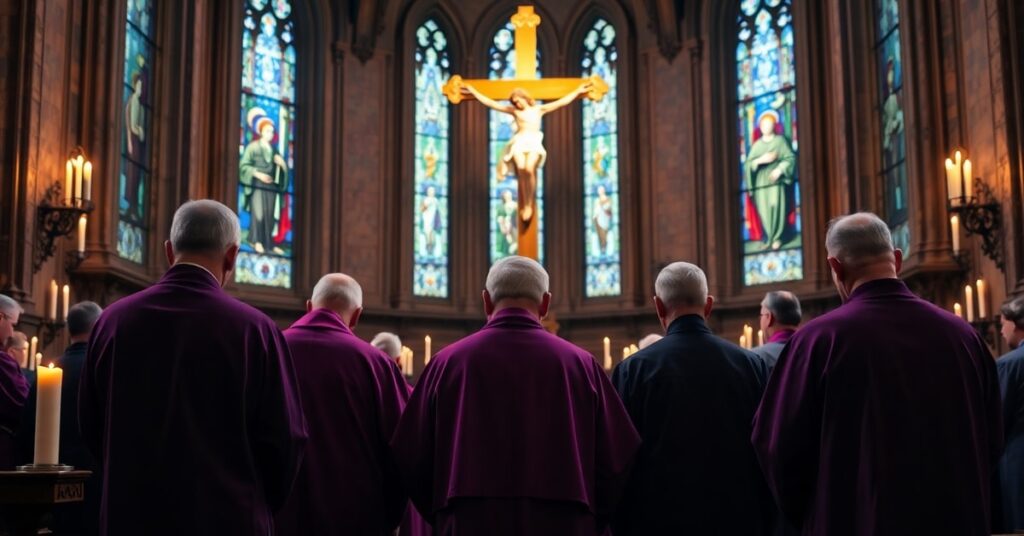
A solemn image of monks praying in the Holy Land as Christian families depart, symbolizing the decline of Christianity in the region.
World

The Holy Land’s Christian Exodus: A Symptom of Civilizational Apostasy

The EWTN News portal reports on the dramatic decline of Christians in the Holy Land, now comprising barely 2% of the population, down from 20% in 1948. Benedictine Abbot Nikodemus Schnabel, interviewed by Aid to the Church in Need (ACN), warns that the region risks becoming a “Christian Disneyland”—holy sites preserved as tourist attractions devoid of any living Christian presence. He identifies war, economic crisis, housing shortages, and unemployment as the principal drivers of this exodus, affecting Arabic-speaking Palestinian Catholics, Hebrew-speaking Catholic families, and migrant workers alike. The abbot’s plea—”Pray that there is a future for Christians here”—coupled with the claim that the Church is “neither pro-Israel nor pro-Palestine, but pro-human,” reveals a posture of studied neutrality that abandons the Church’s divine mandate to proclaim the universal kingship of Christ over all nations and peoples. This article, while lamenting the demographic catastrophe, remains entirely silent about the supernatural causes of this collapse and the theological bankruptcy of the post-conciliar Church’s approach to the Holy Land.

Traditional Catholic liturgy in a historic basilica with a priest at the altar and kneeling faithful, contrasted with digital AI interfaces symbolizing the neo-church's focus on artificial intelligence.
Antichurch

The Neo-Church’s Digital Idolatry: AI Ethics as a Substitute for the Reign of Christ the King

The National Catholic Register reports that DePaul University hosted a conference on April 30–May 1, 2026, titled “Pope Leo XIV: From the Americas, For the World,” where Jesuit Father Philip Larrey discussed the usurper antipope’s approach to artificial intelligence. Larrey praised Leo XIV’s “fresh” and “humane” take on AI, emphasizing that “machines do not have a soul” and that only God can create one. The conference, organized by DePaul’s Center for World Catholicism and Intercultural Theology, framed AI as a pressing ethical concern for the conciliar sect, with Larrey warning that AI threatens to “alter radically some of the fundamental pillars of human civilization.” This entire discourse, however, reveals the profound spiritual bankruptcy of post-conciliarism: while the neo-church obsesses over the ethics of digital machines, it has abandoned the immutable Catholic doctrine of the soul, the supernatural order, and the social reign of Christ the King—replacing them with a naturalistic humanism dressed in theological vestments.

A solemn Catholic priest in traditional vestments stands in a dimly lit church, gazing at an empty confessional booth with concern as a faint psychedelic swirl subtly infiltrates the sacred space.
Antichurch

Psychedelic “Healing”: The Conciliar Church’s Embrace of Pharmacological Occultism

The National Catholic Register (May 4, 2026) reports that “Catholic” mental health professionals have largely welcomed President Trump’s executive order accelerating research into and potential approval of psychedelic drugs — including ibogaine, psilocybin, LSD, DMT, and mescaline — for the treatment of serious mental illness, depression, PTSD, and opioid addiction. The article quotes psychologist Greg Bottaro, psychiatrist Justin Hendricks, and Catholic Psychotherapy Association president-elect Terry Braciszewski, all of whom express cautious or enthusiastic support for these substances, framing them within the language of “Catholic anthropology,” “stewardship of the temple of the body,” and “neurochemical healing.” The executive order itself acknowledges that over 14 million American adults now suffer from serious mental illness and that existing therapies have failed. What the article systematically omits — and what the quoted “Catholic” professionals cannot or will not articulate — is that the Church’s moral theology, her teaching on the integrity of the human person, her warnings against the occult, and her understanding of suffering and mental illness render this entire project not merely dangerous but intrinsically evil, a pharmacological recapitulation of the ancient serpent’s promise: “Eritis sicut dii” — “You shall be as gods.”

A Catholic bishop in traditional vestments stands in a church, emphasizing the importance of supernatural remedies over secular therapy for mental health.
Antichurch

Bishop Chylinski’s Mental Health Message: A Symptomatic Omission of the Supernatural

The National Catholic Register reports that Auxiliary Bishop Keith Chylinski of Philadelphia, in a video message for the U.S. Conference of Catholic Bishops (USCCB) marking Mental Health Awareness Month, urged the faithful to reject stigma around mental health, stating that God “wants us to be healthy mind, body, and soul” and that “in Christ there is always hope.” Bishop Chylinski, who studied clinical psychology, praised advances in medical science and psychotherapy over the past 50 years, encouraging those struggling to seek resources and asserting that “there is no shame in asking for help.” The message emphasizes the interconnection of spiritual, physical, and mental well-being, but conspicuously reduces the Church’s supernatural mission to a therapeutic support system, omitting any mention of sin, grace, sacraments, or the eternal destiny of the soul.

Father Larry Holland in hospital bed holding rosary, rejecting euthanasia offer from nurse in Vancouver General Hospital.
Antichurch

A Priest Offered Death as “Compassion”: Canada’s Euthanasia Regime and the Conciliar Church’s Silence on the Fifth Commandment

National Catholic Register portal reports on Father Larry Holland, a 79-year-old Vancouver priest recovering from a hip fracture at Vancouver General Hospital, who was twice offered Medical Assistance in Dying (MAID) by healthcare staff who knew he was a Catholic priest and morally opposed to euthanasia. The article details the growing normalization of euthanasia in Canada—now approaching 100,000 assisted deaths—and the increasing institutional pressure on medical professionals to proactively initiate MAID discussions with vulnerable patients, including those with strong religious objections. While the article presents the incident as shocking and highlights the priest’s resistance, it fails to anchor its critique in the immutable moral theology of the pre-conciliar Church, instead framing the issue through the lens of “coercion” and “sensitivity” rather than the absolute, divinely revealed prohibition against the direct killing of the innocent—a silence that reveals the conciliar Church’s own complicity in the culture of death it claims to oppose.

A solemn conference at DePaul University discussing AI ethics under Pope Leo XIV's leadership, contrasting worldly concerns with Catholic tradition.
Antichurch

The Neo-Church’s Digital Idolatry: How Leo XIV and Jesuit Scholars Reduce the Faith to a Debate About Machines

EWTN News reports that DePaul University hosted a conference titled “Pope Leo XIV: From the Americas, For the World,” where Jesuit Father Philip Larrey praised the antipope’s “fresh” and “humane” approach to artificial intelligence, emphasizing that “machines do not have soul” and that only God can create one. This entire spectacle reveals the conciliar sect’s characteristic obsession with temporal, technological, and worldly concerns while remaining silent on the true crises of faith, the apostasy of the post-conciliar hierarchy, and the eternal salvation of souls.

A priest in a traditional confessional listening to a penitent's confession, symbolizing spiritual healing and the Catholic approach to mental health.
World

Psychedelic “Therapy” and the Catholic Soul: A Dangerous Naivety

EWTN News reports on Catholic mental health professionals welcoming the Trump administration’s executive order to accelerate research and access to psychedelic drugs for mental illness, while urging “caution.” The article presents a hopeful outlook on substances like ibogaine and psilocybin, highlighting their potential to “rewire” neural pathways and offer “real healing” for conditions like depression and PTSD. While acknowledging potential dangers, the professionals emphasize the need for “protective factors” and “Catholic anthropology” to guide treatment, viewing these substances as tools for “stewardship over our life” and “maintaining the temple of our body.” This approach, however, fundamentally misunderstands the nature of the human person, the etiology of suffering, and the Church’s timeless teaching on the integrity of the soul and the dangers of altering consciousness outside of strictly controlled medical necessity. The enthusiasm for such “innovative methods” reflects a capitulation to a materialistic, reductionist view of the human person, neglecting the primacy of the spiritual and the profound risks posed to the soul by substances known to induce altered states of consciousness and ego dissolution.

Antichurch

Bishop Chylinski Reduces Catholic Pastoral Care to Secular Therapeutic Accompaniment

EWTN News reports that Auxiliary Bishop Keith Chylinski of Philadelphia, in a video message for Mental Health Awareness Month, urged the faithful to reject “stigma” around mental health, stating that God “wants us to be healthy mind, body, and soul” and praising advances in medical science and psychotherapy over the past 50 years, while encouraging those struggling to seek resources offered by the Church. The message, while superficially appealing to compassion, is a textbook example of the post-conciliar neo-church’s capitulation to secular psychologism, reducing the supernatural order of grace and the salvific power of the Most Holy Sacrifice of the Mass to a therapeutic model of “well-being,” thereby obscuring the reality of sin, the necessity of the sacraments, and the absolute primacy of the soul’s eternal salvation over temporal psychological comfort.

Scroll to Top
Antichurch.org
Privacy Overview

This website uses cookies so that we can provide you with the best user experience possible. Cookie information is stored in your browser and performs functions such as recognising you when you return to our website and helping our team to understand which sections of the website you find most interesting and useful.