Archbishop Coakley’s Presidential Address: A Masterclass in Modernist Evasion and the Abdication of Catholic Truth
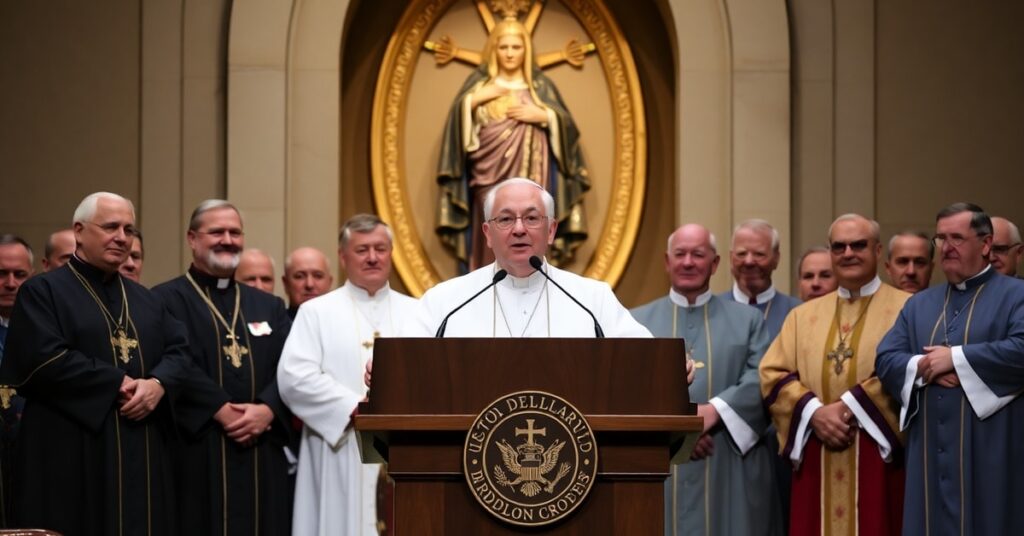
The National Catholic Register reports on June 10, 2026, from Orlando, Florida, that Archbishop Paul S. Coakley, president of the United States Conference of Catholic Bishops (USCCB), delivered his first presidential remarks at the spring plenary session. His address, ostensibly outlining the “successes” and “challenges” facing the U.S. bishops, is a textbook example of the conciliar sect’s characteristic evasion of doctrinal clarity, its embrace of naturalistic humanism, and its systematic silence on the true spiritual crises of our age. While Coakley speaks of “hope,” “human dignity,” and “dialogue,” he conspicuously omits any mention of the Church’s primary mission: the salvation of souls through the preaching of the Gospel, the administration of the sacraments, and the uncompromising defense of immutable Catholic truth against the ravages of modernism and apostasy. His address, far from being a beacon of Catholic leadership, is a testament to the spiritual bankruptcy of the post-conciliar structures.