Author name: amdg

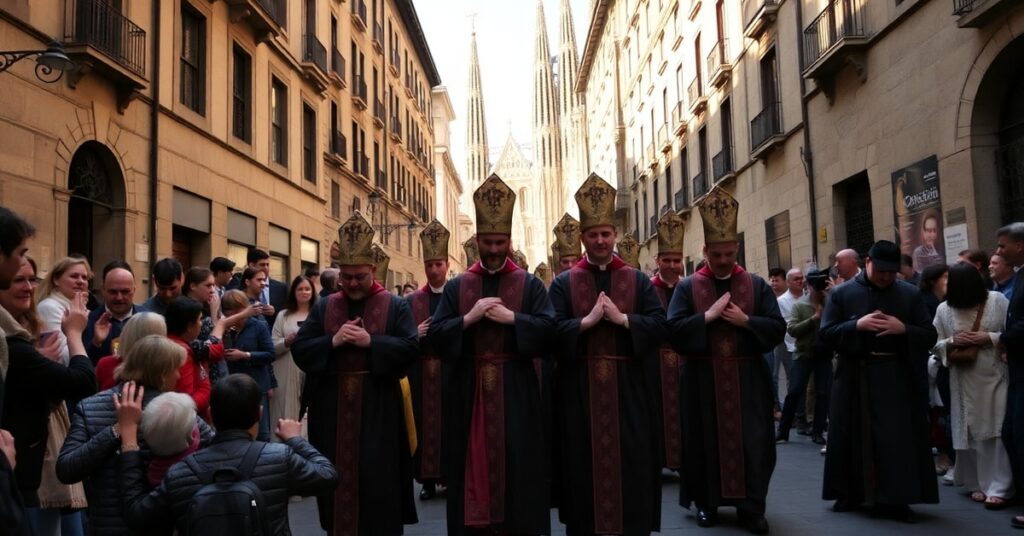
African bishops in traditional ecclesiastical attire gathered in Nairobi's St. Mary's Cathedral discussing secular governance themes, with youth delegates in the background.
Antichurch

Synodality and Secular Governance Replace Evangelization in African Bishops’ Gathering

Vatican News portal reports on April 15, 2026, that Kenya is preparing to host the 21st Plenary Assembly of the Association of Member Episcopal Conferences of Eastern Africa (AMECEA), scheduled for July 17–26, 2026, in Nairobi. The gathering will bring together bishops from Sudan, South Sudan, Ethiopia, Eritrea, Uganda, Kenya, Tanzania, Malawi, Zambia, Djibouti, and Somalia under the theme: “Building Bridges of Communion, Hope, Justice, and Good Governance.” Archbishop Maurice Muhatia Makumba, Chairman of the Kenya Conference of Catholic Bishops, described the event as “a moment of grace,” while AMECEA President Bishop Charles Kasonde of Zambia emphasized responding to youth aspirations for “justice, accountability, and hope.” The assembly will include bishops, priests, religious, youth delegates, and Catholic professionals, with particular emphasis on youth engagement in ecclesial processes. This gathering exemplifies the post-conciliar Church’s systematic replacement of supernatural evangelization with naturalistic social activism, reducing the Church’s divine mission to a bureaucratic exercise in secular governance and interreligious dialogue.

A solemn image depicting the usurper Robert Prevost, known as 'Pope Leo XIV,' being greeted by Cameroonian authorities during his fraudulent apostolic journey.
Antichurch

Leo XIV’s African Pilgrimage: A Parade of Heresy Under the Guise of Apostolic Mission

VaticanNews portal reports on April 15, 2026, that the usurper Robert Prevost, styling himself “Pope Leo XIV,” landed in Yaoundé, Cameroon, as part of his so-called “apostolic journey” through Algeria, Cameroon, Angola, and Equatorial Guinea. The article describes a ceremonial welcome involving state anthems, meetings with political authorities including Prime Minister Joseph Dion Ngute and President Paul Barthélemy Biya, a visit to an orphanage, and a private audience with Cameroonian bishops. This entire spectacle is presented as a pastoral mission, yet it is nothing but a choreographed performance of the conciliar sect’s apostate agenda—substituting the supernatural mission of the Church with naturalistic humanitarianism, political legitimization of heretical regimes, and the perpetuation of a counterfeit ecclesiology that denies the true Kingship of Christ over all nations.

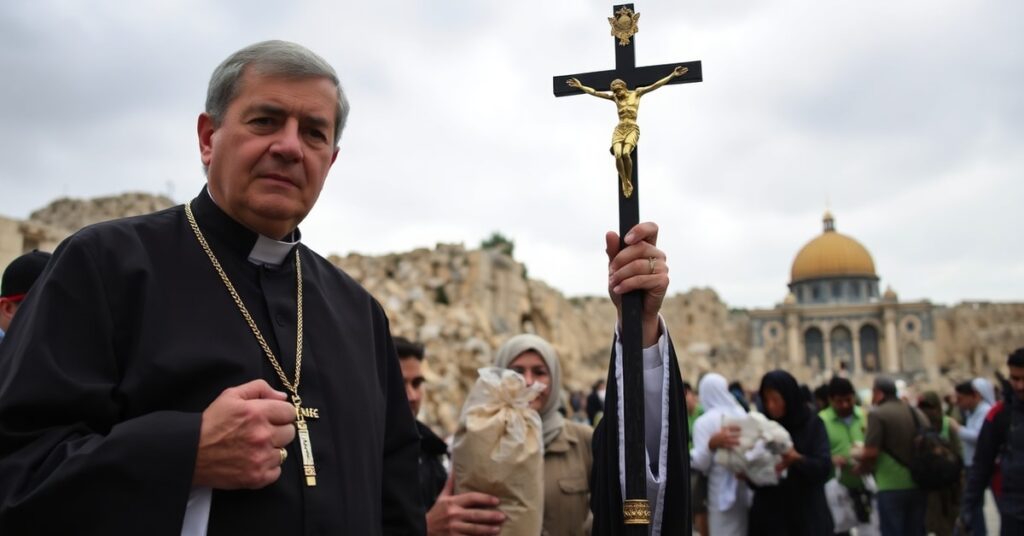
Sedevacantist priest in traditional attire praying before a crucifix in a solemn church setting.
Antichurch

The Conciliar Sect Reduces Priestly Vocation to Psychological Self-Help

EWTN News reports on Cardinal Jose Advincula of Manila warning of a “mental health crisis” among Filipino priests, with two clergy members sharing stories of addiction and burnout, all framed within the post-conciliar paradigm of psychological therapy, “self-care,” and the cult of human vulnerability — a framework that systematically obscures the supernatural reality of the priestly vocation, the necessity of mortification, and the true sources of spiritual desolation.

Antipope Robert Prevost (Leo XIV) during an interfaith meeting in Algeria, 2026.
Antichurch

Leo XIV’s Algerian Pilgrimage: Building Bridges to Nowhere

VaticanNews portal reports on April 15, 2026, that the usurper Robert Prevost, styling himself “Pope Leo XIV,” reflected aboard the papal plane on his apostolic journey to Algeria, calling it a “special blessing” and a “wonderful opportunity to continue to build bridges and promote dialogue.” The so-called pope praised Algerian civil authorities, honored St. Augustine as a figure for “all people,” and lauded Algerian Christians for their “profound witness” of living in peace with Muslims, concluding that the visit to a mosque was “significant” to demonstrate that different believers “can live together in peace.” This statement encapsulates the entire post-conciliar apostasy: the reduction of the Catholic Church’s divine mission to interreligious dialogue, the erasure of the obligation to convert all souls to the one true Faith, and the transformation of the papacy into a platform for religious indifferentism condemned repeatedly by the authentic Magisterium.

Usurper Robert Prevost as 'Pope Leo XIV' visits Augustinians in Annaba, Algeria amid ruins of Hippo.
Antichurch

The “Fraternal Visit” of Leo XIV to Annaba: A Study in Conciliar Apostasy and the Erasure of Catholic Mission

The National Catholic Register reports that on April 14, 2026, the usurper Robert Prevost, styling himself “Pope Leo XIV,” traveled to Annaba, Algeria, where he met with members of the Augustinian order for what was described as a “beautiful and pleasant” fraternal encounter. The visit included a shared meal with Augustinian friars who care for the Basilica of St. Augustine, as well as a stop at the ruins of Hippo and a home run by the Little Sisters of the Poor. The statement from the Order of St. Augustine emphasized “unity amid the diversity of nations,” highlighting friars from South Sudan, Nigeria, and Kenya as exemplars of an international community “united in heart and soul.” What is conspicuously absent from this entire report — and what reveals the true spiritual bankruptcy of the conciliar sect — is any mention of the Catholic faith, the conversion of souls, the preaching of the Gospel, or the exclusive salvific mission of the One, Holy, Catholic, and Apostolic Church. This omission is not accidental; it is the very essence of the post-conciliar revolution.

Pope Leo XIV during Mass in Algeria with Protestant leaders, symbolizing the betrayal of Catholic doctrine through false ecumenism and diplomatic appeasement.
Antichurch

Papal Visit to Algeria: A Diplomatic Charade Masking the Betrayal of Persecuted Christians

The National Catholic Register reports on Pope Leo XIV’s visit to Algeria (April 13–15, 2026), where the government has shut down nearly 50 Protestant churches over the past decade. Kelsey Zorzi of Alliance Defending Freedom describes how Algerian authorities have used bureaucratic pretexts—unprocessed license applications, expired meeting invitations, and building code violations—to systematically suppress Christianity. The article presents the papal visit as “encouraging” to persecuted Christians, noting that Leo XIV raised the issue of church closures with President Tebboune and celebrated Mass with Protestant leaders present. The piece frames the visit as a potential catalyst for religious freedom improvements, quoting Zorzi’s hope that “this might be the thing that leads to change.” This narrative, however, conceals a far more damning reality: the post-conciliar Vatican’s systematic abandonment of persecuted Christians through its embrace of religious liberty, false ecumenism, and diplomatic appeasement of Islamic regimes—a betrayal rooted in the very theological revolution that created the conciliar sect.

A traditional Catholic priest stands solemnly before an altar with a newspaper headline about modernist apostasy against Christ the King.
Antichurch

The Usurper’s Peace: A Modernist Manifesto Against the Kingship of Christ

VaticanNews portal (April 15, 2026) publishes an editorial by Andrea Tornielli that presents the teaching of the line of usurpers on peace and war, from Benedict XV to Leo XIV, arguing that the concept of “just war” has become practically untenable in the modern era due to the destructive power of contemporary weapons. The article traces a supposed “development” of doctrine through the magisterium of John XXIII, Paul VI, John Paul II, Francis, and Leo XIV, culminating in the latter’s call to “put the sword back into its sheath” and reject the “idolatry of power.” This editorial is nothing but a thinly veiled modernist manifesto that systematically dismantles the Church’s immutable teaching on the moral legitimacy of defensive war, replaces the supernatural mission of the Church with naturalistic pacifism, and reveals the conciliar sect’s fundamental apostasy from the Social Kingship of Christ.

Two disciples walking on the road to Emmaus at dusk, unaware of the Risen Christ beside them, with Eucharistic symbols in the background.
Antichurch

The Road to Emmaus: A Lesson the Conciliar Sect Refuses to Learn

Pillar Catholic portal (April 15, 2026) — The Substack podcast “Sunday School” from Pillar Catholic features JD Flynn and Kate Olivera discussing the readings for the Third Sunday of Easter, Year A, with particular focus on the Gospel account of the disciples on the road to Emmaus (Luke 24:13-35). The episode, hosted by Dr. Scott Powell, treats the Resurrection narrative as material for casual discussion among self-identified Catholic commentators operating within the structures of the conciliar sect. That two figures from a media outlet of the post-conciliar apparatus presume to instruct the faithful on the very mystery of the Resurrection — while remaining entirely silent on the state of apostasy engulfing the institution they serve — is itself a symptom of the disease.

A traditional Catholic hospital room scene with a dying man receiving last rites from a priest, his wife by his side.
Spiritual

When Personal Experience Replaces the Faith: The Subtle Naturalism of Sentimental Catholic Testimony

The EWTN News portal published on April 15, 2026 an article recounting the testimony of Virginia Pérez de Santana regarding the death of her husband Miguel from brain cancer. The narrative follows a predictable pattern increasingly common in post-conciliar Catholic media: a terminally ill man has a subjective “experience with God” in a hospital room, feels warmth and an embrace, and subsequently radiates peace. His wife then universalizes this private experience as proof of God’s existence and encourages others to “lean on the testimonies of others” because “he is real.” The article, presented as edifying content, is in fact a textbook example of the modernist substitution of personal religious experience for the objective truths of the Catholic faith, the elevation of sentiment over doctrine, and the reduction of supernatural religion to psychological comfort.

Scroll to Top
Antichurch.org
Privacy Overview

This website uses cookies so that we can provide you with the best user experience possible. Cookie information is stored in your browser and performs functions such as recognising you when you return to our website and helping our team to understand which sections of the website you find most interesting and useful.