Author name: amdg

Leo XIV (Robert Prevost) during his modernist Italian tour, visiting Pompeii Shrine, La Sapienza University, and Lampedusa.
Antichurch

Leo XIV’s Italian Tour: A Modernist Pilgrimage of Environmentalism, Ecumenism, and Naturalistic Humanism

VaticanNews portal reports on the announced pastoral itinerary of “Pope” Leo XIV (Robert Prevost) across Italy from May through August 2026, including visits to Pompeii, Naples, Rome’s La Sapienza University, Acerra’s “Land of Fires,” Pavia, Lampedusa, Assisi, and Rimini. The programme reveals a pontificate entirely consumed by the very errors condemned by the pre-conciliar Magisterium: the worship of the earth, the embrace of secular academia, the promotion of open borders, and the reduction of the Church’s salvific mission to naturalistic humanitarianism.

A Catholic priest in traditional attire praying before a globe with geopolitical tensions symbolizing Christ's Kingship over nations.
World

US-Iran Talks in Pakistan: A Diplomatic Charade Amid Global Apostasy

VaticanNews portal reports on the anticipated resumption of US-Iran talks in Pakistan, framed within a broader context of geopolitical tensions, military actions in Lebanon, and humanitarian warnings. The article presents these developments as routine diplomatic and security matters, devoid of any supernatural or moral framework—revealing the profound spiritual blindness of the post-conciliar establishment.

A crowd at Malabo Stadium during Leo XIV's closing Mass in Africa, highlighting the absence of supernatural elements in modernist Catholic worship.
Antichurch

Papal Spectacle in Africa: A Profound Experience of What, Exactly?

EWTN News portal reports on testimonies from attendees of the closing Mass of Leo XIV’s 11-day apostolic journey to Africa, held at Malabo Stadium in Equatorial Guinea. The article, sourced from ACI Africa, presents four individuals—a parish priest, a religious sister, a radio station president, and a young tribal representative—who uniformly describe the event as a “profound experience of faith,” emphasizing spiritual encouragement, national pride, and consolation amid local tragedy. The narrative frames the visit as a grace-filled convergence of papal presence and African Catholic identity, with Leo XIV himself declaring he carries from the continent “an invaluable treasure of faith, hope, and charity.” Yet beneath this veneer of pious enthusiasm lies a profound theological and spiritual void—one that reveals not the triumph of the Catholic faith, but the triumph of the conciliar sect’s naturalistic humanism, its cult of personality, and its systematic evasion of the supernatural realities that alone constitute the Church’s mission.

Christ as the Good Shepherd in a traditional Catholic church setting, symbolizing His divine authority and exclusivity in salvation.
Antichurch

VaticanNews Reduces Good Shepherd to Sentimental Mentorship

VaticanNews portal reports on April 25, 2026, presenting a reflection by Jenny Kraska for the Fourth Sunday of Easter. The article reduces the solemn Gospel of the Good Shepherd—where Christ declares Himself the sole gate of salvation and the one who lays down His life for His sheep—to a sentimental meditation on human mentorship and artistic appreciation. By omitting the dogmatic exclusivity of Christ’s salvific mission and ignoring the crisis of the “abomination of desolation” in the Church, this reflection exemplifies the naturalistic and modernist tendencies of the conciliar sect, which replaces the supernatural order with humanistic psychology.

A solemn gathering of Italian Catholic religion teachers listening to a man on a podium styled as 'Pope Leo XIV' (Robert Prevost), delivering an address filled with Modernist errors in the Vatican.
Antichurch

Pope Leo XIV Reduces Faith to Restless Hearts and Secular Treasures

VaticanNews portal reports (April 25, 2026) that the usurper Robert Prevost, styling himself “Pope Leo XIV,” met with Italian Catholic religion teachers and delivered an address steeped in the very Modernist errors condemned by St. Pius X — reducing the Catholic faith to a subjective “interior dialogue,” a tool for self-knowledge, and a cultural resource for secular education, while remaining utterly silent on the necessity of conversion, the reality of sin, the obligation to profess the one true Faith, and the eternal destiny of souls.

Antipope Leo XIV (Robert Prevost) addressing EU lawmakers in the Vatican, promoting modernist ideals while omitting Christ the King's reign and supernatural truths.
Antichurch

Pope Leo XIV to EU Lawmakers: A Modernist Sermon on the Ruins of Christendom

Vatican News portal reports that on April 25, 2026, the antipope Leo XIV (Robert Prevost) addressed parliamentarians of the European People’s Party at the Vatican, urging them to “seek unity, not conflict,” rebuild trust with citizens, and pursue politics rooted in the “common good.” He invoked the “Christian heritage” of Europe, quoted his predecessor Bergoglio’s maxim that “unity is greater than conflict,” and called for a “return to the analogue” in the “era of digital triumph.” He warned against “ideology” while simultaneously promoting the very ideological framework of post-conciliar Modernism — religious freedom, care for creation, artificial intelligence, and a “realistic perspective” on migration. The address is a textbook example of the conciliar sect’s reduction of the Faith to naturalistic humanism, devoid of any mention of the supernatural end of man, the Kingship of Christ, the necessity of the true Church for salvation, or the eternal destiny of souls.

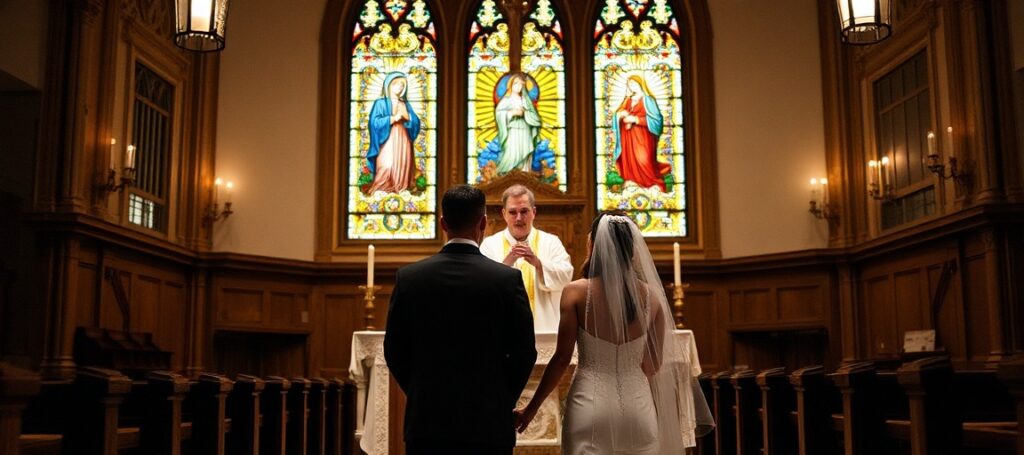
A Catholic couple during a traditional Latin Mass wedding, photographed by Allison Girone, with the priest elevating the Host in a reverent church setting.
Spiritual

Sacred Images, Profane Context: The Idolatry of Aestheticism in a Church Without Faith

The National Catholic Register portal reports on a growing trend among Catholic couples: the search for specialized wedding photographers who can capture the “sacredness” of the traditional Latin Mass. The article profiles several photographers—Allison and John Girone, Kaylee Toole, and Victoria Cerise—who market their services to couples seeking images that reflect the “theology” and “liturgy” of the sacrament of matrimony. Testimonials from brides like Lucy Jones and Alexandra Yeryomin emphasize the importance of capturing moments such as the Consecration, the elevation of the Host, and prayers before statues of the Blessed Virgin. The article frames this trend as a vocational calling, a means of preserving beauty and honoring God through visual artistry. While the aesthetic appreciation of sacred liturgy is commendable in principle, the article’s uncritical embrace of this phenomenon within the context of the post-conciliar Church reveals a profound spiritual blindness—a substitution of external beauty for interior faith, and a dangerous flirtation with idolatry in a Church that has largely abandoned the very sacramental theology it claims to cherish.

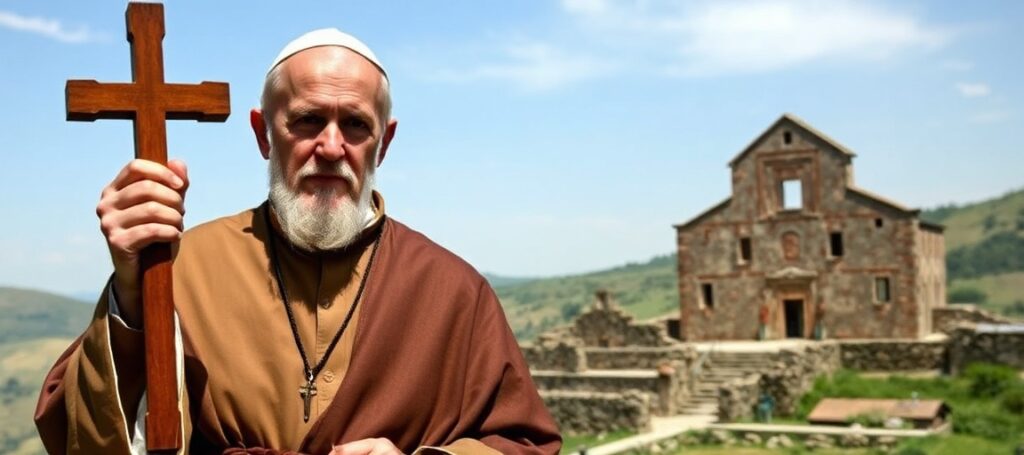
A reverent portrait of St. Francis of Assisi before San Damiano ruins, symbolizing his supernatural mission and rejecting modernist distortions.
Spiritual

EWTN’s “Unknown St. Francis”: Modernist Distortion of a Great Saint’s Legacy

Article from the National Catholic Register portal (April 25, 2026) reports on a new EWTN Learn series titled “The Unknown St. Francis of Assisi,” hosted by Teresa Tomeo in Italy. The series claims to explore the “unknown” aspects of St. Francis’s life, visiting sites such as Santa Maria degli Angeli, Spoleto, and Rivotorto. Tomeo states: “St. Francis brings us back to the basics of the faith… He teaches us about the importance of the Eucharist, about the Incarnational Lord, and he loved Jesus so much that he not only wanted to rebuild the Church spiritually, but physically as well.” The article also mentions St. Clare, the Poor Clares, Mother Angelica, and Franciscan Missionaries of the Eternal Word. However, this seemingly pious presentation is riddled with omissions, equivocations, and a subtle modernist framing that dilutes the radical supernatural reality of St. Francis’s life and mission, reducing it to a palatable, humanistic narrative suitable for the conciliar sect’s ecumenical and sentimental agenda.

Children in a classroom observing a fetal ultrasound with a teacher holding a rosary, emphasizing the spiritual aspect of the pro-life movement.
Antichurch

The Culture of Death Cannot Be Fought With Naturalistic Activism

EWTN News portal reports on “Heart of a Child Ministries,” a Nebraska-based organization that brings live fetal ultrasounds into K–12 classrooms across the United States. Founded by Nikki Schaefer, the ministry began in 2012 with the sale of pro-life pillows and has since expanded into a multistate educational enterprise. Its programs, tailored to each grade level, present fetal development facts, adoption stories, and testimonial speakers, with the stated goal of changing students’ hearts on abortion. The ministry claims a “56% conversion rate” among students and has developed a year-long curriculum called “The Journey Within” for both public and Catholic schools. Schaefer emphasizes the importance of reaching children early so that “when the lies start coming in middle school through social media, through their friends, they’ve already seen an ultrasound.” The article notes that several states have passed laws requiring fetal development education in public schools and that Nebraska Gov. Jim Pillen supports similar legislation. What the article entirely fails to address is that the culture of death is, at its root, a spiritual catastrophe that no amount of secular education, emotional testimonials, or political legislation can remedy without the supernatural grace of God, the sacramental life of the true Church, and the public reign of Christ the King over civil society.

Father Jakob Rolland in a traditional church setting, holding a Bible with a crucifix behind him, symbolizing the persecution of Catholic teachings on mortal sin.
Antichurch

When Explaining Mortal Sin Becomes a “Hate Crime” in the Secular Republic of Iceland

The National Catholic Register portal (April 24, 2026) reports that Father Jakob Rolland, a French missionary priest stationed in Iceland, was placed under criminal investigation after stating in a radio interview that persons conscious of unconfessed grave sins — including homosexual acts — should not receive Holy Communion. The commentary by Jennifer Roback Morse and Maura Eckels Scherber of the Ruth Institute frames this as a case of religious persecution: a secular government criminalizing the mere articulation of Catholic moral teaching under the guise of enforcing a “conversion therapy” ban. The authors correctly note that Father Rolland neither performed therapy nor coerced anyone; he simply taught what the Church has taught for two millennia. Yet the deeper scandal is not merely the Icelandic government’s overreach but the theological anemia of the commentary itself, which reduces the supernatural drama of sacrilege and grace to a question of civil liberties and “freedom of speech” — as if the Eucharist were a matter of opinion rather than the very Body, Blood, Soul, and Divinity of Our Lord Jesus Christ.

Scroll to Top
Antichurch.org
Privacy Overview

This website uses cookies so that we can provide you with the best user experience possible. Cookie information is stored in your browser and performs functions such as recognising you when you return to our website and helping our team to understand which sections of the website you find most interesting and useful.