Antichurch

Antichurch

Catholic Charities Sues Michigan: Modernist Capitulation Disguised as Defense of Faith

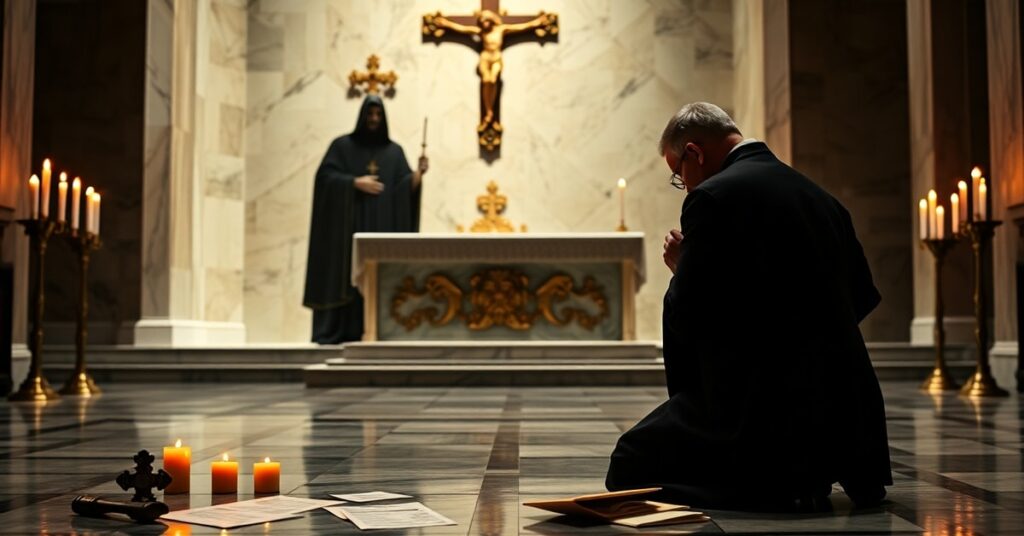
EWTN News portal reports (June 27, 2026) that Catholic Charities of Ingham, Eaton & Clinton Counties has filed a federal lawsuit against Michigan state officials, alleging religious discrimination over the charity’s refusal to abandon Catholic teaching on abortion and marriage. The lawsuit claims the state “singled out and punished” the ministry for following the Church’s teachings. What is presented as a bold defense of Catholic identity is, upon examination, a manifestation of the very modernist captivity it purports to resist: an organization occupying the name “Catholic” while operating entirely within the framework of the post-conciliar conciliar sect, utilizing secular legal mechanisms to defend a “religious liberty” framework condemned by the pre-conciliar Magisterium, and utterly silent upon the supernatural mission of the true Church.
Antichurch

The Patristic Mask on the Face of the Conciliar Schism

National Catholic Register portal reports an Eastern Catholic deacon’s attempt to explain why “union with Rome” is allegedly essential, using a selective reading of the Fathers and a conciliar ecclesiology. The article, however, reveals the bankruptcy of the post‑1958 “communion” religion: it defends an ontologically new Church, the conciliar sect, while invoking the authority of the true Church of Christ. The author’s “Rome” is not the See of Peter as understood by the Fathers, but the administrative center of the New Church, a center that has formally embraced heresy.

Antichurch

The Catholic Spotify: Digital Narcissism in the Age of Apostasy

EWTN News portal reports on the launch of “Fio,” a Catholic audio streaming platform described as an alternative to Spotify, offering over 100,000 hours of content from more than 1,000 creators. The platform’s co-founder, Will Hickl, emphasizes fair compensation for artists and a “curated” environment free from secular advertisements. This initiative, while ostensibly promoting faith, reveals the profound spiritual bankruptcy of a Catholicism reduced to consumerist entertainment, where the supernatural life of grace is supplanted by the endless consumption of digital content.

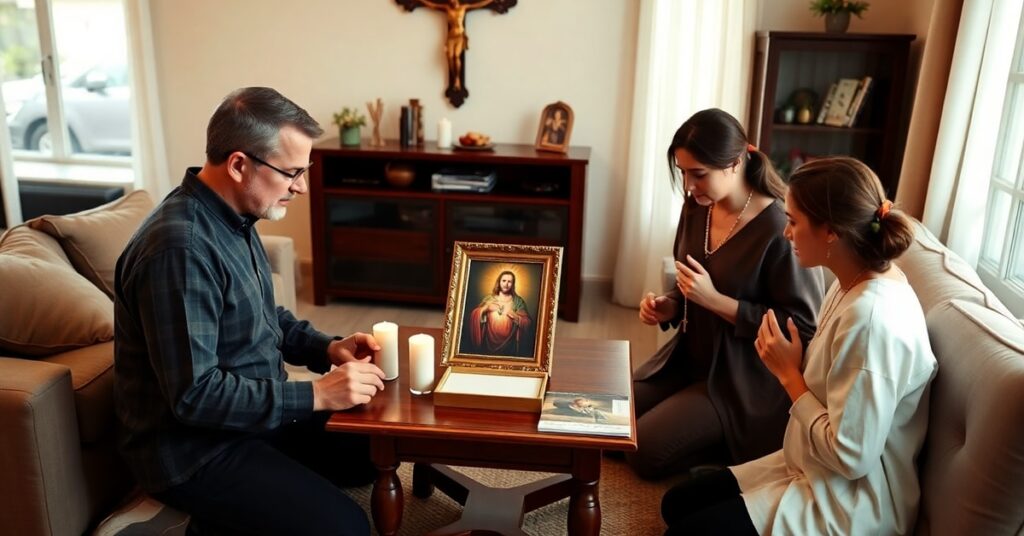
Catholic family in prayer around Sacred Heart image in modern home interior reflecting domestic enthronement devotion controversy
Antichurch

Enthronement Devotion: Negating the Kingship of Christ Through Domestic Naturalism

National Catholic Register portal reports on the practice of “Sacred Heart Enthronement” in domestic settings, presenting it as a revival of a mid-20th century tradition. The article describes how families, amidst personal tragedies and transient modern life, consecrate their homes to the Sacred Heart of Jesus by displaying an image and reciting prayers, often without the presence of a priest. This seemingly pious practice, when scrutinized through the lens of integral Catholic doctrine, reveals a profound spiritual banalization and a capitulation to the very modernism that has dismantled the Church’s public and private authority. The enthronement of an image in a living room, stripped of its supernatural context and sacramental gravity, is not a restoration of Christ’s Kingship but a reduction of His royal dominion to a mere interior sentiment, perfectly aligned with the conciliar revolution’s dismantling of the Catholic social order.

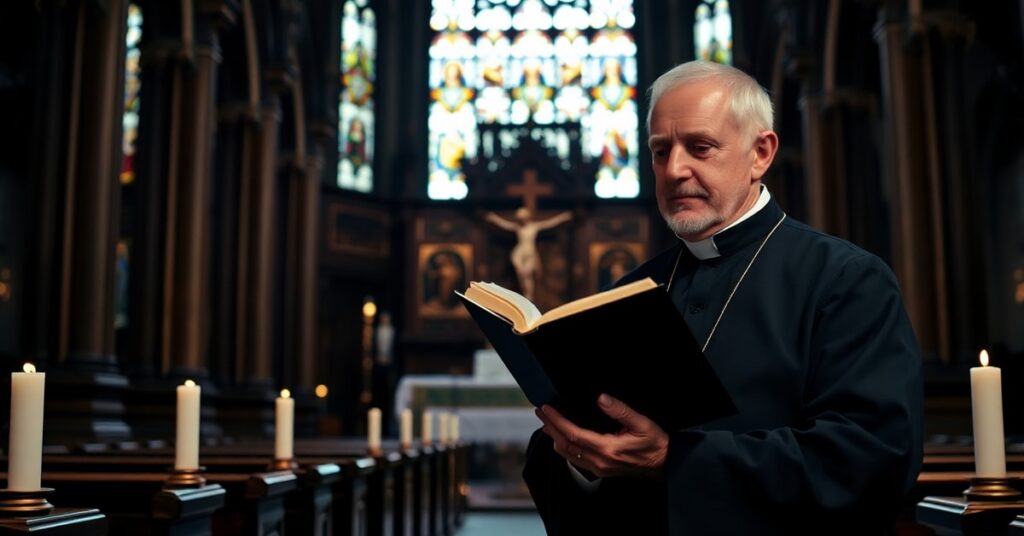
Traditional Catholic priest in prayer inside a Baroque church reflecting the demands of authentic discipleship and rejection of modernist reductionism.
Antichurch

The Demands of Being a Disciple of Christ: A Symptom of Modernist Reductionism

Msgr. Charles Pope, a clergyman of the conciliar structures, presents a “Sunday Guide” for June 27, 2026, commenting on the Gospel of Matthew (10:37-42). The article, sourced from the National Catholic Register, purports to explain the demands of Christian discipleship. However, upon examination through the lens of integral Catholic faith, it reveals itself as a subtle but profound reduction of the Faith to a naturalistic, internalized moralism, entirely silent on the supernatural realities of sanctifying grace, the state of grace, the necessity of the true Church and her sacraments for salvation, and the reality of eternal judgment. It is a sermon fit for the “Church of the New Advent,” where the hard edges of dogma are smoothed into therapeutic self-help.

Antichurch

Catholic Bishops’ Migration Demands Expose Subversion of Divine Law

NCR Online portal reports that several U.S. “bishops,” including Archbishop Thomas Wenski of Miami and Bishop Brendan Cahill, have criticized a June 25, 2026, Supreme Court ruling allowing the termination of Temporary Protected Status (TPS) for hundreds of thousands of Haitians and Syrians, calling on Congress to extend the protections and warning of a “moral crisis” and “dire consequences” for those affected and for the U.S. itself. This intervention reveals the complete capitulation of the post-conciliar hierarchy to the secular, naturalistic order, abandoning the divine mission of the Church in favor of political lobbying for a system founded on the rejection of Christ the King.

Antichurch

The Collapse of Vocations in the Conciliar Sect: A Symptom of Institutional Apostasy

The article from EWTN News portal (June 27, 2026) reports on the laicization of Damián María Montes, a former Redemptorist priest and social media influencer, who left priestly ministry after two decades. His departure is part of a trend of “influencer” priests leaving religious life, with Montes citing a search for “beauty, thought, and humanity” and the possibility of starting a family. The piece frames this as a phenomenon within the post-conciliar structures, noting similar cases. **This is not a vocational crisis but the logical fruit of an institution that has abandoned the supernatural conception of the priesthood.**

Scroll to Top
Antichurch.org
Privacy Overview

This website uses cookies so that we can provide you with the best user experience possible. Cookie information is stored in your browser and performs functions such as recognising you when you return to our website and helping our team to understand which sections of the website you find most interesting and useful.