Antichurch

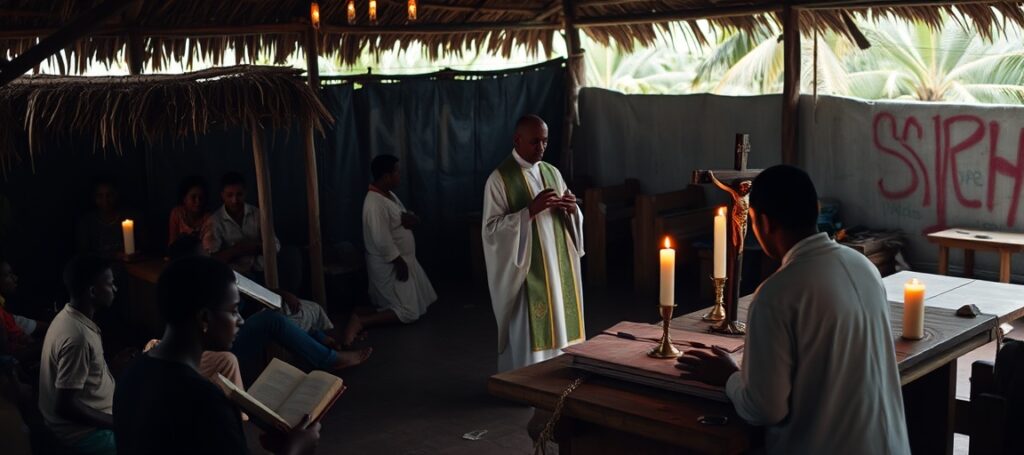
Traditional Catholic priest in liturgical vestments before an antique altar with crucifix and candles, contrasting with antipope Leo XIV's speech on organ donation.
Antichurch

Pope Leo XIV’s Organ Donation Speech: The Neo-Church’s Naturalistic Gospel

The National Catholic Register reports that antipope Leo XIV praised organ donation as a “noble act” while warning against “commodification of the human body,” citing the example of “Blessed” Carlo Gnocchi and the moral guidance of Pope Pius XII. The speech, delivered March 26, 2026, to the Italian National Transplant Network, framed donation as an expression of “generous solidarity” and “culture of help,” aligning with the “Catechism of the Catholic Church” and the teaching of “Pope Francis.” The address entirely omits the supernatural destiny of the human body, the necessity of the state of grace for moral acts, and the primacy of Christ’s kingship over all aspects of life, reducing Catholic anthropology to a mere naturalistic humanism.

Antichurch

Palm Sunday Naturalism: The Modernist Reduction of the Passion to Psychology

The National Catholic Register portal publishes a Palm Sunday reflection by “Msgr.” Charles Pope, a cleric of the post-conciliar sect, dated March 27, 2026. The article identifies five human failings—drowsiness, destruction, denial, dodging, deflecting—observed in the Passion narratives and presents them as universal psychological patterns from which modern readers can learn. It frames the disciples’ and Pilate’s actions primarily through the lens of fear, stress, and moral weakness, urging self-examination without reference to supernatural grace, sacramental life, or the explicit duty of public obedience to Christ the King. The thesis is clear: the article replaces Catholic theology of sin, redemption, and social order with a naturalistic, self-help morality utterly alien to the integral faith.

Antichurch

Mother Angelica: The Modernist Icon of the Neo-Church

The National Catholic Register portal publishes a commemorative article by Kathryn Jean Lopez marking the tenth anniversary of the death of Mother Mary Angelica of the Annunciation, founder of the Eternal Word Television Network (EWTN). The piece recalls personal encounters, her funeral, and her legacy, portraying her as a joyful, wise, and inspiring figure whose life was centered on the Eucharist and whose media work was a path to God. It emphasizes her personal holiness, the emotional impact of her funeral, and the broad public mourning she received, including from non-Catholics. The article concludes with hope for her canonization and her intercession, framing her as a model for all sinners aspiring to heaven.

This narrative, however, is a carefully constructed hagiography of a principal agent of the post-conciliar apostasy. It presents a figure who, under the guise of traditional piety, was a key architect in the systematic dismantling of Catholic doctrine and practice, making her a perfect instrument of the “abomination of desolation” standing in the holy place. The article’s omissions are as damning as its praises, revealing a theology stripped of supernatural substance and reduced to sentimental humanism.

Antichurch

Easter Cancellations in Jerusalem: The Apostasy of Naturalistic “Pastoral Care”

Pierbattista Pizzaballa, the Latin “Patriarch” of Jerusalem, has announced the cancellation of the traditional Palm Sunday procession on the Mount of Olives and the postponement of the Chrism Mass due to the ongoing war in the Middle East and the closure of major holy sites since February 28. He invites the faithful to unite in prayer, particularly the Rosary, and to experience the celebrations “in a different way, with their families or in community, in a spirit of contemplation and hope.”

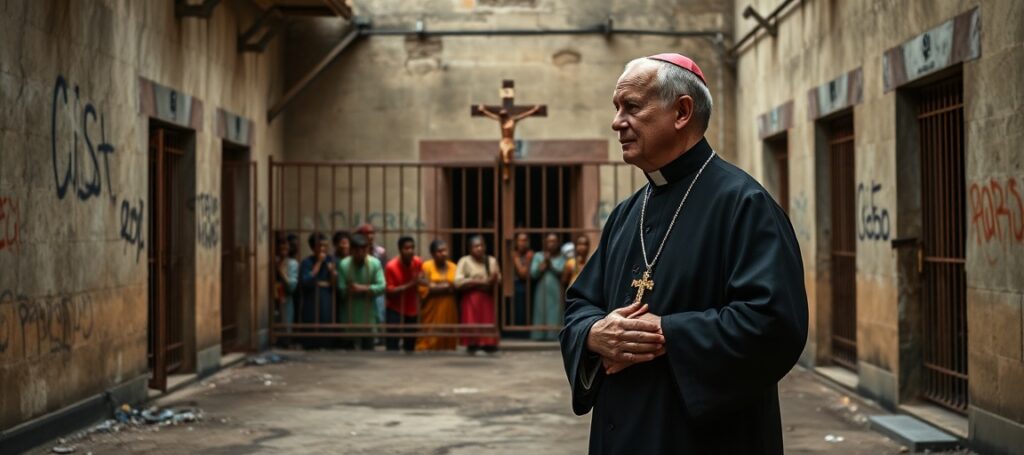
Traditional Catholic priest in prison cell, praying with rosary, surrounded by religious icons, emphasizing suffering united to the Cross.
Antichurch

The Heresy of “Hope” in a Post-Conciliar “Saint”

The cited article from EWTN News reports on a Vatican conference honoring “Venerable” Francis-Xavier Nguyễn Văn Thuận, a figure elevated in the process of beatification by the antipope “Francis.” It frames his life and prison writings as a testimony of “hope,” gentleness, and serenity amidst communist persecution, presenting him as a model for contemporary Catholics. This narrative, however, is a masterclass in theological and spiritual bankruptcy, substituting sentimental humanism for the integral Catholic doctrine of Christ’s absolute Kingship and the Church’s uncompromising war against error.

Antichurch

Organ Donation or Apostasy? The Naturalistic Heresy of the Conciliar Sect

The article reports that the antipope known as “Pope Leo XIV” addressed participants of an event organized by the Italian National Transplant Network on March 26, 2026. He praised organ donation as a “noble and meritorious act” and warned against “any form of commodification of the human body,” urging that transplants be governed by “fair and transparent criteria.” He referenced the example of “Blessed” Carlo Gnocchi’s corneal donation and cited “Pope Pius XII” as having offered “early moral guidance,” recognizing the legitimacy of organ removal “respecting the dignity of the human body.” He further invoked the post-conciliar Catechism of the Catholic Church, which calls organ donation “a noble and meritorious act.” The speech emphasized scientific progress, the “culture of donation,” and the need to keep “the well-being of the patient as your guiding principle,” framing the act within a naturalistic paradigm of “solidarity, fraternity, and hope” while omitting any reference to the supernatural destiny of the human body, the necessity of the state of grace, or the social reign of Christ the King. The article notes that this audience coincided with the Vatican’s publication of a document on xenotransplantation.

Scroll to Top
Antichurch.org
Privacy Overview

This website uses cookies so that we can provide you with the best user experience possible. Cookie information is stored in your browser and performs functions such as recognising you when you return to our website and helping our team to understand which sections of the website you find most interesting and useful.