Antichurch

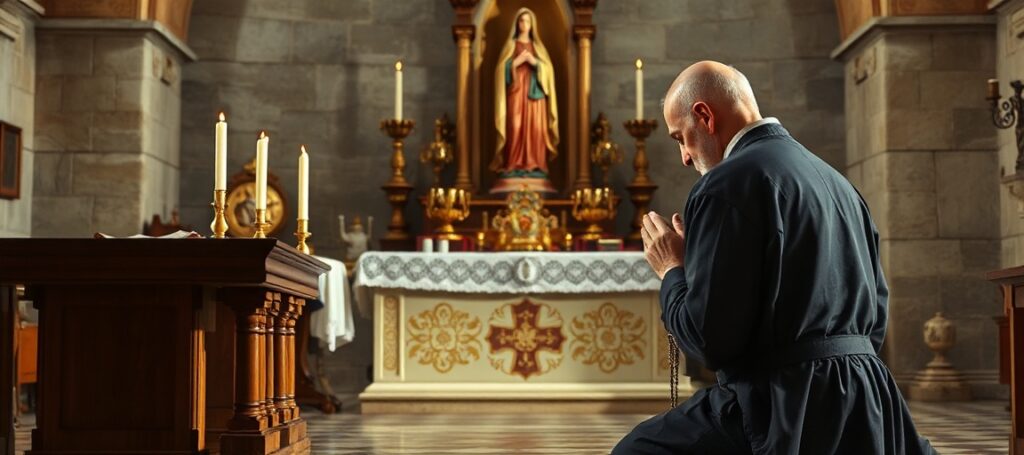
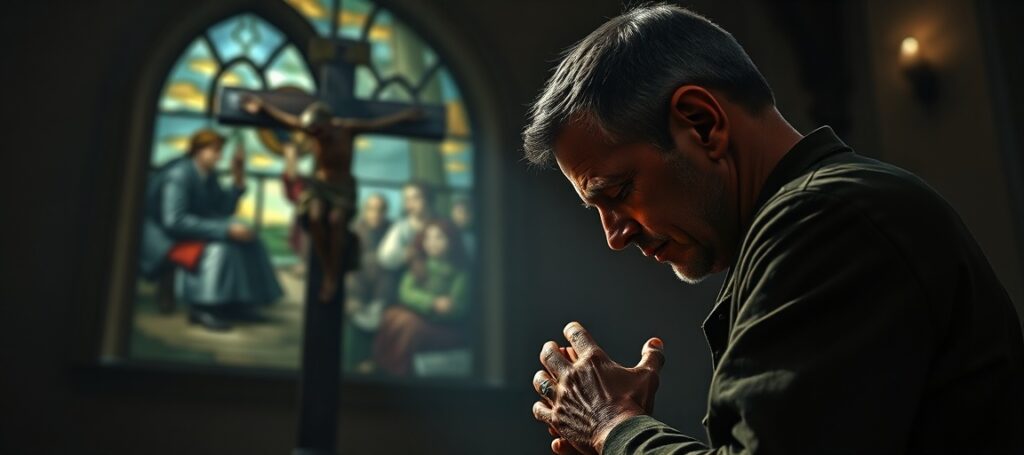
Vincent Stefanek, a B-17 gunner, kneels in prayer before a crucifix in a chapel with stained-glass windows depicting the Warsaw Uprising.
Antichurch

A B-17 Gunner’s Survivor Guilt: When Catholic Faith Becomes Mere Sentimentality

The National Catholic Register portal reports on the story of Vincent Stefanek, a B-17 aerial gunner who survived a 1944 mission over Warsaw while his crew perished, and who spent the rest of his life grappling with “survivor guilt” and seeking to understand God’s purpose for his continued existence. The article, authored by Richard C. Lukas, presents Stefanek’s wartime trauma and subsequent Catholic devotion as a model of faith, quoting his reflections on being “an instrument of Faith” and receiving a “second opportunity to do something good.” The piece is framed as a Memorial Day tribute, emphasizing patriotism, the “Greatest Generation,” and the redemptive value of suffering. What the article utterly fails to provide is any substantive theological framework for understanding suffering, divine providence, or the supernatural purpose of human existence beyond vague sentimentalism and naturalistic self-help.
Antichurch

Eucharistic Pilgrimage: A Parade of Empty Rituals in the Temple of the New Order

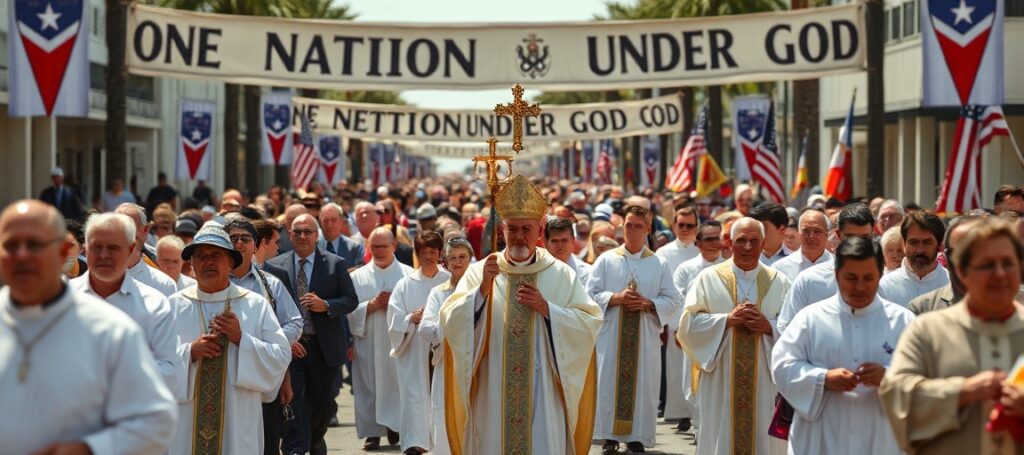
EWTN News reports (May 24, 2026) that the 2026 National Eucharistic Pilgrimage launched from St. Augustine, Florida, on Pentecost Sunday, carrying the Blessed Sacrament along the “St. Frances Xavier Cabrini Route” up the Eastern Seaboard to Philadelphia, timed to coincide with the United States’ 250th anniversary. Over 1,000 faithful gathered under the Florida sun at the National Shrine of Our Lady of La Leche at Mission Nombre de Dios, where “Bishop” Erik Pohlmeier celebrated the opening Pentecost Mass, incensed the altar, and presided over a procession to the historic chapel for exposition and adoration. Nine “perpetual pilgrims” were named to accompany the Eucharist across 18 dioceses and two Eastern-rite eparchies over six weeks. Pohlmeier’s homily connected Pentecost to “the missionary impulse” and “the divine power of the Church’s work,” while organizers framed the theme as “One Nation Under God” — linking the country’s founding, Catholic history, and a call for “unity, healing, and renewal.” The pilgrimage is the third such national event since 2024. What the article presents as a triumphant expression of Catholic faith is, from the perspective of integral Catholic doctrine, a meticulously staged spectacle that reveals the theological bankruptcy, naturalistic reductionism, and crypto-pagan syncretism at the heart of the post-conciliar sect occupying the structures of the Vatican.

Antichurch

The “Mother of the Church” Memorial: A Conciliar Marian Devotion Rooted in Modernist Ecclesiology

The National Catholic Register article (May 24, 2026) reports on the memorial of the Blessed Virgin Mary, “Mother of the Church,” celebrated on the Monday after Pentecost. It traces the title’s formal proclamation by Paul VI in 1964 during the Second Vatican Council, its championing by John Paul II, and its addition to the General Roman Calendar by Francis in 2018. The article presents this devotion as a natural outgrowth of centuries of Marian piety, anchored in John 19:25, and intended to foster “the maternal sense of the Church.” This seemingly pious devotion, however, is a quintessential product of the conciliar revolution, embodying its ecclesiological errors and serving to advance a modernist reimagining of Mary’s role, detached from the integral Catholic faith.

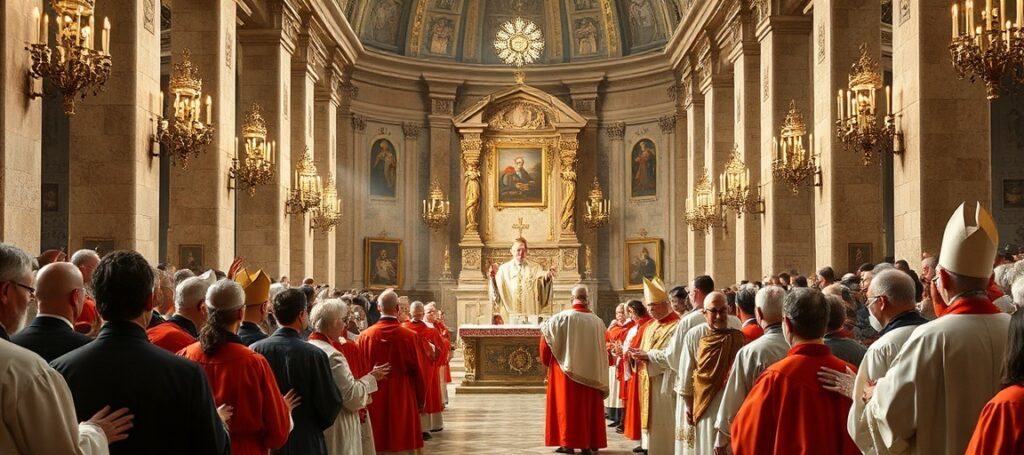
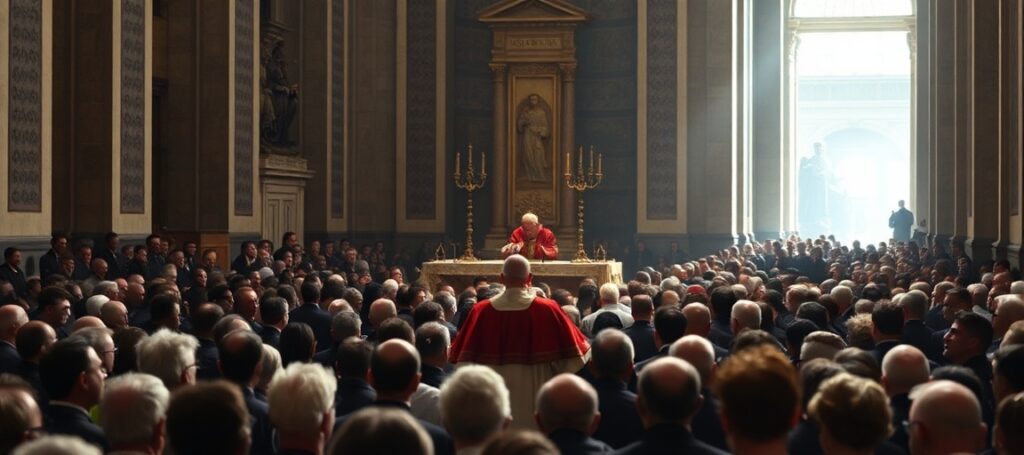
A solemn Pentecost homily in St. Peter's Basilica by Robert Prevost, who falsely styles himself 'Pope Leo XIV', with a congregation reflecting unease and spiritual decay.
Antichurch

Pentecost Homily of Leo XIV: The Holy Spirit Reduced to Sentimental Pacifism and False Fraternity

The National Catholic Register, citing ACI Stampa and EWTN News, reports on the Pentecost Sunday homily delivered by the usurper Robert Prevost — who falsely styles himself “Pope Leo XIV” — on May 24, 2026, in St. Peter’s Basilica. The central theme of the homily was a prayer for peace, the renewal of the Church, and the action of the Holy Spirit in overcoming war, misery, and sin. Prevost described the Holy Spirit as the “Spirit of peace, mission, and truth,” urging the faithful to become “co-workers of the Gospel” and agents of communion in a world torn by conflict. He also led the Regina Caeli prayer, invoking the Holy Spirit to open “the door of God,” “the door of the Church,” and “the door of our hearts,” calling all peoples to speak “the one language of love.” He further recalled the day of prayer for the Church in China and remembered victims of a mining accident and war-torn Christian communities in the Holy Land, Lebanon, and the Middle East. What is striking — and what immediately reveals the theological bankruptcy of this address — is the complete absence of any mention of the Most Holy Sacrifice of the Mass as propitiatory sacrifice, the necessity of the Catholic Church as the one true means of salvation, the reality of sin as mortal danger to the soul, the obligation of nations to submit to the Social Kingship of Christ, or the dogmatic teaching that outside the Catholic Church there is no salvation. In its place, we are offered a bland, naturalistic humanitarianism dressed in Pentecostal vestments, perfectly calibrated to the spirit of the conciliar revolution.

Solemn Pentecost Mass in St. Peter's Basilica with Leo XIV delivering a modernist homily in 2026.
Antichurch

Pentecost Homily of Leo XIV: The Holy Spirit as Architect of Masonic Universal Fraternity

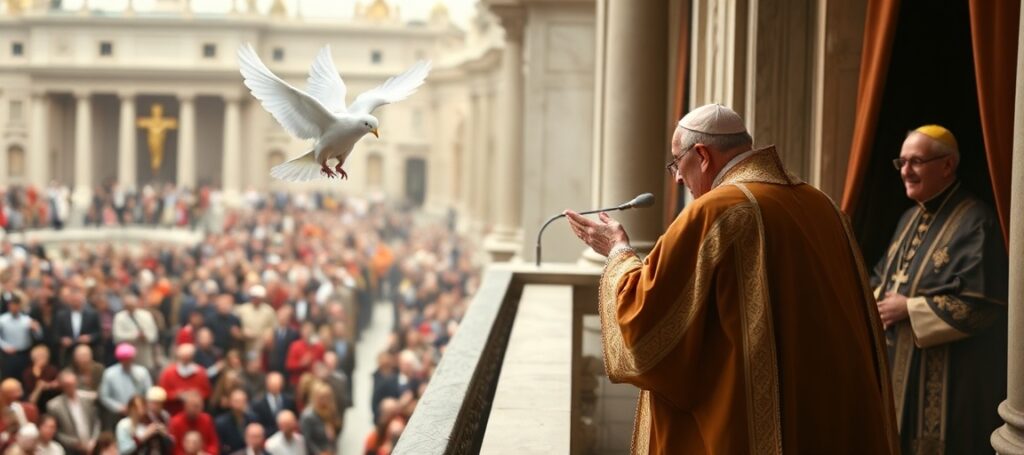
EWTN News portal reports on May 24, 2026, that the usurper Robert Prevost, known as “Leo XIV,” celebrated a Mass in St. Peter’s Basilica for Pentecost Sunday. During his homily, he prayed that the Holy Spirit would save humanity “from the evil of war,” which is overcome not by any superpower, but by the “omnipotence of love.” He described the Spirit as the promoter of “peace, mission, and truth,” and emphasized that the Church is the “protagonist” of the Gospel, transforming the world’s “confusion into communion.” In his closing Regina Coeli address, he spoke of the Spirit opening three doors: the door of God, the door of the Church, and the door of our hearts, leading to a universal “fraternity” and “the one language of love, which unites and harmonizes differences.” This homily, far from being a supernatural call to conversion, is a textbook example of modernist naturalism, reducing the Holy Spirit’s action to a mere catalyst for a humanitarian utopia and the conciliar project of universal syncretism.

Leo XIV delivering a modernist address from the Vatican balcony, promoting a false fraternity devoid of Catholic truth.
Antichurch

The Neo-Church’s Fraternity: A Naturalistic Subversion of the Holy Spirit’s True Mission

VaticanNews portal reports on May 24, 2026, that the usurper Leo XIV, during his Regina Caeli address, urged the faithful to invoke the Holy Spirit to build a “fraternal world where peace reigns,” emphasizing the need for a “welcoming and hospitable” Church that overcomes “resistance, selfishness, mistrust, and prejudice.” He identified three “doors” the Spirit must open: to God (understood as personal experience rather than law), to the Church (as an open, inclusive community), and to the human heart (to foster universal fraternity). This address, dripping with the rhetoric of Modernism, reduces the Holy Spirit’s divine mission to a sentimental program of naturalistic humanism, entirely omitting the necessity of conversion to the Catholic Faith, the propitiatory sacrifice of the Mass, and the social reign of Christ the King.

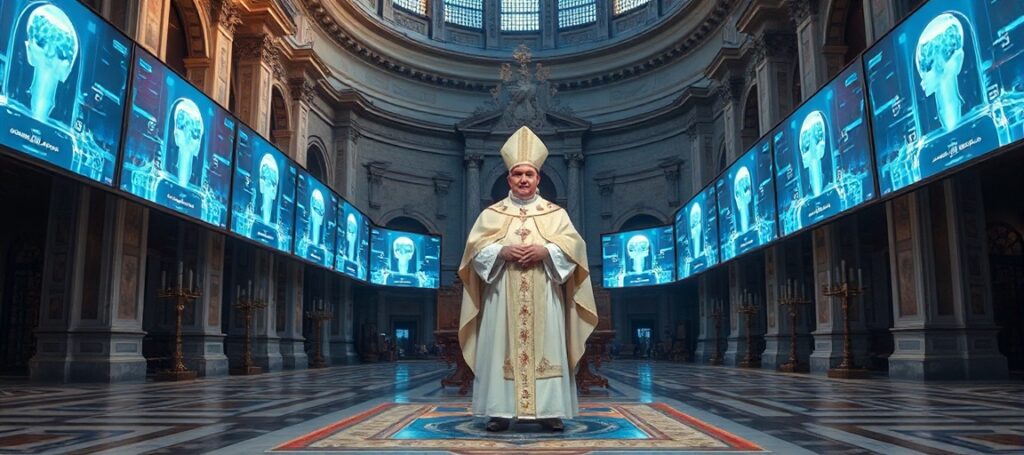
Pope Leo XIV in St. Peter's Basilica surrounded by digital screens displaying AI themes, symbolizing the abandonment of Christ the King.
Antichurch

The Digital Antichurch: Leo XIV’s Techno-Heresy and the Abandonment of Christ the King

The National Catholic Register — a mouthpiece of the conciliar sect — reports on the ideological trajectory of the current usurper of Peter’s throne, Leo XIV (Robert Prevost), ahead of the release of his first encyclical, Magnifica Humanitas: “On the Protection of Human Dignity in the Age of Artificial Intelligence.” The article presents a sanitized portrait of a “pastoral” and “technologically engaged” pontiff, emphasizing themes of “peace,” “unity,” “social justice,” and the ethical use of artificial intelligence. What it omits — and what must be exposed with unflinching clarity — is that every single one of these themes is rooted in the modernist apostasy condemned by Pope St. Pius X in Pascendi Dominici gregis and Lamentabili sane exitu, and represents a direct repudiation of the social reign of Our Lord Jesus Christ as defined by Pope Pius XI in Quas primas. This is not a pope. This is an antipope whose entire program is a synthesis of humanitarian idolatry, naturalistic ethics, and the substitution of the supernatural order with a technocratic utopia — the very essence of the abomination of desolation sitting in the temple of God (2 Thess. 2:4).

A devout Catholic pilgrim praying humbly before a sacred altar with relics and a statue of the Blessed Virgin Mary in a traditional church setting.
Antichurch

The Heart of Pilgrimage: A Prayerful Journey

National Catholic Register portal (May 24, 2026) presents an article on the nature and practice of Catholic pilgrimages, featuring commentary from various figures within the post-conciliar establishment. While the topic of pilgrimage is inherently tied to the supernatural life of the Church, the article’s treatment reveals the pervasive naturalism and theological ambiguity that characterize the conciliar sect’s approach to spiritual practices.

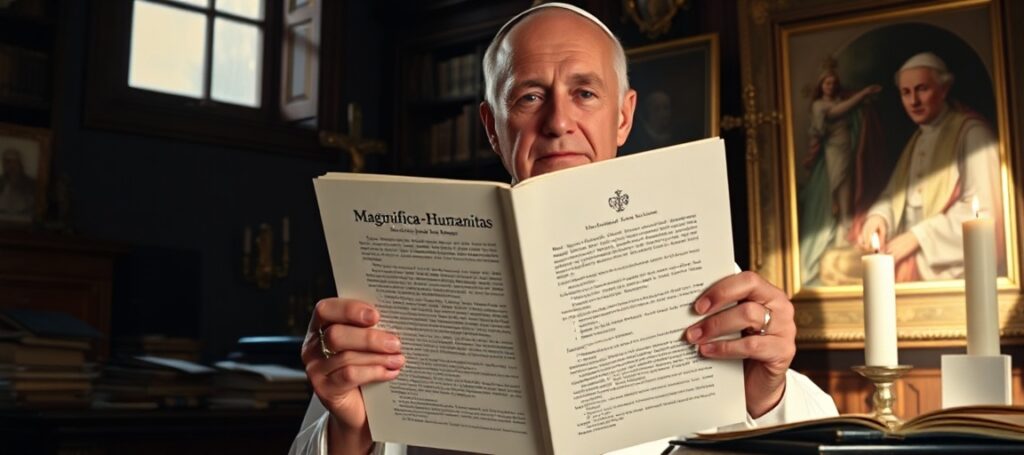
A traditional Catholic priest in a study holding an encyclical document titled 'Magnifica Humanitas,' surrounded by historical papal texts and a crucifix.
Antichurch

The Usurper’s Ink: A Guide to the Documents of an Antipope

EWTN News portal (May 24, 2026) reports on the various types of documents issued by the one currently occupying the Vatican, referred to as “Pope Leo XIV,” such as encyclicals, apostolic constitutions, and motu proprios. The article explains the historical and modern uses of these documents, emphasizing their role in leading the “Catholic Church” and revealing the “pope’s pastoral and theological vision.” It specifically mentions the upcoming release of Leo XIV’s first encyclical, *Magnifica Humanitas*, and his focus on artificial intelligence. The article also details how Catholics are expected to interpret these documents, noting that even when not “ex cathedra,” they require “a religious submission of the mind and will.” This entire framework, however, rests upon the fundamental and catastrophic error of acknowledging Robert Prevost, known as Leo XIV, as a legitimate successor of St. Peter, thereby lending an air of authority and binding force to the pronouncements of an antipope and perpetuating the modernist revolution that has desecrated the Church.

Scroll to Top
Antichurch.org
Privacy Overview

This website uses cookies so that we can provide you with the best user experience possible. Cookie information is stored in your browser and performs functions such as recognising you when you return to our website and helping our team to understand which sections of the website you find most interesting and useful.