World

World

Catholic Economic Thought: A Trojan Horse for Capitalism in the Guise of Thomism

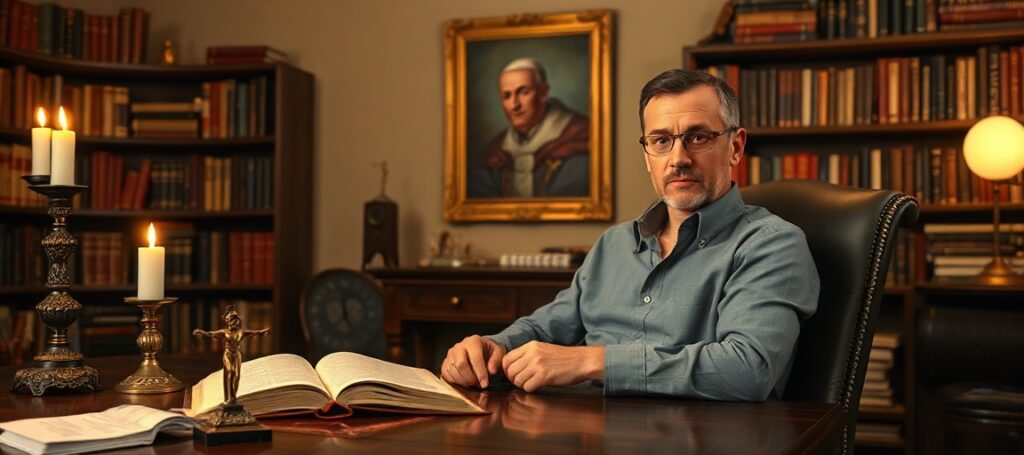
The National Catholic Register portal reports on an article by Solène Tadié (April 17, 2026) that presents medieval Catholic thinkers—particularly Franciscan friars and theologians of the School of Salamanca—as proto-capitalists who “anticipated” modern economic principles such as supply and demand, capital formation, and market-determined pricing. The piece frames these teachings as timeless wisdom for families and entrepreneurs today, seamlessly integrating them into contemporary capitalist discourse. This is not merely a historical curiosity; it is a deliberate ideological operation that baptizes the very economic liberalism condemned by the Church’s Magisterium, reducing Catholic social teaching to a mere precursor of Adam Smith and Milton Friedman.

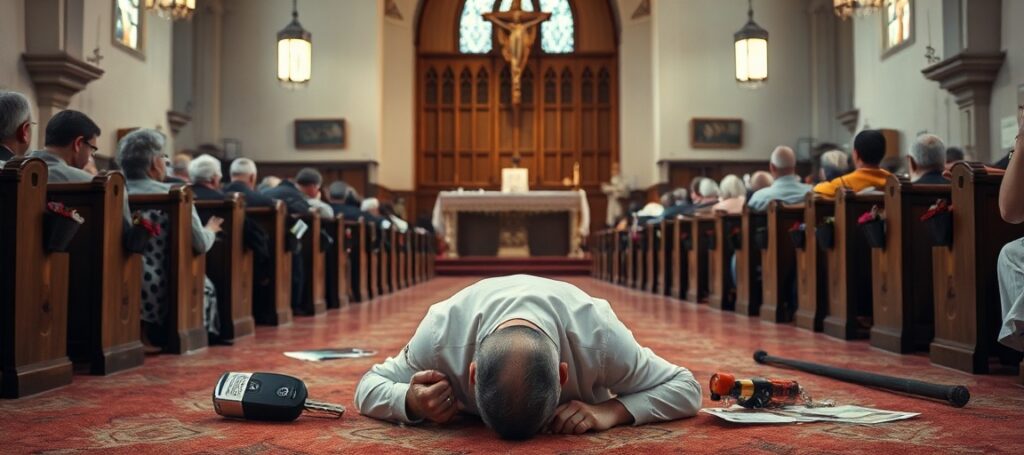
Young men attending Traditional Latin Mass in a historic Catholic church.
World

Young Men Return to Religion While the Neo-Church Collapses Around Them

National Catholic Register portal reports that Gallup polling data from 2024–2025 indicates a notable increase in the percentage of young American men aged 18–29 who say religion is “very important” in their lives—rising to 42%, surpassing young women at 29%. Religious attendance among young men has also climbed to 40% reporting monthly or more frequent participation. The article presents these statistics as a positive development, attributing some of the shift to political realignment, with young men increasingly identifying as Republican. The data is drawn from multiple Gallup surveys involving thousands of respondents.

But what kind of “religion” are these young men returning to? The article, like virtually all reporting from the conciliar press, operates in a theological vacuum—it never once asks whether the religion being practiced is the true Catholic Faith, integrally professed and sacramentally lived, or whether it is the hollowed-out naturalism of the post-conciliar sect. This silence is not accidental. It is the hallmark of an entire civilization that has lost the capacity to distinguish between the worship of the true God in Spirit and in truth, and the idolatry of human sentiment dressed in religious language. The statistics may be real, but the interpretation offered—and, more damningly, the interpretation omitted—reveals the depth of the apostasy.

World

The Religion of Statistics: When “Importance” Replaces Sanctity

EWTN News portal reports that Gallup data from 2024–2025 indicates young U.S. men (ages 18–29) now surpass young women in claiming religion is “very important” to them—42% versus 29%. The article frames this as a positive development, noting increased religious attendance and identification with specific religions among young men. However, this statistical uptick in self-reported “importance” of religion reveals nothing about the state of souls, the integrity of faith, or the fidelity of those institutions where these young men allegedly worship. In an age of apostasy, numbers are not a measure of grace but of confusion.

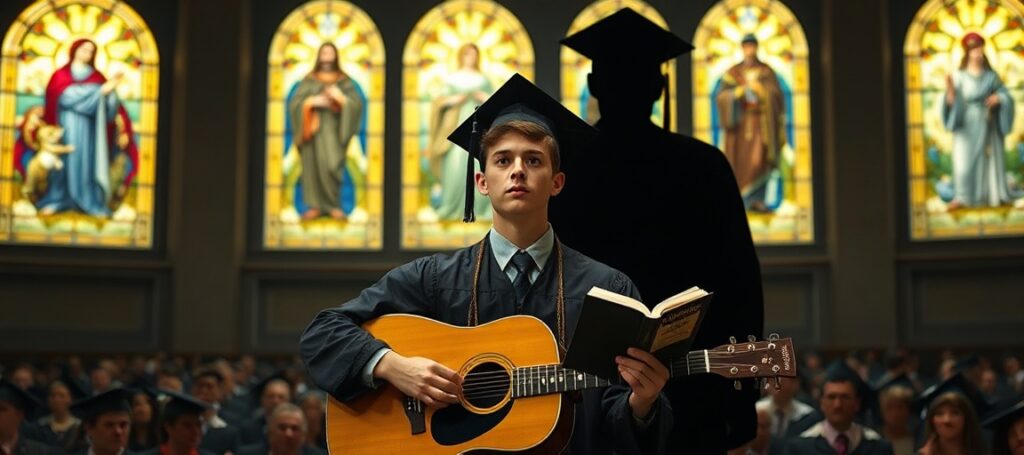
A traditional Catholic chapel setting where Mark Harrington teaches financial stewardship to students, emphasizing the primacy of supernatural principles.
World

Financial Literacy Without the Fear of God: A Catholic Bootcamp Built on Sand

The National Catholic Register reports on Mark Harrington, a former investment banker and FOCUS missionary, who created a “Finance Bootcamp” for graduating seniors at the University of Colorado Boulder’s St. Thomas Aquinas Catholic Center. The three-hour workshop covers budgeting, debt strategy, 401(k)s, and tithing, aiming to alleviate Gen Z’s financial anxiety and empower them to give generously. Harrington, now developing a platform called Pilgrim Finance, argues that “financial formation is a precondition for vocational freedom.” While the initiative addresses a real-world need, its entire framework is built on the shifting sands of naturalistic humanism, conspicuously devoid of the supernatural principles that must govern every aspect of a Catholic’s life, especially the stewardship of material goods.

World

When the Roof Falls: A Lesson in Vanitas from a Wisconsin Parish

EWTN News reports that St. Joseph Catholic Church in East Bristol, Wisconsin, a parish standing for over 130 years, suffered catastrophic roof damage during severe thunderstorms on April 14, 2026. The Gothic Revival structure, completed in 1890, lost roughly half its roof, exposing the interior to the elements. The Diocese of Madison expressed heartbreak and requested prayers. While the physical destruction of a church building is a temporal misfortune that evokes natural sorrow, the event serves as a stark, silent sermon on the *vanitas* of all earthly things—a sermon the conciliar structures, with their relentless focus on the material and the horizontal, are constitutionally incapable of preaching.

Pro-life demonstrators march in Prague with crosses and banners, led by Archbishop Emeritus Jan Graubner near St. Vitus Cathedral amid police restrictions and pro-abortion counterprotests.
World

Prague March for Life Muted by Police While Conciliar “Church” Offers No Defense of the Unborn

The cited article from EWTN News (April 14, 2026) reports that thousands of pro-life marchers filled the streets of Prague on April 11 for the Czech Republic’s annual March for Life, though organizers claim police restrictions significantly depressed turnout at Wenceslas Square. Archbishop Emeritus Jan Graubner of Prague delivered a homily at St. Vitus Cathedral speaking of “the revival of families” and a “culture based on love,” while pro-abortion counterprotesters attempted to block the march, resulting in five arrests. The organizer, Hnutí Pro život ČR, is considering a legal complaint against the police for blocking access to the square. Yet beneath the veneer of this event lies a profound spiritual bankruptcy: a march for “life” orchestrated under the auspices of a conciliar hierarchy that has systematically abandoned the Church’s sovereign authority over the moral order, reducing the defense of the unborn to a mere political demonstration stripped of its supernatural foundation and rendered impotent by a clergy that refuses to exercise the fullness of its divine mandate.

World

The Artemis II Crew’s Cosmic Voyage: A Mirror of Modern Man’s Spiritual Blindness

The National Catholic Register, citing CNA, reports on the return of the Artemis II crew from their 10-day journey around the moon. The astronauts, Reid Wiseman, Christina Koch, Victor Glover, and Jeremy Hansen, shared reflections centered on human solidarity, gratitude, and the beauty of Earth, framing their experience through a lens of naturalistic wonder and vague theism, while remaining conspicuously silent on the divine Creator and the true purpose of human existence.

A Catholic priest in traditional vestments gazing at the night sky with a crucifix, symbolizing the absence of Christ's sovereignty in Artemis II astronauts' reflections.
World

Artemis II Astronauts Return with Naturalistic Reflections, Omitting God’s Sovereignty

EWTN News portal reports that on April 14, 2026, the Artemis II crew — astronauts Reid Wiseman, Christina Koch, Jeremy Hansen, and Victor Glover — returned to Earth after a nearly 10-day journey around the moon, traveling approximately 695,000 miles. During their post-mission reflections at NASA’s Johnson Space Center in Houston, the astronauts shared sentiments of awe, gratitude, and human connection, with Victor Glover explicitly thanking God and Jeremy Hansen emphasizing gratitude, joy, and love. Christina Koch described Earth as “just this lifeboat, hanging undisturbingly in the universe” and declared that “planet Earth, you are a crew.” Reid Wiseman stated, “It’s a special thing to be a human and it’s a special thing to be on planet Earth.” While these reflections contain passing invocations of the divine, they reveal a fundamentally naturalistic and humanistic worldview that reduces the cosmos to a backdrop for human experience and omits the absolute sovereignty of Jesus Christ over all creation — a silence that speaks volumes about the spiritual bankruptcy of modern secular institutions, even when their participants profess personal faith.

A traditional Polish Catholic church interior with a priest praying before an altar, symbolizing the loss of supernatural focus in modern religious institutions.
World

When Parishes Become Bomb Shelters: Poland’s Church Surrenders Its Mission

EWTN News portal reports that the Polish Bishops’ Conference has established a working group with government ministries to prepare the country’s more than 10,000 parishes for a potential armed conflict, including evacuation protocols, humanitarian corridors, and stockpiling of generators, water, and medical supplies. Archbishop Tadeusz Wojda, president of the conference, stated that “most Poles will first turn to the Church for help, and only then to municipal institutions and offices.” The initiative is framed as a precautionary measure amid fears of spillover from the war in neighboring Ukraine and broader Eastern European instability. This entire program — presented with bureaucratic self-satisfaction — reveals not the strength of the Catholic Church in Poland, but the abysmal extent to which the conciliar sect has reduced its mission to that of a humanitarian NGO, abandoning its supernatural mandate in exchange for temporal relevance.

A Catholic priest in traditional vestments stands before a war-torn landscape, holding a crucifix as a symbol of Christ the King's dominion over nations.
World

When Empires Negotiate, the Innocent Pay the Price: The Iran War and the Absence of Christ the King

National Catholic Register commentary by Alberto M. Fernandez (April 13, 2026) draws a parallel between the 1988 end of the Iran-Iraq war and the current Iran-Israel-United States conflict, suggesting that Iran may soon be forced to “drink the cup of poison” and accept a peace agreement. The article describes military maneuvers, naval blockades, diplomatic negotiations, and regional power dynamics, while briefly quoting Pope Leo XIV’s call for peace. However, from the perspective of integral Catholic faith, this commentary — like nearly all secular geopolitical analysis — operates entirely within the framework of naturalistic power politics, utterly ignoring the supernatural order, the Kingship of Christ, and the only true source of peace. It treats war and peace as mere calculations of force, diplomacy, and economic pressure, reducing the suffering of hundreds of thousands of souls to strategic variables in a game played by empires. The article is not merely incomplete; it is spiritually bankrupt, a symptom of the modernist abandonment of the Church’s social teaching and the public reign of Christ the King over all nations.

Scroll to Top
Antichurch.org
Privacy Overview

This website uses cookies so that we can provide you with the best user experience possible. Cookie information is stored in your browser and performs functions such as recognising you when you return to our website and helping our team to understand which sections of the website you find most interesting and useful.