World

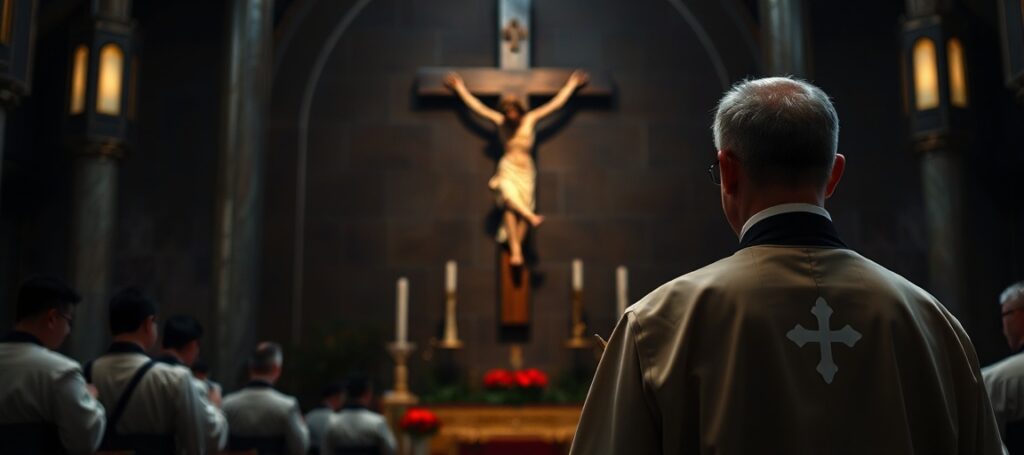
A Catholic family of 16 discusses financial prudence in a modest home with a crucifix on the wall.
World

A Debt-Free Family of 16: Domestic Prudence or Distraction from the Supernatural Battle?

National Catholic Register portal reports on the Fatzinger family, parents of 14 children, who claim to live debt-free in one of the most expensive metropolitan areas in the United States. Their advice, drawn from a book published by Ave Maria Press, focuses on frugality, saving, and avoiding debt to achieve “financial freedom.” While the article presents a model of domestic prudence, it entirely omits the supernatural realities that should govern a Catholic family’s life, reducing the faith to a matter of budgetary management and naturalistic self-help.

World

Archbishop of Dhaka Opposes Online Classes: A Catholic Critique of Compromise in Education

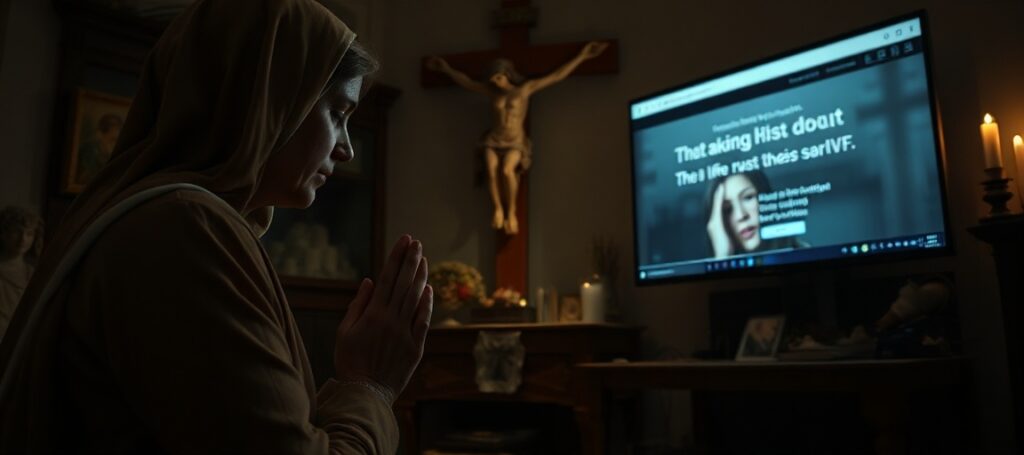
The article from EWTN News (April 9, 2026) reports that Archbishop Bejoy N. D’Cruze of Dhaka opposes the Bangladeshi government’s proposal to introduce online classes amid an energy crisis, citing concerns over moral formation and educational quality. While the archbishop’s stance appears to defend Catholic education, a deeper analysis reveals a troubling accommodation to secular frameworks and a failure to articulate the full supernatural mission of Catholic schooling.

World

Bishop’s Easter Homily Fails to Address Spiritual Root of Congo Violence

The National Catholic Register (NCR) reports on the aftermath of a brutal attack by ADF rebels in the Democratic Republic of Congo, where 43 civilians were killed and villages burned. Bishop Melchisedec Sikuli Paluku of Butembo-Beni expressed solidarity with victims and called for peace during his Easter homily, yet his words, while emotionally resonant, remain trapped within a purely naturalistic framework that ignores the supernatural causes of such evil and the only true remedy: the Social Reign of Christ the King over nations.

A Catholic priest praying over the ruins of a destroyed school, symbolizing the absence of Christ the King in modern humanitarian efforts.
World

Ceasefire in Name Only: UNICEF’s Naturalist Piety Masks the Bankruptcy of Man-Made Peace Without Christ the King

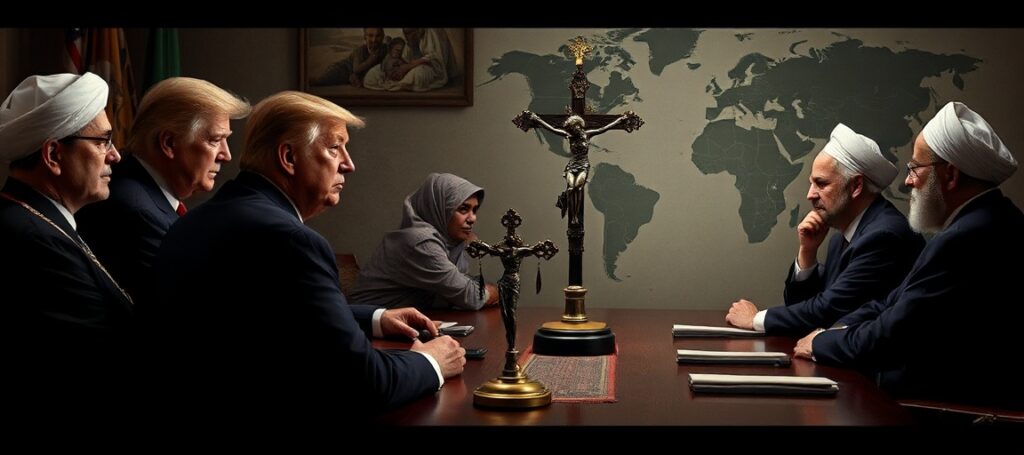
VaticanNews portal reports on April 9, 2026, that UNICEF has issued a statement regarding the lasting effects of the recent U.S.-Israeli conflict with Iran on children, noting that more than 1,100 children have been reported injured or killed since February 28, including 200 killed in Iran, 91 in Lebanon, 4 in Israel, and 1 in Kuwait. The organization welcomes the ceasefire while emphasizing the ongoing humanitarian crisis, damaged health facilities, destroyed schools—including the Shajareh Tayyebeh school attack that killed 168 children—and the need for continued aid. “Every child deserves peace. Every child deserves a future,” UNICEF declares, reaffirming its commitment to health, nutrition, education, child protection, water, sanitation, and emergency response. The article frames the conflict and its resolution entirely within the paradigm of international humanitarian law, UN protocols, and secular human rights discourse, invoking Article 77 of Additional Protocol I to the Geneva Conventions while remaining conspicuously silent on the only foundation upon which true peace can be built: the Social Kingship of Our Lord Jesus Christ.

World

Hannover’s Queer Indoctrination of Toddlers: Violation of Divine Law and Christ’s Kingship

Infovaticana reports (February 15, 2026) that the municipal council of Hannover, Germany, has recommended a list of queer-themed books for use in public daycare centers, targeting children as young as three. These books include illustrations of post-operative transgender individuals and instructions on body exploration. While the city frames this as promoting “inclusion and diversity,” such an initiative constitutes a grave violation of natural law, parental rights, and the social reign of Christ the King. The omission of any reference to supernatural truth, the state’s duty to uphold divine law, and the immutability of God’s creation exposes the depth of modernist apostasy that now permeates both civil and ecclesiastical structures.

A Catholic priest in traditional vestments stands solemnly in the Holy Land, holding a copy of Quas Primas, with Rachel's Tomb in the background, symbolizing the conflict between Christ the King and secular geopolitics.
World

Secular Reporting’s Silent Apostasy: Christ the King Excluded from Geopolitics

The Vatican News portal reports on Israeli cabinet approval of expanded control in the West Bank, altering Oslo Accords arrangements and transferring authority over “heritage sites” like Rachel’s Tomb to Israeli control. A Palestinian official declares this ends meaningful negotiations. The article presents the geopolitical conflict through a purely secular, naturalistic framework, omitting any reference to supernatural justice, the Social Kingship of Our Lord Jesus Christ, or the moral obligations of states derived from Divine Law. This silence is not neutrality but a profound apostasy, reflecting the modernist paradigm that has infected even those structures occupying the Vatican.

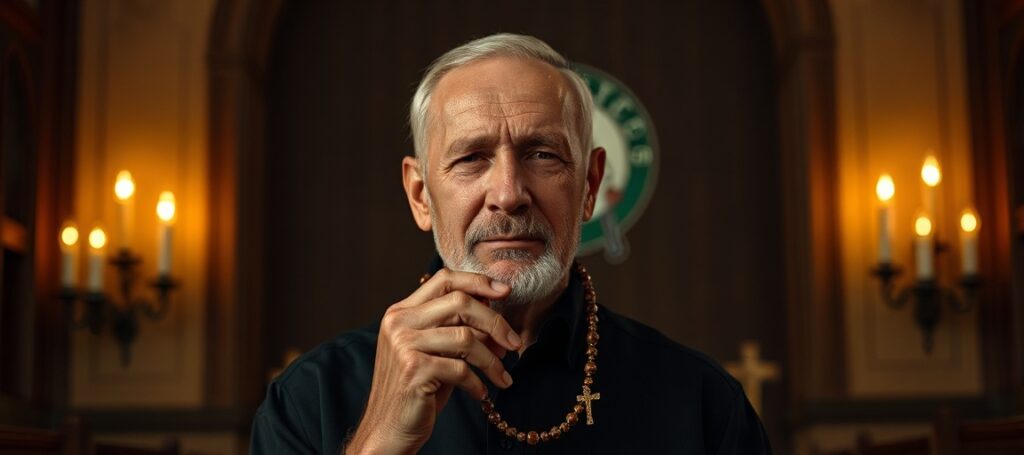
Portrait of Catholic businessman Jimmy Lai in prison, kneeling in prayer with rosary beads, surrounded by dim lighting and traditional Catholic iconography.
World

The Secularist Silence on Christ’s Kingship in Jimmy Lai’s Persecution

The EWTN News portal (February 10, 2026) reports on the family reaction to Catholic businessman Jimmy Lai’s 20-year prison sentence by Hong Kong authorities. Claire Lai describes her father’s imprisonment as politically motivated, citing deteriorating health conditions and calling for US-China diplomatic intervention. Sebastien Lai condemns Hong Kong’s legal system destruction, while both children reference their father’s Catholic faith and trust in divine providence. The article emphasizes international political pressure as the solution.

Scroll to Top
Antichurch.org
Privacy Overview

This website uses cookies so that we can provide you with the best user experience possible. Cookie information is stored in your browser and performs functions such as recognising you when you return to our website and helping our team to understand which sections of the website you find most interesting and useful.