June 2026

Antichurch

Montserrat Pilgrimage Exposes the Neo-Church’s Substitution of Marian Devotion for the Social Gospel

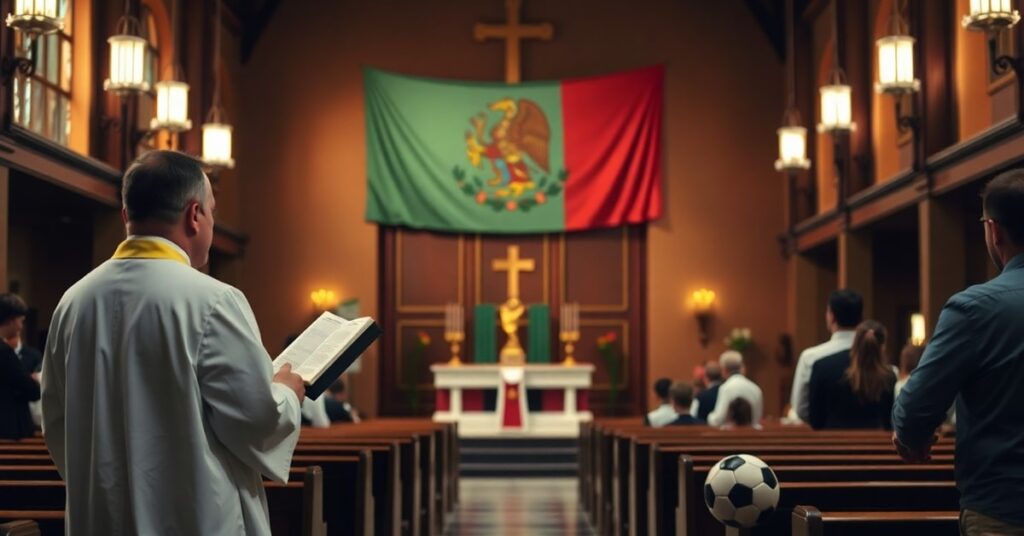
EWTN News reports that on June 10, 2026, the usurper Robert Prevost — styling himself “Pope Leo XIV” — traveled to the Abbey of Montserrat near Barcelona, Spain, where he venerated a 12th-century wooden statue of the Blessed Virgin Mary known as “La Moreneta,” entrusted his claimed pontificate to her intercession, and reflected on mercy, reconciliation, and the avoidance of “hidden violence.” The visit followed a stop at Brians 1 Penitentiary Center, where he told inmates that “the mistakes of a person’s life do not determine who they are” and that “God loves you just as you are.” At Montserrat, he prayed the rosary, invoked St. Ignatius of Loyola’s conversion there, and asked Mary to “guide us to Jesus.” While superficially resembling Catholic piety, the entire performance is a masterclass in the conciliar sect’s characteristic replacement of the supernatural order — the salvation of souls, the propitiatory sacrifice of the Mass, the reality of sin and hell — with a horizontal, naturalistic program of social comfort, psychological reassurance, and sentimental humanitarianism, all wrapped in the aesthetic trappings of a Catholicity long since emptied of its doctrinal substance.
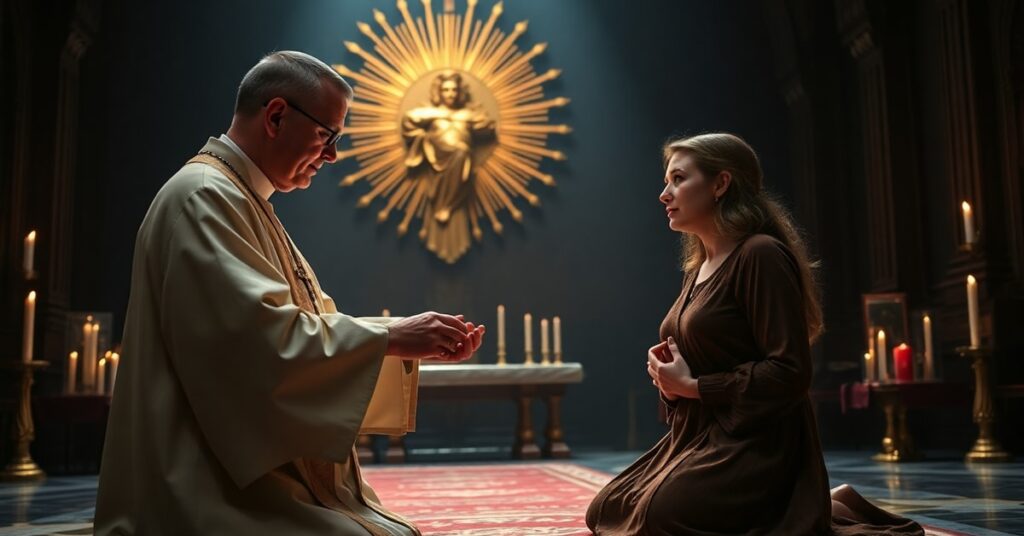
A Traditional Catholic priest and a layperson praying with Sacred Heart badges in an ornate chapel, emphasizing sacramental devotion without superstition.
Spiritual

The Sacred Heart Badge: A Sacramental Rooted in Private Revelation and Its Doctrinal Limits

National Catholic Register portal reports on the Sacred Heart badge, a sacramental approved by the Sacred Congregation of Rites in 1900, tracing its origins to the private revelations of St. Margaret Mary Alacoque and the Marian apparition at Pellevoisin. While the article presents the badge as a powerful means of devotion, it fails to adequately distinguish between the Church’s public revelation and the inherent limitations of private revelations, potentially leading the faithful into a misplaced confidence that borders on superstition rather than a robust theological understanding of sacramentals and the true source of grace.

Antichurch

The Golden Rose and the Walls That Remain: Leo XIV’s Naturalistic Homily in Madrid

EWTN News portal reports that on June 8, 2026, the usurper Robert Prevost, known as “Pope” Leo XIV, bestowed a Golden Rose upon the statue of Our Lady of Almudena in Madrid, delivering a homily centered on the collapse of walls and the “Christian roots” of Spain. The article, framed as a celebration of Marian devotion and Spain’s Catholic heritage, presents the event as a moment of spiritual renewal and historical continuity. Yet beneath the veneer of pious rhetoric lies a profound emptiness: the complete absence of any mention of the Social Reign of Christ the King, the necessity of Spain’s explicit return to the Catholic Faith as the sole path to true peace, and the total silence regarding the apostasy that has consumed the conciliar sect. This ceremony, far from being a genuine act of Catholic worship, is a masterclass in modernist ambiguity, reducing the Blessed Virgin to a symbol of vague “hope” and “communion” while ignoring the supernatural realities of sin, grace, and the obligation of all nations to submit to the Divine King.

Antichurch

From Port of Shame to Port of Hope: The Neo-Church’s Idolatry of Migration

VaticanNews portal reports on the upcoming visit of the antipope Leo XIV to the Canary Islands, specifically to the Port of Arguineguín, once dubbed the “Port of Shame” due to the inadequate conditions for arriving migrants. The article frames this visit as a transformative event, turning a place of suffering into one of “hope,” emphasizing the “accompaniment” of migrants by the “Holy Father” and the integration of migrants, including non-Christians, into the local community. It highlights the “double surprise” of the visit, the “joy” of the local “Church,” and the “unity” fostered among different faiths. The article concludes by presenting the Canary Islands as an “example” of migrant integration, where even unaccompanied minors are welcomed into local families, revitalizing depopulated areas. This entire narrative, steeped in naturalistic humanism and false charity, completely ignores the spiritual peril of souls, the duty of Catholic states to protect their borders and faith, and the absolute primacy of the supernatural end, revealing the conciliar sect’s profound apostasy from the immutable teaching of Christ the King.

Antichurch

13,000 at Knock Shrine: Marian Devotion Co-opted by the Conciliar Sect’s Ecumenical and Modernist Agenda

EWTN News reports that on June 6, 2026, over 13,000 people gathered at Knock Shrine in Ireland for the 41st All Ireland Rosary, described as the “largest gathering of Catholics in Ireland since Pope Francis’ visit in 2018.” Archbishop Eamon Martin of Armagh presided, expressing “joy and hope” and emphasizing a “sense of mission” for those “strong and steadfast in their faith.” He encouraged the restoration of First Saturday devotions and echoed the recent encyclical “Magnifica Humanitas” by the antipope Leo XIV on Artificial Intelligence. The event also featured speakers like Bishop Oliver Doeme, Nikki Kingsley (a convert from Islam), Fr. Chris Alar, and Sister Ângela de Fátima, vice postulator for the cause of the three Fátima children. While outwardly a display of Marian piety, this gathering, orchestrated by the structures of the conciliar sect, serves to reinforce the very modernist and ecumenical errors that have devastated the Church, diverting the faithful from the true remedies for the world’s ills.

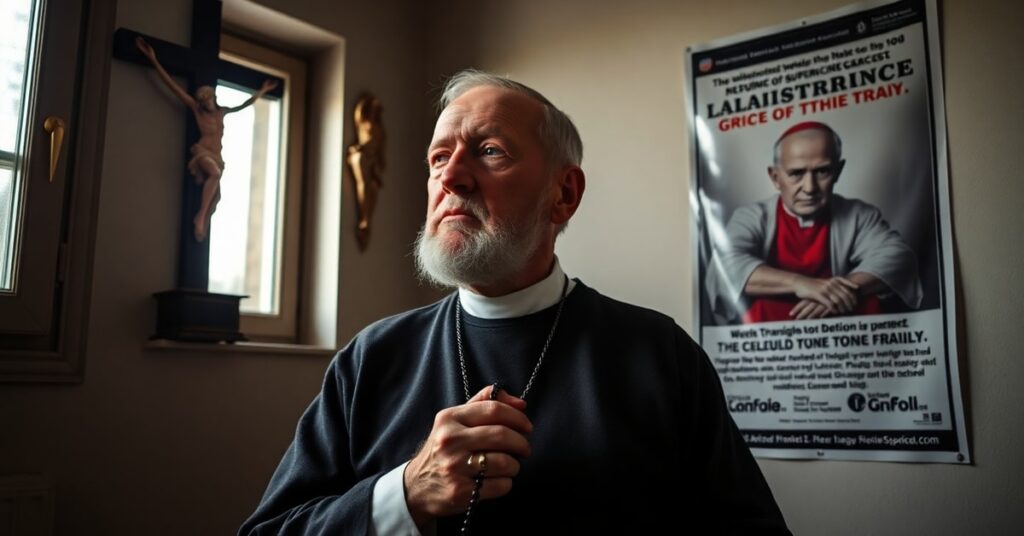
Traditional Catholic elderly man in prayer with rosary before crucifix, contrasting with modernist 'magisterium of fragility' poster behind him
Antichurch

The Neo-Church’s “Magisterium of Fragility”: A Gospel of Weakness Against the Kingship of Christ

VaticanNews portal reports that the antipope Leo XIV, through a letter sent by “Secretary of State” Pietro Parolin to “Cardinal” Kevin Farrell, has reaffirmed the value of the elderly as “life teachers” and described old age as a “time of grace” and a “magisterium of fragility.” The letter was occasioned by a meeting of the Dicastery for Laity, Family, and Life dedicated to the pastoral care of the elderly, under the theme “A Bridge to Heaven: The Magisterium of Fragility in the Time of Strength.” The message reduces the Christian understanding of old age to sentimental naturalism, omits entirely the supernatural framework of suffering, penance, and final judgment, and perpetuates the conciliar revolution’s systematic replacement of Catholic doctrine with a humanistic cult of weakness.

Jimmy Lai in solitary confinement praying with a hand-drawn Crucifixion sketch, juxtaposed with Cardinal Stephen Chow in a modernist church.
Antichurch

Jimmy Lai, the Neo-Church, and the Silence of Cardinal Chow

The National Catholic Register, a portal often echoing the sentiments of the post-conciliar establishment, published a commentary by George Weigel on June 10, 2026, titled “The Strength of Jimmy Lai and the Weakness of Emperor Xi.” The article discusses the imprisonment of Jimmy Lai, a Hong Kong pro-democracy media mogul, and President Trump’s efforts to secure his release. Weigel describes Lai’s solitary confinement, his health struggles, and his deep Catholic faith, evidenced by his religious sketches, particularly of the Crucifixion. He notes Lai’s conviction under the National Security Law as legally and morally invalid, comparing it to Christ’s condemnation by Pontius Pilate. Weigel also highlights an internal conflict within the Chinese communist regime regarding Lai’s fate, with the foreign ministry favoring exile and security hardliners preferring continued imprisonment. He criticizes Xi Jinping’s intransigence, suggesting it reveals the emperor’s weakness. Finally, Weigel urges fellow Catholics to pray for Lai, pressure the US administration, and calls upon Cardinal Stephen Chow of Hong Kong to provide pastoral support, noting Chow’s previous silence on the matter. This commentary, while ostensibly advocating for a persecuted Catholic, reveals a profound theological and ecclesiological void characteristic of the post-conciliar era, failing to anchor its pleas in the immutable social reign of Christ the King and instead relying on secular political mechanisms and a deficient understanding of true martyrdom.

Antichurch

Montserrat Pilgrimage: Leo XIV’s Call for “Peace” and “Reconciliation” Masks the Absence of Christ’s True Kingship

VaticanNews portal reports on “Pope” Leo XIV’s apostolic journey to the Abbey of Our Lady of Montserrat in Spain, where he recited the rosary and delivered an address calling for “mercy, reconciliation, truth and gentleness.” The event, which took place on June 10, 2026, at the 1000-year-old Benedictine monastery near Barcelona, was attended by approximately 7,000 people. “His Holiness” spoke in Spanish and Catalan, urging the faithful to “renounce hurtful words, hasty judgment, gossip and slander,” and to “nurture love” so that “hatred may give way to hope and peace.” This address, while superficially appealing to Marian devotion, is a masterclass in the conciliar strategy of reducing the supernatural Faith to a vague, naturalistic humanitarianism, entirely devoid of the Church’s true mission: the salvation of souls and the public reign of Christ the King.

Antichurch

The Usurper’s Prison Visit: Leo XIV Preaches a God Without Justice

VaticanNews portal reports on June 10, 2026, that during his apostolic journey to Spain, the usurper Robert Prevost, known as “Pope” Leo XIV, visited the “Brians 1 Penitential Center,” where he delivered a message to prisoners centered on God’s unconditional love and the possibility of renewal, stating, “There is, therefore, no situation that causes the Lord to turn His gaze away from us.” While the message emphasizes divine mercy and the inherent worth of every person, a critical examination from the perspective of integral Catholic faith reveals a profound omission of essential truths regarding sin, justice, and the necessity of repentance, reflecting the modernist tendency to reduce the Gospel to a purely sentimental and horizontal message devoid of supernatural realism.

Scroll to Top
Antichurch.org
Privacy Overview

This website uses cookies so that we can provide you with the best user experience possible. Cookie information is stored in your browser and performs functions such as recognising you when you return to our website and helping our team to understand which sections of the website you find most interesting and useful.