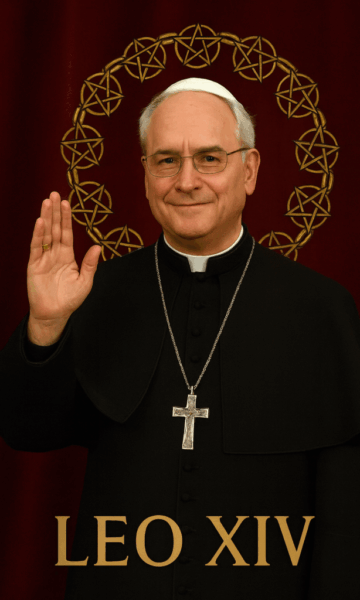
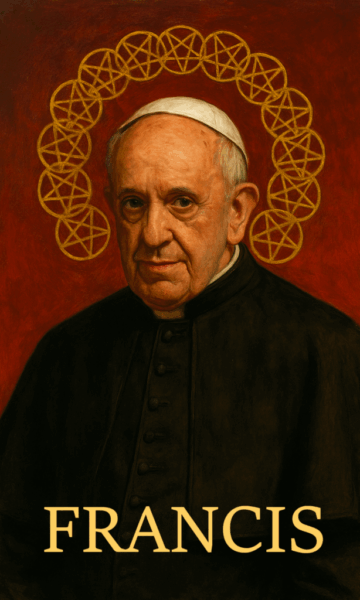
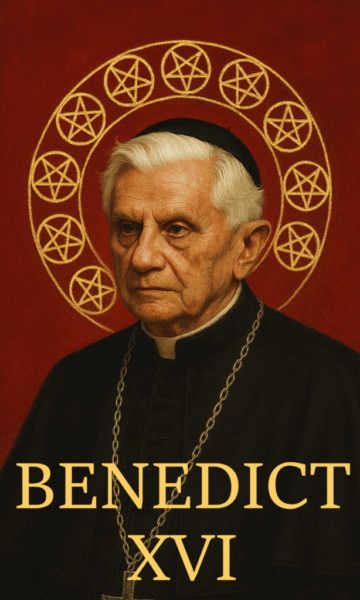
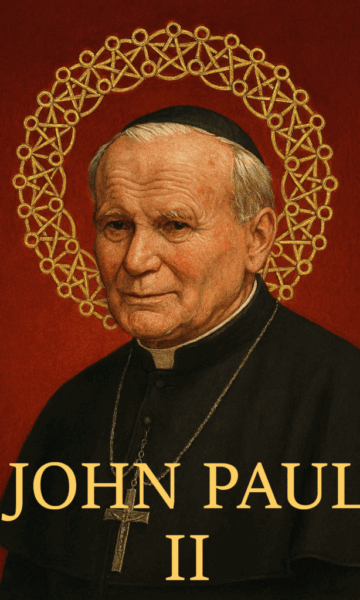
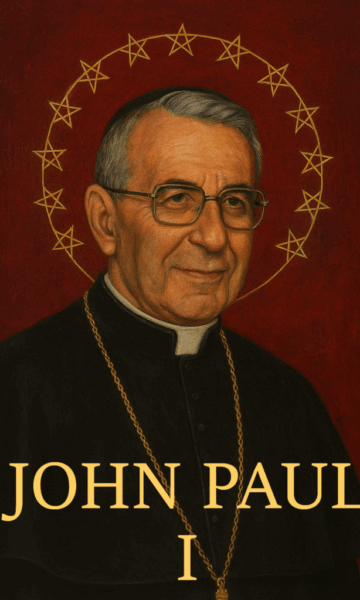
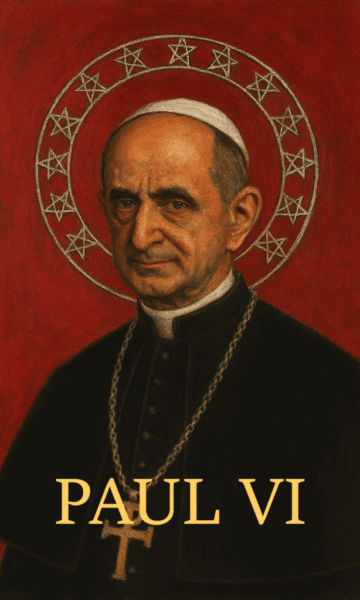
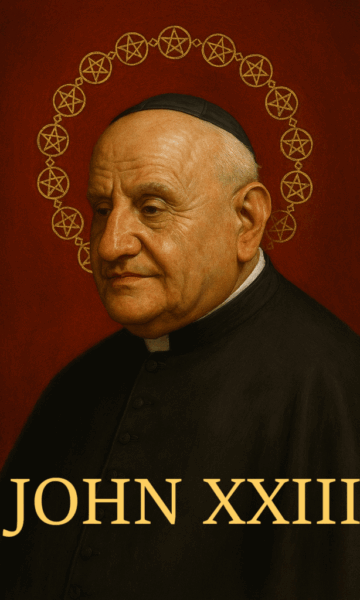
Antipopes of the Antichurch

News feed

EWTN’s Gabriel Awards: A Trophy Case for the Conciliar Revolution

EWTN News portal reports on the network’s multiple honors at the 2026 Gabriel Awards and Catholic Media Awards, celebrating its “commitment to producing compelling, faith-centered content.” The list of winners, featuring segments on “Pope” Leo XIV, profiles of heretics like John Paul II, and social justice activism, is not a testament to orthodoxy but a comprehensive exhibition of the post-conciliar church’s subservience to modernism. This collection of awards is a trophy case for the Conciliar Revolution, showcasing an apostolate that has exchanged the unchanging truth of Catholic dogma for the fleeting applause of a secular media establishment.

The Dobbs Deception: When “Pro-Life” Means Managing the Abortion Economy

Four years after the Dobbs ruling, the U.S. episcopate and “pro-life” managerial class reveal their true function: not the total abolition of the abortion industry, but its regulation and perpetuation under state control. The cited article reports on statements by Bishop Daniel Thomas, Kristan Hawkins, and Marjorie Dannenfelser, who collectively treat the chemical abortion pill as a logistical problem rather than the mass poisoning of innocents it is. The article exposes the bankruptcy of a movement that celebrates the “return to the states” while 15,000 children continue to be chemically slaughtered monthly in so-called “pro-life” states. The thesis of this analysis is uncompromising: the entire post-Dobbs “pro-life” apparatus, led by the USCCB, functions not to destroy the culture of death, but to render it administratively sustainable, deliberately ignoring the doctrinal duty to reject all cooperation with abortion and the modernist dissolution of divine law into democratic process. This is the fruit of an integral Catholic faith abandoned for political naturalism.

Eucharist as Antidote to Division: The Anti-Christ’s Liturgical Rhetoric Exposed

`[Antichurch] Eucharist as Antidote to Division: The Anti-Christ’s Liturgical Rhetoric Exposed`

At his June 24, 2026, general audience, the usurper “Pope” Leo XIV continued his catechesis on Vatican II’s *Sacrosanctum Concilium*, calling the Eucharist a “powerful antidote to division” and urging Catholics to be “transformed by the mystery we celebrate.” The address, delivered in St. Peter’s Square, promoted the reformed liturgy as the source of unity, citing the Lectionary, the Mass structure, and the patristic and conciliar texts in a naturalistic, modernist framework. This rhetoric betrays a complete inversion of Catholic doctrine: the Most Holy Sacrifice of the Mass is no longer the unbloody renewal of Calvary for the remission of sins, but a symbolic “banquet” and a tool for vague humanitarian unity. The entire address is a symptom of the conciliar revolution’s reduction of the Church to a humanitarian NGO, where the Eucharist is weaponized to advance the apostasy of Modernism.

Theological Bankruptcy: The Eucharist Without Sacrifice

The address is silent on the propitiatory nature of the Mass. The Catholic Church has always taught that the Mass is a true sacrifice, offered by the priest *in persona Christi*, for the living and the dead (Council of Trent, Session XXII, Chapter 2). The modernist “Mass” of Paul VI, which Leo XIV implicitly defends, is a mere memorial supper, a “paschal banquet” stripped of its sacrificial character. The “Eucharist” described by Leo is a “sign of unity” and a “bond of charity” — phrases lifted from *Sacrosanctum Concilium* — but it is never called the unbloody immolation of Our Lord on Calvary. This silence is not accidental; it is the hallmark of the conciliar sect, which has removed the doctrine of the propitiatory sacrifice from its official catechisms. The faithful are invited to “offer themselves” with the priest, a modernist distortion of the lay faithful’s spiritual participation in the sacrifice. The true offering is the Body and Blood of Christ, not the psychological self-offering of the congregation. The Council of Trent anathematizes those who say that the Mass is merely a commemoration of the sacrifice on the Cross (Canon 3, Session XXII). Leo’s address is a practical realization of this heresy.

The Lectionary: A Modernist Weapon Against Tradition

Leo XIV praised the Lectionary as a “treasure” drawn from the “purest source of the living Tradition,” combining “fidelity with tradition” and “openness to legitimate progress.” This language is a direct echo of the modernist heresy condemned by St. Pius X in *Lamentabili sane exitu*, which rejects the immutable sense of Tradition and introduces the evolution of doctrine (Proposition 58: “Truth changes with man…”). The Lectionary of the reformed liturgy is a modernist fabrication, compiled by the consilium of Bugnini and his associates, which deliberately obscured or removed passages of Scripture that affirm the sacrificial nature of the Mass, the Real Presence, and the necessity of grace. The traditional Roman Lectionary, in use for centuries, was a faithful expression of the Church’s liturgical year. The new Lectionary, by contrast, is a tool of the “new theology,” designed to promote a horizontal, community-centered worship centered on the “Word of God” as a mere text, not as the living Christ present in the Eucharist. The “progress” Leo celebrates is the progress of apostasy.

Augustine and the Body of Christ: A Modernist Misappropriation

The address quotes St. Augustine’s catechesis on the Body of Christ, where he tells the newly baptized: “It is your own mystery that you receive… Be therefore members of the Body of Christ, so that your Amen may be true.” This passage, taken from Augustine’s *Sermon 272*, is used by Leo to support his horizontal, communal interpretation of the Eucharist. However, the traditional understanding of this passage is that the Eucharist makes the faithful into the Mystical Body of Christ through the Real Presence, not through a symbolic “Amen” of the community. Augustine’s teaching is Christocentric and hierarchical: Christ is the Head, the faithful are members by participation in His sacramental Body. The modernist interpretation, promoted by Leo, reduces the Eucharist to a communal meal where the assembly itself becomes the “Body of Christ” by its own act of faith. This is the heresy of Protestantism, condemned by the Council of Trent: the Eucharist is not a symbol of the community, but the true Body and Blood of Christ, independent of the subjective disposition of the recipients.

“One Single Act of Worship”: The Protestantization of the Mass

Leo XIV states that the Liturgy of the Word and the Liturgy of the Eucharist “are so closely connected with each other that they form but one single act of worship.” This is a direct attack on the traditional Roman Rite, which distinguishes the two parts of the Mass as distinct but inseparable elements of the same sacrifice. The traditional Offertory, Canon, and Communion are not merely “word” and “sacrament” but the propitiatory sacrifice of Christ. The modernist “reform” has reduced the Mass to a “service of the word” followed by a “communion service,” a structure borrowed directly from Protestant liturgies. The Council of Trent condemned this reduction, affirming that the Mass is a sacrifice of propitiation, not a mere sermon and meal. The “one single act of worship” is a modernist slogan that obscures the sacrificial character of the Mass and promotes a horizontal, communal assembly.

The Kingdom of God as a Humanitarian Utopia

Leo describes the Eucharist as “the sacrament of the Kingdom that is to come,” a “Bread for the journey” leading to a heavenly homeland where “God will be all in all.” This language, while superficially Catholic, is stripped of its supernatural and eschatological content. The “Kingdom” of the modernists is not the social reign of Christ the King, as taught by Pius XI in *Quas Primas*, but a vague, immanentist “kingdom” of peace and unity on earth. The Eucharist is no longer the pledge of future glory for the faithful who die in grace, but a “powerful antidote to division” in the world. This is the heresy of Modernism, condemned by St. Pius X in *Pascendi Dominici Gregis*: the reduction of the supernatural to the natural, the Kingdom of God to a humanitarian ideal. The true Kingdom of Christ is the Church, the Mystical Body, which alone possesses the sacraments and the means of grace. The Eucharist is the source of sanctifying grace for individuals, not a tool for global unity. Leo’s address is a manifesto of the conciliar sect’s apostasy.

The “Active Participation” of the Faithful: A Modernist Dogma

The address stresses that the faithful are not “passive spectators” but join in offering the sacrifice “with” the priest. This is the modernist dogma of *actuosa participatio*, which has been used to justify the laity’s intrusion into the sanctuary, the abolition of the silent Canon, and the reduction of the priest’s unique role as mediator. The traditional teaching is that the faithful participate in the Mass by their interior dispositions, by their prayers, and by their intentions, but the offering of the sacrifice is the exclusive prerogative of the ordained priest. The Council of Trent condemned the assertion that the faithful “offer” the Mass in the same sense as the priest (Session XXII, Chapter 2). Leo’s language is a direct contradiction of this dogma, promoting a democratic, Protestant concept of the assembly where the priest is merely a “presider” and the people are co-offerers. This is the abolition of the hierarchical priesthood, a cornerstone of the conciliar revolution.

Conclusion: The Abomination of Desolation

The address of Leo XIV is a perfect specimen of the modernist rhetoric that has infected the conciliar sect. The Eucharist is no longer the Most Holy Sacrifice of the Mass, the unbloody renewal of Calvary, but a communal meal, a symbol of unity, a tool for humanitarian progress. The Lectionary, the “one single act of worship,” the “active participation” of the faithful, the “Kingdom” as a utopia — all are fruits of the apostasy that began with Vatican II and continues under the usurpers in the Vatican. The faithful must reject this modernist distortion and return to the traditional Roman Rite, the true Mass of all ages, in which the priest offers the Body and Blood of Christ for the remission of sins, and the faithful participate by their interior dispositions and their fidelity to the unchanging Tradition of the Church. The Eucharist is not an “antidote to division” but the source of sanctifying grace for the salvation of souls. The conciliar sect has made it an idol of their own creation, a tool of their apostasy.

EWTN’s Gabriel Awards Reveal the Triumph of Naturalism Over the Catholic Faith

EWTN, a flagship organ of the post-conciliar establishment, recently celebrated a series of accolades at the 2026 Gabriel Awards and Catholic Media Awards. The cited article reports that the network received numerous honors across various categories, purportedly for its “commitment to producing compelling, faith-centered content.” The list of winners includes pieces on social justice, pro-life activism, ecumenical dialogue, and personality profiles of prominent conciliar figures. This entire spectacle is nothing but a celebration of the very Modernist revolution that has gutted the Church of her supernatural identity, replacing the heroic sanctity of the True Faith with the banal humanitarianism of naturalistic humanism.

Varia

Announcement:
News feedimplemented

Antipopes separate web sites with their all documents refutation – in progress

Categories

Categories

Archive

Czytnik artykułów

Zatrzymano

Playlista

Tekst

Scroll to Top
Antichurch.org
Privacy Overview

This website uses cookies so that we can provide you with the best user experience possible. Cookie information is stored in your browser and performs functions such as recognising you when you return to our website and helping our team to understand which sections of the website you find most interesting and useful.