
Antipopes of the Antichurch
News feed
Antichurch Technocracy: Parolin’s Globalist ‘Win-Win’ Betrays the Social Kingship of Christ
The Vatican News portal reports that on 16 September 2026, the Secretary of State of the conciliar sect, Pietro Parolin, addressed a conference at the Italian Parliament entitled “Faith and Reason in the Age of Artificial Intelligence.” Parolin called for global ethical regulation of AI, expressing concern that nations might “go it alone,” and advocated a “win-win solution” for the Ukraine conflict based on dialogue and humanitarian diplomacy rather than justice or truth. He described AI as “all head and no heart” and admitted the Holy See’s diplomatic efforts yield “limited results.” This spectacle of a usurper’s functionary lecturing a Masonic parliament on “ethics” while ignoring the Social Kingship of Christ the King exposes the total substitution of the supernatural mission of the Church for a naturalistic, Masonic globalist agenda.
German ‘Bishop’ Demands Married Clergy: Conciliar Sect Dismantles Priesthood
EWTN News portal reports that Josef Graf, auxiliary “bishop” of Regensburg, has publicly advocated for the ordination of married men — so-called viri probati — while paying lip service to celibacy and rejecting women’s “ordination,” mere days before the German “bishops'” autumn plenary in Fulda. Graf cites the existence of married convert-clergy and Eastern rites as precedent, denies celibacy is a conditio sine qua non for orders, and blames the vocational collapse on secularization rather than the post-conciliar rupture. The new “conference president,” Heiner Wilmer of Münster, simultaneously calls for a “synodal Church” unafraid of the “spirit of the times.” This orchestrated maneuver is not reform but the calculated demolition of the Catholic priesthood by a paramasonic structure that has not held a valid hierarchy since 1958.
Antipope Leo XIV Exalts Gaudium et Spes: The Masonic Gospel of Human Fraternity Replaces the Kingship of Christ
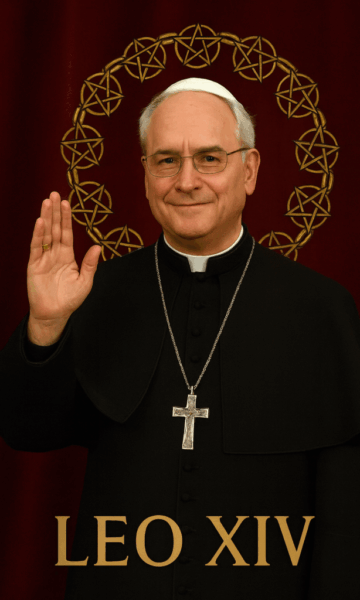
The National Catholic Register portal reports that the usurper antipope Leo XIV (Robert Prevost), during his general audience on September 16, 2026, continued his catechetical series on the pastoral constitution Gaudium et Spes, the flagship document of the apostate Second Vatican Council. The antipope extolled the “growing interdependence of men” as a salient feature of the modern world, praised diversity as a “resource for enrichment,” and demanded “respect and love for adversaries or for those who think and act in ways different from our own.” He warned against delegating decisions to algorithms and invoked the conciliar definition of the common good. This address is not a pastoral exhortation; it is a manifesto of the Masonic Republic established in the place of the Catholic Church, a brazen proclamation that the Civitas Dei has been definitively replaced by the Civitas Hominis.
Conciliar Sect Exploits AI Anxiety to Advance Masonic Social Dialogue Agenda
The EWTN News portal reports on a September 11, 2026 press conference held in the Vatican during the so-called “Fourth Fratelli Tutti Synodal Meeting,” where the conciliar sect’s hierarchs and Masonic labor leaders jointly demanded “worker voice” in artificial intelligence deployment. The piece frames this collaboration as a continuation of Catholic social teaching, citing the usurper “Pope” Leo XIV’s alleged encyclical Magnifica Humanitas and invoking Rerum Novarum to baptize the AFL-CIO’s partnership with Microsoft. The thesis is clear: the conciliar sect has fully surrendered the supernatural mission of the Church to a naturalistic, Masonic project of global governance, using technological anxiety as a pretext to legitimize its apostasy.
Varia
Announcement:
– News feed –implemented
– Antipopes separate web sites with their all documents refutation – in progress