
Antipopes of the Antichurch
News feed
Australian Neo-Church Treats Sunday Obligation as Optional Consumer Choice
The Pillar Catholic portal (October 8, 2026) reports on a 176-page sociological study commissioned by the Australian “bishops’ conference” titled Absent from the Table: Catholics in Australia Who Do Not Regularly Attend Sunday Mass. The study reveals that a majority of self-identified “Catholics” who violate the Sunday precept nonetheless claim adherence to core doctrines such as the Real Presence, yet the “hierarchy” responds not with canonical correction but with proposals for “convenient Mass times,” “shorter services,” and “inclusive” liturgies. This document exposes the complete collapse of supernatural authority in the conciliar sect, replacing the lex orandi, lex credendi (the law of prayer is the law of belief) with a consumerist model where the divine precept is negotiable.
Conciliar Sect Celebrates Cristero Centenary with Modernist Pacifism and False Religious Liberty
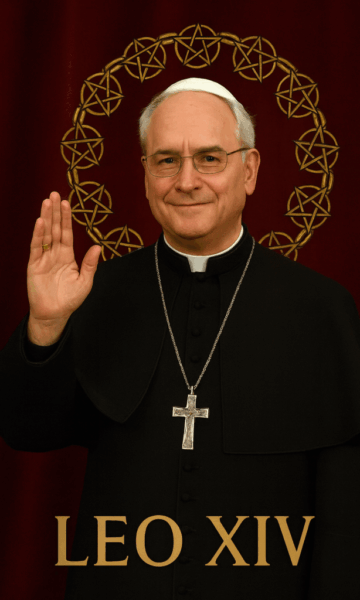
The National Catholic Register — a flagship organ of the neo-conservative wing of the conciliar sect — reports on a conference held at the “Pontifical University of the Holy Cross” in Rome (October 7–9, 2026) marking the centenary of the Cristero War (1926–1929). The event, tellingly titled “Viva Cristo Rey! Centenary of the Cristero Epic,” gathered functionaries of the Vatican’s paramasonic structures: the Mexican ambassador to the Holy See, Alberto Medardo Barranco Chavarría; Rodrigo Guerra López, secretary of the “Pontifical Commission for Latin America”; and the Italian liberal Catholic politician Rocco Buttiglione. The conference epitomizes the conciliar sect’s rewriting of history: the heroic resistance of Mexican Catholics against the Masonic-Communist persecution of President Plutarco Elías Calles is stripped of its supernatural character and reduced to a vague struggle for “religious freedom” — a condemned error — while the antipope Leo XIV (Robert Prevost) is invoked as a teacher of “disarmed and disarming peace,” a pacifist slogan alien to the Church’s perennial doctrine on just war and the Social Kingship of Christ.
Antipope Leo XIV Appoints Woman to Lead Pontifical Mission Societies Amidst Heretical Advocacy for Female Priesthood
The National Catholic Register portal reports that the usurper antipope Leo XIV (Robert Prevost) has appointed Sister Mary Teresa Barron, an Irish religious sister and former president of the International Union of Superiors General (UISG), as adjunct secretary of the Dicastery for Evangelization and president of the Pontifical Mission Societies, effective January 4, 2027. This appointment crowns a trajectory of revolutionary feminism within the conciliar sect, as Barron has publicly advocated for the continued discussion of a female “call to priesthood,” directly contradicting the immutable dogma of the Catholic Church. The elevation of a woman to govern the Church’s missionary apparatus, coupled with her explicit dissent on the nature of Holy Orders, manifests the abomination of desolation sitting where only the Vicarius Christi and his legitimate ministers should reign.
The Neo-Church’s Statistical Idolatry: Reducing the Sacrament of Matrimony to a Therapy for Marital Happiness
The National Catholic Register portal (October 8, 2026) publishes a commentary by Richard Dell’Isola, co-author of a study by the Institute for Family Studies, which trumpets sociological data showing that “devout” Catholics in the conciliar sect report higher marital satisfaction and sexual fulfillment than their non-practicing or non-religious counterparts. The article cites a 74% decline in “Catholic weddings” since 1970, praises the FOCUS apostolate for producing “orthodox” alumni with stable marriages, and concludes that “alignment between affiliation and practice” within the post-conciliar structure is the key to “experiencing the fullness of marriage.” The thesis is a capitulation to naturalism: the supernatural sacrament is reduced to a psychological mechanism for “self-concordance” and “happiness advantage,” utterly silent on the primary end of marriage, the necessity of the state of grace, and the apostasy of the very structure dispensing these simulated sacraments.
Varia
Announcement:
– News feed –implemented
– Antipopes separate web sites with their all documents refutation – in progress