
Antipopes of the Antichurch
News feed
Pilgrims Robbed at Gunpoint: The Fruits of a Church That Abandoned Christ the King for Secular Security
The EWTN News portal — the English-language mouthpiece of the ACI Prensa propaganda apparatus of the conciliar sect — reports that a group of forty-seven pilgrims from the Diocese of Nuevo Laredo, returning from the Basilica of Our Lady of Guadalupe in Mexico City, was intercepted and robbed at gunpoint on a highway in Guanajuato by men disguised as National Guard agents. The “bishop” Luis Carlos Lerma Martínez laments the “lack of security on the highways” and urges the civil authorities to “redouble their efforts.” Not a word is spoken of the Kingship of Christ, the necessity of the Social Reign of the Sacred Heart, or the spiritual desolation that follows when a nation officially apostatizes from its Baptismal promises. This incident is not a mere crime report; it is a damning indictment of a hierarchy that has traded the potestas ordinata of the King of Kings for the potestas facta of Masonic republics.
The Americanist Heresy Crowned: “Archbishop” Pérez Baptizes the Masonic Republic at 250
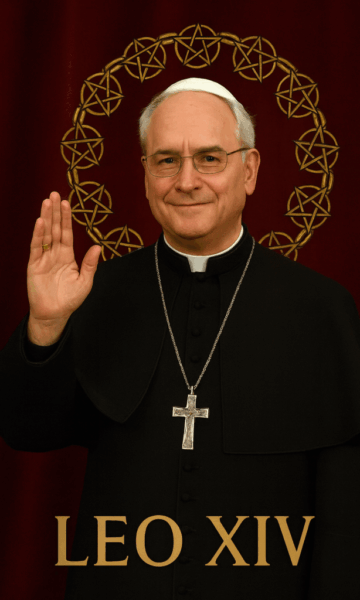
The National Catholic Register portal publishes a commentary by the “archbishop” of Philadelphia, Nelson J. Pérez, dated August 5, 2026, celebrating the 250th anniversary of the Declaration of Independence. The text exults in the bestowal of the “Liberty Medal” upon the antipope Leo XIV (Robert Prevost) by the National Constitution Center, describes a “National Eucharistic Pilgrimage” processing between shrines of post-conciliar “saints,” and explicitly grounds Catholic duty in the “fundamental right” of religious liberty, listing Catholics, Protestants, Jews, Muslims, Buddhists, and Hindus as equal possessors of the “right to worship.” The “archbishop” invokes the antipope’s encyclical *Magnifica Humanitas* to frame the building of the “City of God” as a project of “dialogue,” “diversity,” and “justice” achieved through human collaboration. **This is not Catholicism; it is the final, mature fruit of the Americanist heresy, formally condemned by Leo XIII, now canonized by the conciliar sect as its founding charter.**
Simony in the Neo-Church: German Conciliar Structure Monetizes Baptism
The EWTN News portal reports that a wealthy investor, Peter Löw, is offering 500 euros for every child baptized in the Starnberg conciliar parish near Munich, an initiative dubbed “Starnberger Schutzengelchen.” The pseudo-diocese of Augsburg issued a tepid statement calling the scheme a “likeable expression of charity” while expressing an “uneasy feeling” about the proximity of financial incentive and sacramental reception. The local conciliar “priest,” Mr. Andreas Jall, defends the bribe as pastoral assistance for families in a high-cost area. This sordid transaction lays bare the neo-church’s total capitulation to mammon: the conciliar sect openly trades the sacrament of regeneration for cash, confirming its status as a synagogue of Satan where grace is merchandised and the Kingship of Christ is mocked.
Antipope Leo XIV Promotes Conciliar Liturgy as Substitute for True Prayer While True Faith Vanishes
The National Catholic Register portal reports that the antipope Leo XIV (Robert Prevost) resumed his general audiences on August 5, 2026, inside St. Peter’s Basilica, lamenting that prayer is disappearing from Christian families and urging the faithful to embrace the Liturgy of the Hours as a “daily school of Christian prayer” according to the Vatican II constitution Sacrosanctum Concilium. He cited the modernist Paul VI’s claim that “the liturgy is the primary source of the divine life communicated to us.” This address manifests the quintessence of the conciliar apostasy: a usurper on the Chair of Peter legitimizing a fabricated liturgy, reducing divine worship to a human technique, and substituting the lex orandi of the true Church with the lex orandi of the neo-church.
Varia
Announcement:
– News feed –implemented
– Antipopes separate web sites with their all documents refutation – in progress