Spiritual

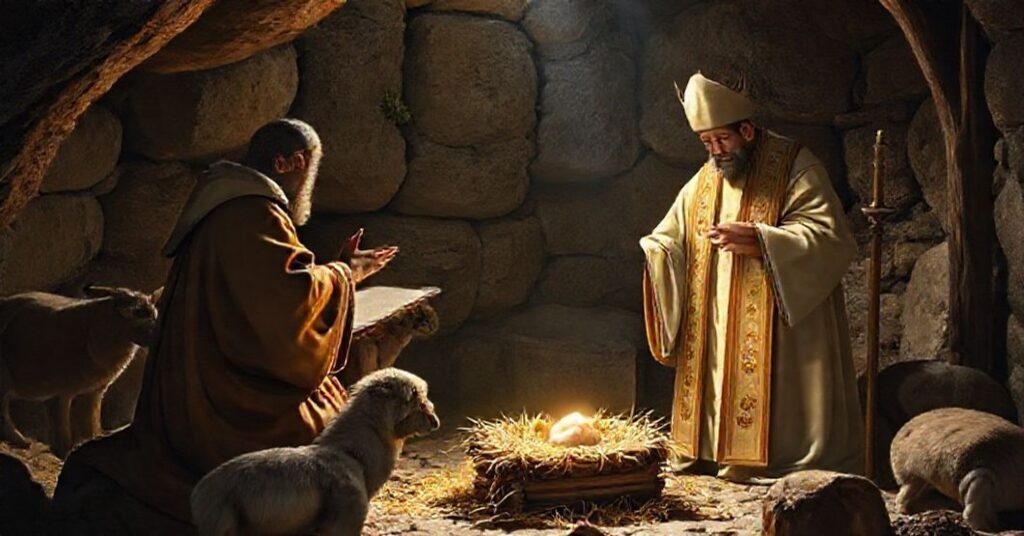
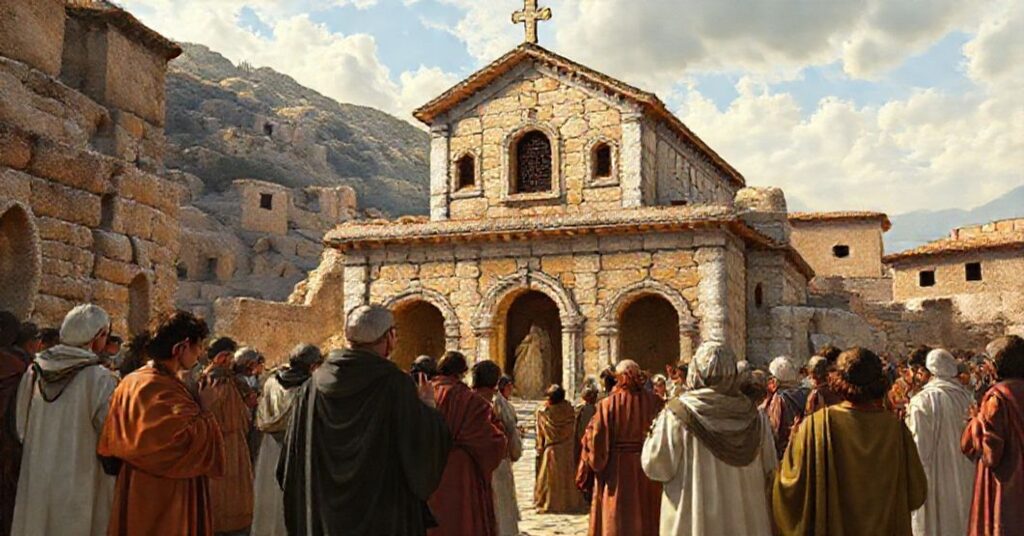
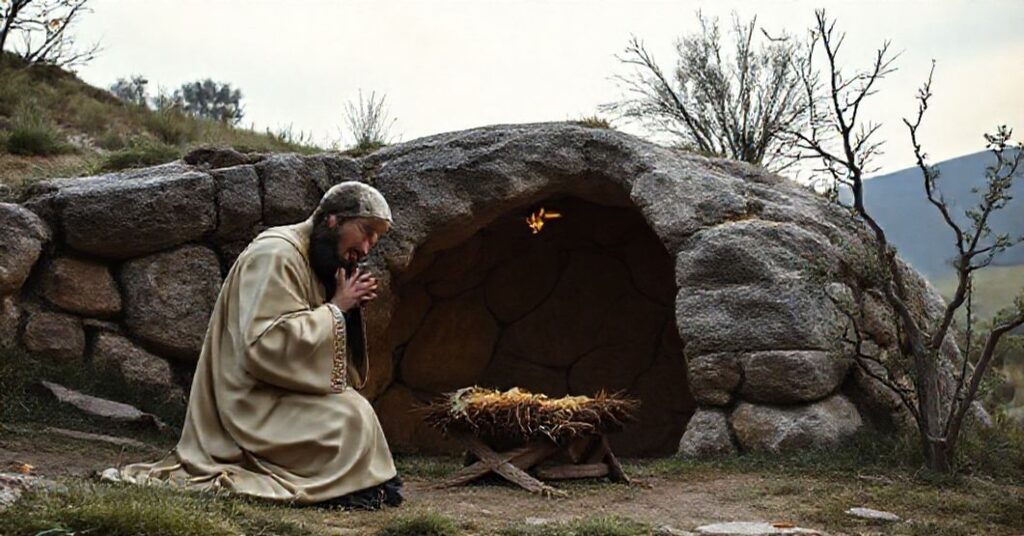
A reverent depiction of the Holy House of Loreto with traditional Catholic pilgrims in prayer.
Spiritual

Loreto Legend: Naturalism Masquerading as Piety in Modernist Narrative

The Catholic News Agency portal (December 10, 2025) uncritically promotes the Loreto shrine through modernist lenses, treating the Holy House’s authenticity as an archaeological puzzle rather than a supernatural mystery. The article breathlessly recounts how “historic documents have vindicated the beliefs of pious pilgrims over the centuries — with an ironic twist,” reducing the angelic translation tradition to a naturalistic transfer by the Angeli family. This materialist presentation betrays the creeping naturalism infecting even “conservative” neo-church outlets.

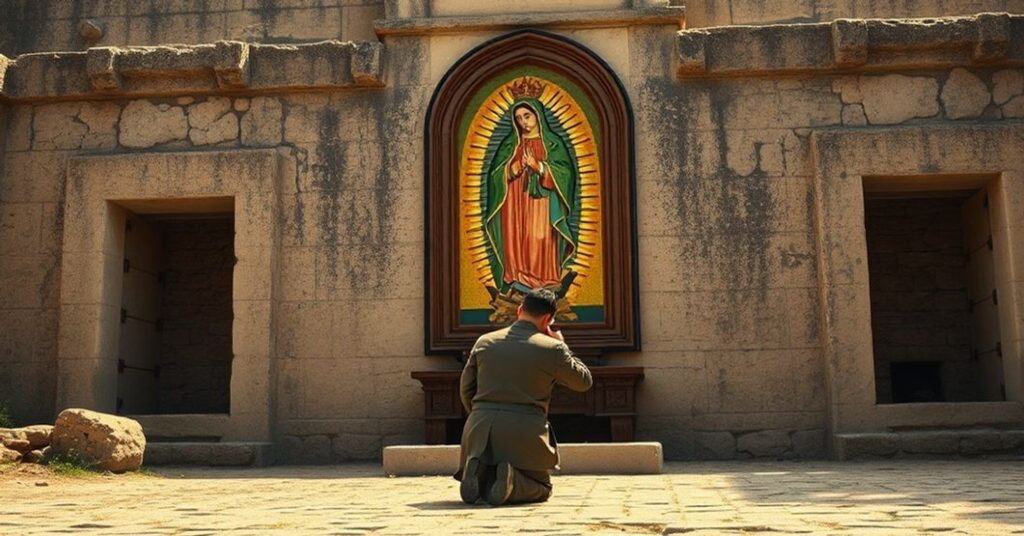
Sedevacantist Catholic critique of Our Lady of Guadalupe syncretism depicted through St. Juan Diego's prayer at the ancient chapel ruins of Tepeyac.
Spiritual

Our Lady of Guadalupe: Syncretic Cult Versus Catholic Tradition

The Catholic News Agency portal (December 9, 2025) reports on the archaeological remnants of the chapel where the image of “Our Lady of Guadalupe” was initially housed, emphasizing St. Juan Diego’s role as caretaker of the image and herald of the alleged apparitions. The article describes this as an “essential part of the Marian complex of Tepeyac,” presenting the Virgin’s message as universal love for marginalized peoples. This uncritical celebration of syncretic paganism disguised as Marian devotion exposes the theological bankruptcy of post-conciliar pseudo-Catholicism.

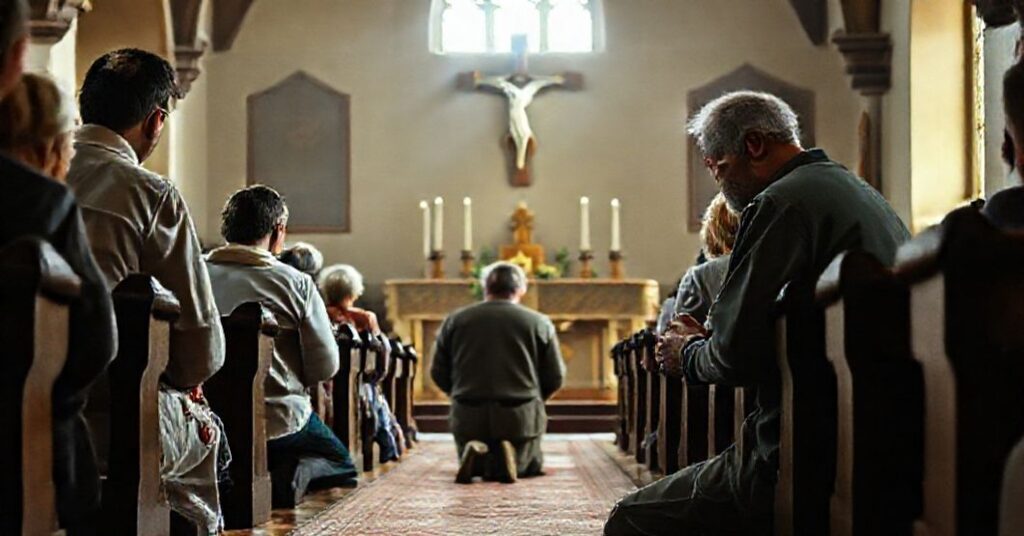
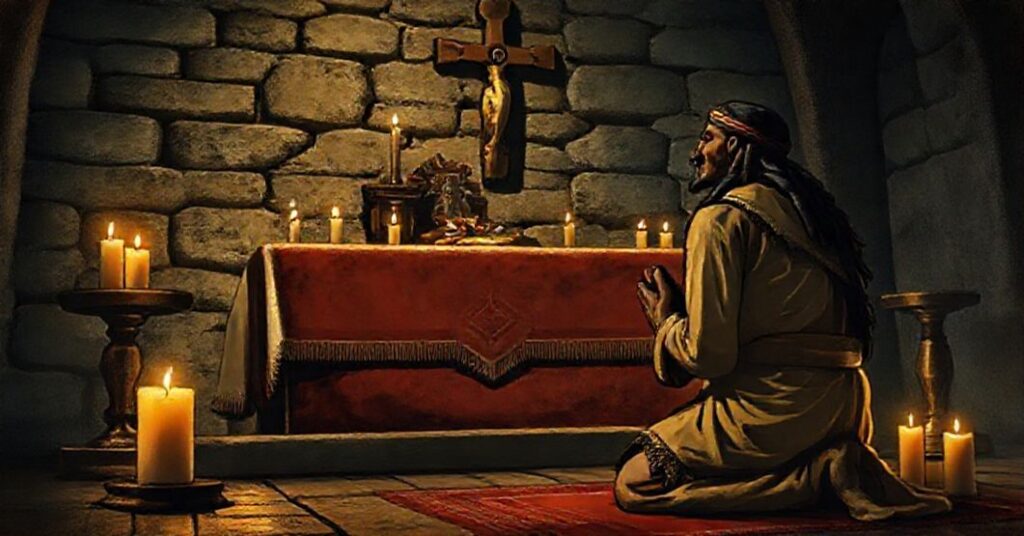
Squanto kneeling in prayer before a Catholic altar in a dimly lit chapel, symbolizing his alleged baptism and the urgency of evangelization among Native Americans
Spiritual

The Mythologized Squanto: Syncretism and Historical Revisionism in Modern Catholic Narratives

Catholic News Agency’s article “Was Squanto Catholic? What we know about this hero of the first Thanksgiving” (November 27, 2025) presents a naturalized account of Tisquantum’s life that obscures essential Catholic truths while promoting dangerous historical revisionism. The narrative centers on speculative claims about Squanto’s baptism by Spanish Franciscans while ignoring the Church’s divine mandate for the conversion of nations. The article states:

“It is apparently from these Franciscans that he received baptism and became Catholic, though it is not clear to what extent he was catechized and practiced his new faith.”

This equivocation reduces the sacrament of baptism to a cultural artifact rather than the supernatural regeneration described in De Baptismo (Council of Trent, Session VII). The article’s admission that “Native American culture was very spiritual” dangerously equates pagan animism with sanctifying grace, violating the Church’s constant teaching that “extra Ecclesiam nulla salus” (outside the Church there is no salvation) as defined by Pope Boniface VIII in Unam Sanctam (1302).

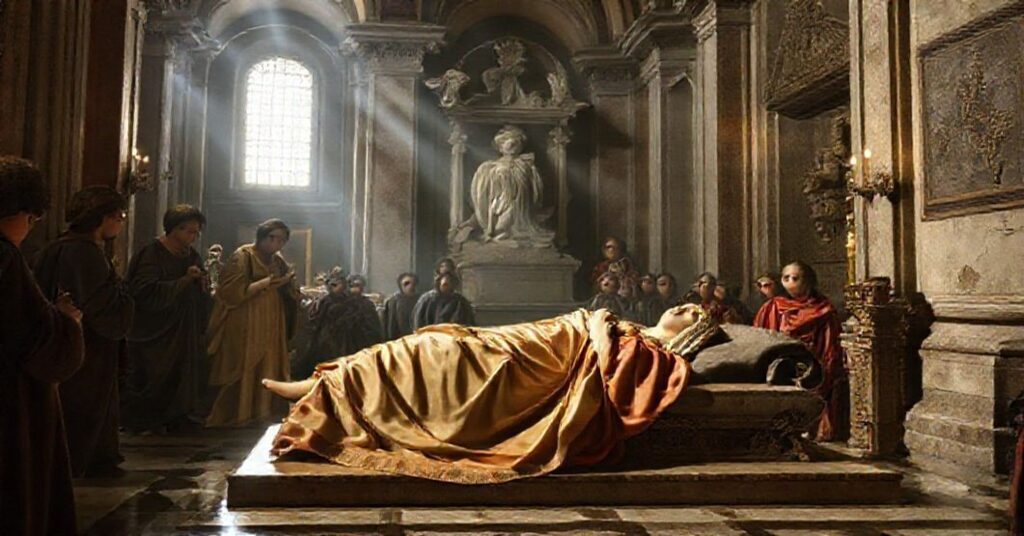
St. Cecilia's incorrupt body in the Basilica of St. Cecilia, Rome, with traditional Baroque elements and Latin antiphon emphasizing her martyrdom.
Spiritual

Cecilia’s Martyrdom Amidst Conciliar Distortions of Sacred Music

Catholic News Agency reports on November 22, 2025, about the Basilica of St. Cecilia in Rome, detailing the martyr’s life, her incorrupt body discovered in 1599, and her designation as “patron saint of music”. The article describes Cecilia’s vow of virginity, martyrdom under Marcus Aurelius, and the Baroque sculpture by Stefano Maderno. It references debates about the Latin antiphon’s interpretation – whether Cecilia sang during wedding festivities (cantantibus organis) or during torture (candentibus organis).

A traditional Catholic depiction of the Presentation of Mary in the Temple, highlighting the contrast between true Marian devotion and modern distortions
Spiritual

Marian Piety Distorted: The Apocryphal Roots of Modern Devotionalism

The National Catholic Register article (November 21, 2025) promotes the feast of Mary’s Presentation using the Protoevangelium of James, an apocryphal 2nd-century text rejected by the Church’s perennial Magisterium. The article cites “Pope” Paul VI’s 1974 modernist encyclical Marialis Cultus to validate this feast despite its non-biblical origins, claiming it carries “lofty and exemplary values.” This uncritical embrace of pseudepigrapha epitomizes the post-conciliar sect’s rupture with Catholic doctrinal integrity.

St. Elizabeth of Hungary in Franciscan habit praying before a hospital for the poor, embodying true Catholic charity rooted in supernatural grace.
Spiritual

St. Elizabeth of Hungary: Distorted Sanctity in Service of Modernist Agenda

Catholic News Agency reports on St. Elizabeth of Hungary (1207-1231), emphasizing her charitable works as a noblewoman who embraced Franciscan poverty after her husband’s death. The article describes her hospital-building, care for the poor, and eventual canonization four years after her death, while quoting “Pope” Benedict XVI’s praise of her as a “model for those in authority” who allegedly inspired “political figures” toward “reconciliation between peoples” (November 17, 2025).

Saint Frances Xavier Cabrini standing resolutely on a 19th-century ship deck, gazing at an iceberg with serene trust in Divine Providence
Spiritual

Divine Providence Preserves Saints from Modernist Distortions

The National Catholic Register portal (November 13, 2025) recounts episodes from the life of St. Frances Xavier Cabrini (1850-1917), emphasizing her providential escape from the Titanic and other maritime dangers. While the narrative details her trust in God’s protection during travels to establish hospitals and orphanages, the article exemplifies the conciliar sect’s reduction of sanctity to sentimentalized exempla rather than doctrinal fortitude.

A reverent portrait of St. Martin of Tours, soldier-turned-bishop, defending the Faith against heresy in a historically accurate Catholic setting.
Spiritual

St. Martin of Tours: A True Soldier of Christ Amidst Modernist Distortions

The Catholic News Agency (CNA) portal – an organ of the neo-conservative EWTN apparatus – commemorates St. Martin of Tours (November 11, 2025) with a narrative stripped of doctrinal clarity and saturated with ecumenical sentimentalism. While purporting to honor the saint, the article reduces his militancy against heresy to a vague “care of souls” and omits critical lessons for our apostate age.

St. Leo the Great holding his Tome before a traditional Catholic altar, symbolizing the defense of Christological orthodoxy against modern apostasy.
Spiritual

St. Leo the Great’s Legacy Weaponized to Conceal Modern Apostasy

Catholic News Agency’s November 10, 2025 article superficially recounts St. Leo I’s defense of Christological orthodoxy while ignoring the systematic dismantling of that same faith by the conciliar sect. The portal writes: “Pope Leo I… worked to clarify doctrines related to Christ’s human and divine natures” and quotes modernist “church historian” Thomas Clemmons calling Leo a “pope-theologian” and “remarkable bishop”. Yet this veneer of orthodoxy masks the article’s true function: to create false continuity between Catholicism and the conciliar counterfeit.

A reverent portrait of King David in traditional Catholic style, emphasizing his prophetic and liturgical role.
Spiritual

The Neo-Church’s “House of David”: A Naturalist Distortion of Sacred History

Catholic News Agency reports on the second season of “House of David,” a Prime Video series produced by “The Wonder Project,” which claims to portray the biblical King David’s journey from shepherd to military commander. Actor Michael Iskander, who plays David and recently converted to Catholicism, describes the season as “transformative” and emphasizes themes of friendship with Jonathan and “how much God can work in our lives if we let him.” The article frames the series as inspirational content prompting viewers to “grow closer to Christ.”

Scroll to Top
Antichurch.org
Privacy Overview

This website uses cookies so that we can provide you with the best user experience possible. Cookie information is stored in your browser and performs functions such as recognising you when you return to our website and helping our team to understand which sections of the website you find most interesting and useful.