Spiritual

Spiritual

The Sacred Heart Devotion: A Catholic Treasure Co-opted by the Conciliar Sect — EWTN Promotes a Film That Ignores the Kingship of Christ

EWTN News portal reports on a new docudrama film, “Sacred Heart: His Reign Has No End,” directed by Steven and Sabrina Gunnell of KREA Film-Makers. The film, which reportedly sold nearly 1 million tickets in France and Europe, retells the apparitions of the Sacred Heart of Jesus to St. Margaret Mary Alacoque in 17th-century France. It features testimonies, accounts of Eucharistic miracles, historical analysis, and dramatic reenactments. The film is scheduled for U.S. theatrical release June 9–11 and June 14, 2026. The article includes an extensive interview with Steven Gunnell, who recounts his personal conversion story — from involvement in a French boy band, through depression and suicidal ideation, to a dramatic encounter with the Sacred Heart of Jesus in a chapel of St. Rita. Both filmmakers express the hope that viewers will leave cinemas “feeling full of love” and “burning about this love.” The article closes with references to U.S. “bishops” planning a consecration to the Sacred Heart. What is conspicuously absent from this entire presentation — and from the film itself, as far as the article reveals — is any mention of the Social Kingship of Christ, the duty of nations to publicly consecrate themselves to Christ the King, or the condemnation of the secularism and laicism that Pius XI identified as the root plague of modern society. The Sacred Heart devotion, stripped of its integral theological context and reduced to an emotional experience of personal consolation, becomes yet another instrument of the conciliar sect’s program of sentimentalized, depoliticized Catholicism.

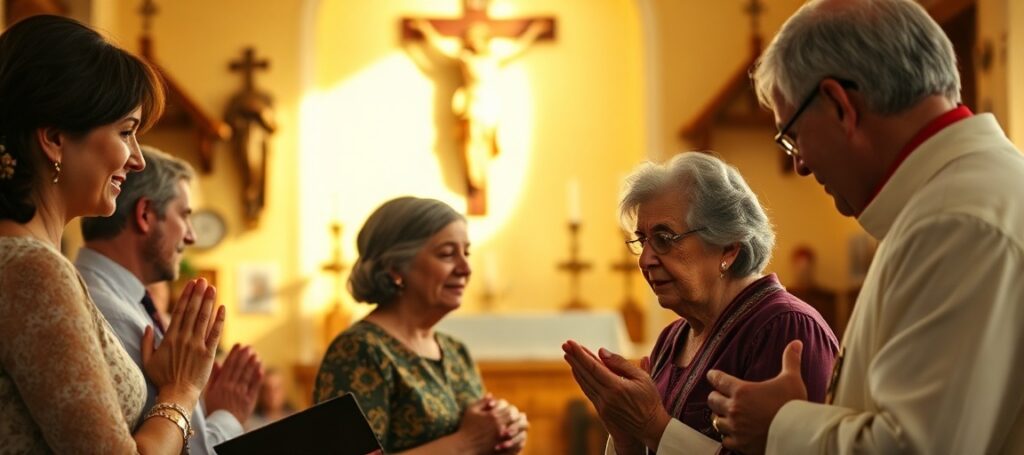
A traditional Catholic family kneeling in prayer before a domestic altar with a crucifix and rosary, emphasizing the importance of sacraments and divine grace in family life.
Spiritual

The Domestic Church Mirage: When “Finding God in the Laundry” Replaces the Supernatural Life

EWTN News portal reports on a new initiative called “30 Days to an Intentional Catholic Summer” by Spirit Juice Kids, a YouTube-based content creator targeting children aged 3–6. The program encourages parents to integrate brief daily reflections, prayers, and family activities into their routines, centered on the theme of Jesus’ hidden domestic life. Julia Jacks, director of Spirit Juice Studios, emphasizes making holiness accessible through ordinary tasks like folding laundry or washing dishes, stating, “He is right here in this moment. We just have to be more intentional about it.” A paid version includes videos from Father Tim Anastos, chaplain at the University of Illinois-Chicago. The initiative aims to build “small, meaningful rhythms of faith” during summer, with hopes these habits persist beyond the 30 days.

This program, while cloaked in pious language, exemplifies the post-conciliar reduction of the supernatural life to sentimental domesticity—a subtle but grave distortion that replaces the rigors of asceticism, sacramental grace, and the pursuit of sanctifying virtue with a comfortable, naturalistic spirituality devoid of the Cross.

Dante Alighieri kneeling in reverence before Beatrice in a traditional Catholic setting, symbolizing divine truth and the necessity of sacraments and grace.
Spiritual

How Beatrice’s Beauty Led Dante to God: A Theological Critique of Naturalized Aesthetics and the Suppression of Supernatural Grace

Regis Martin, S.T.D., professor of theology at Franciscan University of Steubenville, writes in an article published on the National Catholic Register portal (June 5, 2026) that Dante Alighieri’s encounter with Beatrice was not merely romantic infatuation but a revelation of divine truth—her beauty a “real truth,” a “beam of the eternal Thou,” and a “glimpse… of the joys that may await us on the other side of death.” He quotes Charles Williams, Coventry Patmore, T.S. Eliot, G.K. Chesterton, and Romano Guardini to argue that authentic love requires self-sacrifice, asceticism, and ultimately leads to God through the “altar” of marriage. The article concludes with poetic allusions to Eliot’s Four Quartets and Claudel’s call to be “worthy of the flame consuming you.” Yet beneath this lyrical veneer lies a profound theological evasion: the systematic omission of sanctifying grace, the sacramental economy, and the Church as the sole dispenser of salvation—hallmarks of the post-conciliar naturalism that reduces supernatural realities to mere aesthetic experience.

Catholic priest in traditional vestments before an altar, with a faded American flag covering a statue of Christ the King.
Spiritual

Fidelity Month Exposed: Naturalistic Patriotism Masquerading as Virtue

The National Catholic Register reports that elected officials across the United States, including the governors of Arkansas and Utah, have recognized June as “Fidelity Month” — a grassroots movement founded in 2023 by Princeton professor Robert P. George, aimed at renewing commitments to God, family, and country. The movement encourages Americans to “rededicate themselves to basic values” such as patriotism, religion, and community involvement. While the language sounds pious on the surface, this initiative is a textbook example of the naturalistic, horizontal spirituality that has infected even nominally Catholic thought in the post-conciliar era — reducing the supernatural life of grace to a civic program of moralistic therapeutic deism wrapped in the flag.

A Catholic family praying in a traditional chapel with a priest anointing an elderly widow, symbolizing the supernatural focus of true charity.
Spiritual

When Charity Becomes a Program: The Substitution of Supernatural Virtue with Activism

National Catholic Register portal reports on “Both Hands,” a Christian nonprofit that pairs adoption fundraising with service projects for widows, completing 1,652 projects across 46 states and raising more than $25 million since 2008. The article presents this as a model of Christian charity, quoting James 1:27 and featuring testimonials from adoptive families and ministry founders. Yet beneath the veneer of praiseworthy activity lies a fundamentally naturalistic framework that reduces the supernatural life of grace to organized philanthropy, omits the Church’s salvific mission entirely, and reflects the post-conciliar inversion of the spiritual order — where the corporal works of mercy are severed from their theological roots and repackaged as community programming.

Couple praying at Marian shrine in traditional Catholic setting
Spiritual

Marian Shrines and the Theology of Suffering: What the Article Dares Not Say

The *National Catholic Register* article from May 31, 2026, reports on infertile couples turning to Marian shrines—specifically Our Lady of La Leche in St. Augustine, Florida, and Our Lady of Guadalupe in La Crosse, Wisconsin—seeking intercession for children. It presents testimonies of answered prayers, thanksgiving, and spiritual comfort, while also acknowledging that some couples remain childless or suffer miscarriage. The article quotes clergy and laypeople alike, all within the framework of the post-conciliar Church’s approved devotional life. Yet beneath its pious veneer lies a profound silence: it never once confronts the supernatural reality of suffering, the necessity of final perseverance, or the possibility that these very shrines may be instruments of a deeper apostasy. This omission is not accidental—it is symptomatic of the neo-church’s systematic evacuation of Catholic truth.

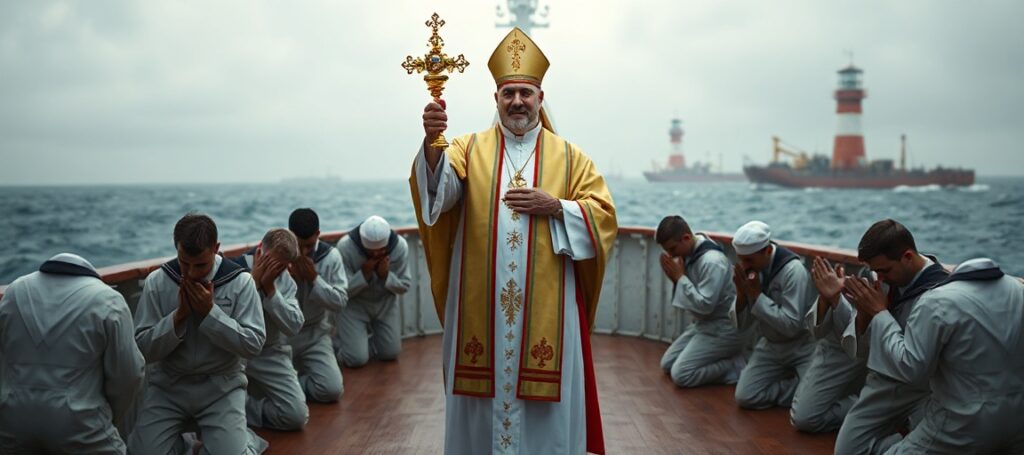
Bishop Frank Schuster holding the Blessed Sacrament aboard a ship with praying seafarers, emphasizing the sacred mission of salvation over humanitarian aid.
Spiritual

Stella Maris and the Dilution of Sacred Ministry into Mere Humanitarian Accompaniment

EWTN News reports that Seattle Auxiliary Bishop Frank Schuster, speaking ahead of the National Day of Prayer and Remembrance for Mariners, described the work of Stella Maris (formerly the Apostleship of the Sea) as a “ministry of accompaniment” focused on delivering toiletries to sailors, listening to traumatized seafarers, and making referrals for mental health — celebrating Mass aboard ships is mentioned almost as an afterthought. The article presents this humanitarian outreach as the essence of the Church’s mission to those at sea. What is conspicuously absent from this entire portrait is any mention of the salvation of souls, the necessity of the sacraments for eternal life, the reality of sin and the need for conversion, or the supernatural purpose of the Church’s existence — revealing a ministry that has effectively reduced the Catholic faith to a nautical social-work agency.

A traditional Catholic scholar contemplating the mystery of the Holy Trinity in a dimly lit chapel.
Spiritual

The Holy Trinity: A Purely Naturalistic Catechesis Stripped of Supernatural Depth

EWTN News portal publishes a catechetical article on the Holy Trinity — the central mystery of the Christian faith — yet the entire exposition is conducted in a tone of rationalistic pedagogy that reduces the highest mystery of revealed religion to a series of logical propositions accessible to unaided human reason, thereby betraying the very supernatural character it claims to present.

A reverent depiction of St. Joan of Arc in prayer, surrounded by divine visions, symbolizing her supernatural mission and Catholic faith.
Spiritual

St. Joan of Arc: From Catholic Heroine to Pro-Life Symbol — A Modernist Appropriation

The article “Why St. Joan of Arc Inspires Me” by Kristan Hawkins, published on the National Catholic Register portal (May 30, 2026), presents a commentary that instrumentalizes the figure of St. Joan of Arc, reducing her supernatural mission to a mere inspiration for contemporary political activism, particularly the pro-life movement. While the article superficially praises Joan’s courage and faith, it fundamentally misrepresents her mission by stripping it of its Catholic theological substance and recasting it in the mold of modern secular activism. This appropriation exemplifies the broader trend within post-conciliar Catholicism of hollowing out the saints’ witness, replacing supernatural faith with naturalistic humanism.

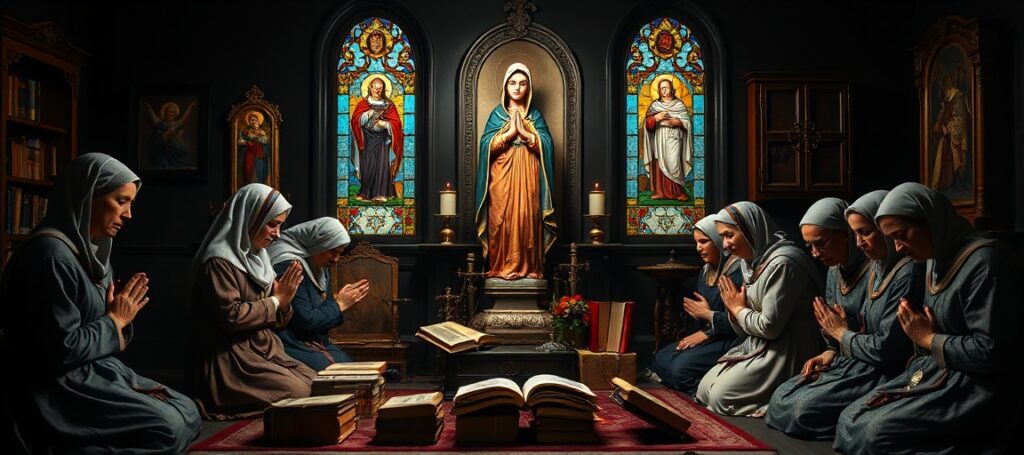
Traditional Catholic mothers praying in a dimly lit chapel with Dominican icons and books, expressing reverence and concern.
Spiritual

Mothers of Dominican Friars: A Post-Conciliar Prayer Group Wrapped in Sentimentality and Spiritual Ambiguity

National Catholic Register portal reports on a group called “Mothers of Dominican Friars,” comprising 25–30 (now over 100) mothers who meet weekly via Zoom to pray the Rosary for their sons—Dominican friars and priests—while sharing fellowship and studying Dominican-authored books. The group, founded in 2016 with the encouragement of “Archbishop” J. Augustine Di Noia, a post-conciliar Dominican, emphasizes maternal support, communal prayer, and spiritual reading. While the surface piety appears commendable, the entire initiative operates within the framework of the conciliar sect, lacking any discernment regarding the doctrinal integrity of the formation these sons receive or the orthodoxy of the “priests” they support. This uncritical embrace of post-conciliar religious life, devoid of vigilance against Modernism, renders even well-intentioned prayer spiritually dangerous—a pious veneer over an apostate structure.

Scroll to Top
Antichurch.org
Privacy Overview

This website uses cookies so that we can provide you with the best user experience possible. Cookie information is stored in your browser and performs functions such as recognising you when you return to our website and helping our team to understand which sections of the website you find most interesting and useful.