Spiritual

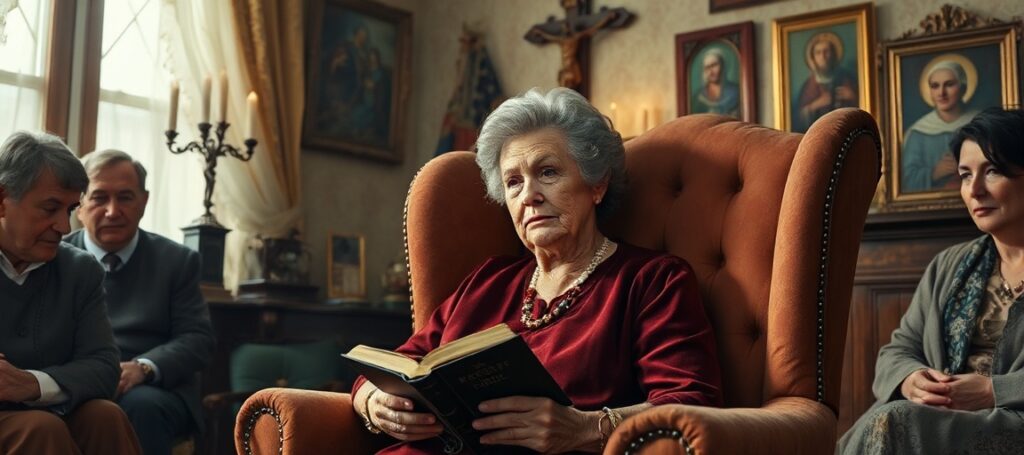
A traditional Polish-American Catholic matriarch in her home, reflecting on the lost faith and family traditions before Vatican II.
Spiritual

The Last Matriarch: When Catholic Families Understood That Blood Without Faith Is Nothing

The National Catholic Register portal published on April 22, 2026, a commentary by Richard C. Lukas titled “The Great Aunt Who Held My Family Together,” a nostalgic reminiscence of a Polish-American matriarch, Wladyslawa, who presided over extended family gatherings in Massachusetts from her “velvet Victorian winged-back chair,” delivering annual tutorials on the meaning of family rooted in Catholic faith and ethnic tradition. The author recalls the beauty of the Traditional Latin Mass, the Latin hymns, the colorful vestments, the banners of saints in parish churches, and his childhood desire to become a priest — a desire nurtured by a family for whom “Polish nationalism was synonymous with Catholicism.” The article is a sentimental portrait of a world that no longer exists, and its very sentimentality, its exclusive focus on natural familial affection and ethnic nostalgia, without a single word about the supernatural dangers that were even then destroying the Church from within, makes it an unwitting elegy not merely for a family matriarch but for the Catholic civilization she believed she was preserving.

Spiritual

St. Joseph on Screen: A Film That Dares to Affirm Life in a Culture of Death

EWTN News reports on a new film, “Saint Joseph: Guardian of the Family,” which tells the story of a married couple facing a serious marital crisis. The husband, a journalist, is assigned to investigate testimonies of people who claim to have experienced the intercession of St. Joseph. Through this investigation, he is personally impacted by the saint and is inspired to become the guardian of his own family, striving to fix the struggles they face. The film, made by the Polish production studio Rafael Film through crowdfunding, will be released in theaters across the United States on April 23. Director Dariusz Regucki shared that the film was inspired by Father Jacek Płota, custodian of the National Shrine of St. Joseph in Kalisz, Poland. Regucki described St. Joseph as a “silent yet obedient man” who “simply does his work” and stated that the saint inspires him as a father and husband, confronting him with “the truth” and showing him “what true love really is.” The director hopes viewers will leave the cinema “moved and full of hope,” holding the hand of their spouse, and that they will “look upward, stop dwelling on their sadness and suffering, and begin to affirm life.” While the film’s intentions appear superficially pious, a rigorous examination through the lens of integral Catholic theology reveals a troubling reliance on emotionalism, a near-total silence on the indispensable sacramental and doctrinal framework of marriage, and a naturalistic anthropology that substitutes psychological comfort for the supernatural life of grace — all hallmarks of the post-conciliar spiritual malaise.

Spiritual

Forensic Idolatry: When Science Replaces Faith in the Relics of the Saints

National Catholic Register portal reports on Dr. Philippe Charlier, a French forensic pathologist who performs autopsies on the remains of saints and historical figures, including St. Thérèse of Lisieux, St. Francis of Assisi, and Mary Magdalene. The article presents his work as a bridge between faith and science, claiming that scientific analysis “legitimizes” devotion to relics and offers “concrete understanding” of how these figures lived and died. It also highlights a supposed “resurgence of interest in relics” since COVID, framing relics as a response to humanity’s “need for something tangible.” While the article attempts to harmonize Catholic devotion with modern forensic science, it reveals a profound theological confusion that undermines the very nature of faith, relics, and the communion of saints.

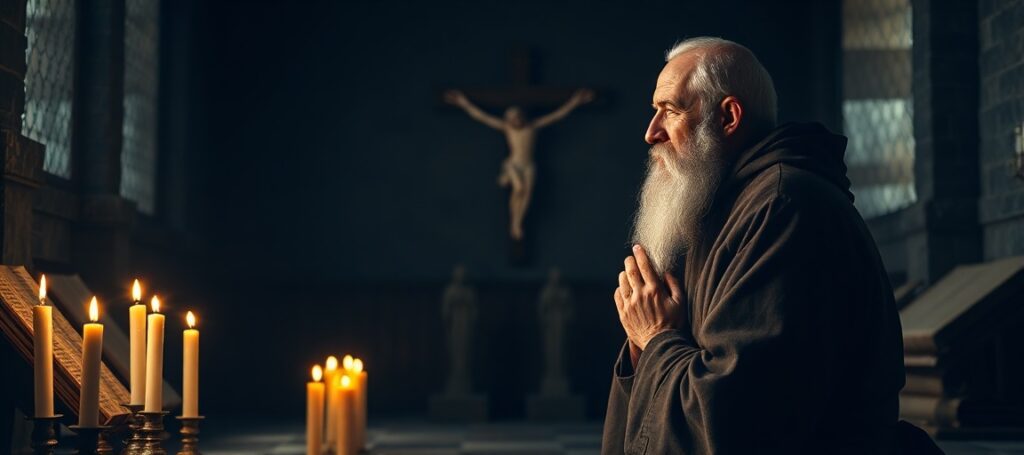
St. Anselm of Canterbury in prayer before a crucifix in a medieval chapel.
Spiritual

St. Anselm: A Doctor of the Church Betrayed by the Conciliar Sect’s Shallow Hagiography

EWTN News portal reports on the figure of St. Anselm of Canterbury, commemorating his feast day on April 21. The article presents him as an 11th- and 12th-century Benedictine monk and archbishop, celebrated for his theological writings on the existence of God and Christ’s atonement. It quotes “Pope” Benedict XVI praising Anselm as “a monk with an intense spiritual life, an excellent teacher of the young, a theologian with an extraordinary capacity for speculation, a wise man of governance and an intransigent defender of the Church’s freedom.” The piece recounts Anselm’s early life, his monastic vocation under Lanfranc, his tenure as abbot of Bec, his reluctant appointment as Archbishop of Canterbury, his struggles against King William Rufus over ecclesiastical liberty, and his eventual exile. It highlights his motto “faith seeking understanding” and notes that Pope Clement XI declared him a Doctor of the Church in 1720. What this hagiographic sketch omits, however, is the very substance of what made Anselm a saint and a doctor — his uncompromising defense of the Church’s supernatural mission against the encroachments of secular power, a mission the conciliar sect has systematically abandoned.

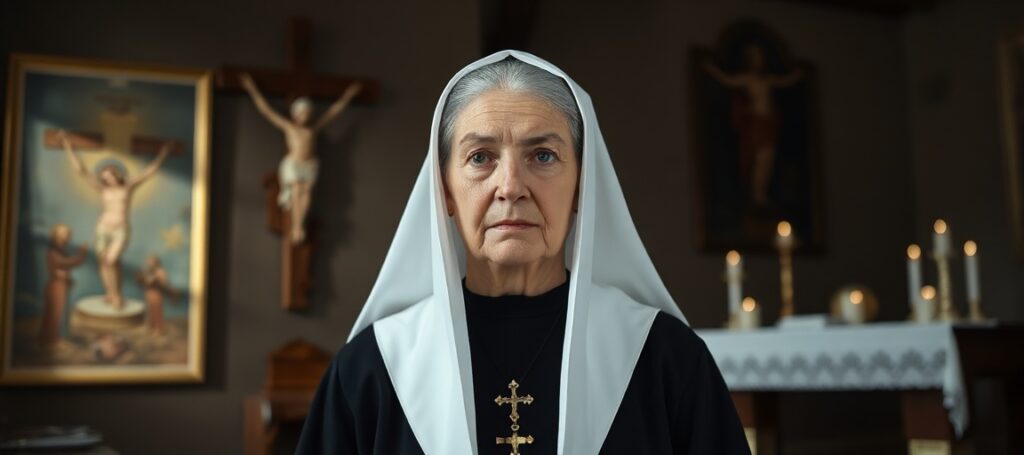
A solemn portrait of Mother Angelica in Poor Clare habit before a chapel symbolizing the doctrinal emptiness of conciliar spirituality.
Spiritual

Mother Angelica’s Legacy: A Critical Examination of Sentimentalized Faith Without the Cross of Truth

EWTN News portal reports on the birthday of Mother Angelica (April 20, 1923), the foundress of the Eternal Word Television Network, presenting 10 quotes attributed to her on the subject of faith and the love of Jesus Christ. The article, authored by Francesca Pollio Fenton and published on April 20, 2026, celebrates her as a “Poor Clare nun” whose “bold faith and candid teaching style brought millions closer to Christ through her television ministry.” The piece is hagiographic in tone, offering no critical examination of the theological content of the quotes, the context of EWTN’s relationship with the post-conciliar structures, or the profound omissions that characterize such sentimentalized presentations of Catholic spirituality. Beneath the veneer of pious remembrance lies a spirituality stripped of doctrinal substance, sacramental urgency, and the uncompromising demands of the Faith — a spirituality perfectly calibrated for the conciliar sect’s program of reducing Christianity to emotional comfort.

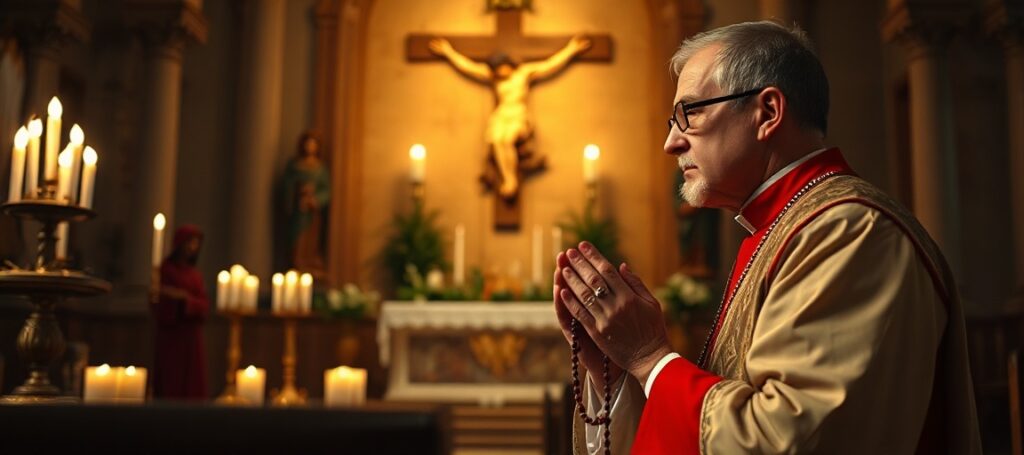
A solemn Catholic priest in traditional vestments kneeling in prayer before a crucifix with a Rosary.
Spiritual

The Register’s “Spiritual Warfare”: A Manual for the Church of the New Advent, Stripped of the Supernatural

National Catholic Register portal reports on an article by Joseph Pronechen (April 19, 2026) that presents “spiritual warfare” through the lens of military analogies drawn from two former U.S. military personnel and a conciliar “priest.” The piece reduces the supernatural combat for souls to a set of tactical procedures, self-help strategies, and psychological resilience techniques, all while remaining silent on the true state of the Church, the crisis of faith, and the only sure means of grace found in the true Church Militant. The article is a symptom of the post-conciliar Church’s reduction of the faith to naturalistic humanism, where “spiritual warfare” becomes a self-improvement program rather than a supernatural battle for eternal salvation under the banner of Christ the King.

A Catholic couple kneeling in prayer before a crucifix in a church, reflecting on their struggle with infertility through the lens of the supernatural Cross of Christ.
Spiritual

The Cross of Infertility Without the Cross of Christ: A Ministry of Naturalistic Accompaniment

EWTN News portal reports on four Catholic ministries offering support to couples experiencing infertility during National Infertility Awareness Week. The article presents Springs in the Desert, The Fruitful Hollow, Lily of the Valley, and Elizabeth Ministry as resources that “walk with couples in suffering,” emphasizing spiritual accompaniment, community, and alignment with Church teaching. While the piece acknowledges the pain of infertility and the existence of ethical fertility treatments such as NaPro technology, it reduces the Church’s supernatural mission to therapeutic companionship and emotional solidarity, omitting any mention of the sacramental life, the necessity of sanctifying grace, the reality of original sin, or the eternal destiny of souls. The article treats infertility as a psychological and social challenge to be managed rather than a participation in the mystery of the Cross to be redeemed through the sacraments and union with Christ the King.

Scroll to Top
Antichurch.org
Privacy Overview

This website uses cookies so that we can provide you with the best user experience possible. Cookie information is stored in your browser and performs functions such as recognising you when you return to our website and helping our team to understand which sections of the website you find most interesting and useful.