
Antipopes of the Antichurch
News feed

Reconciliation Without Christ the King: The Bankruptcy of Leo XIV’s Algerian Homily
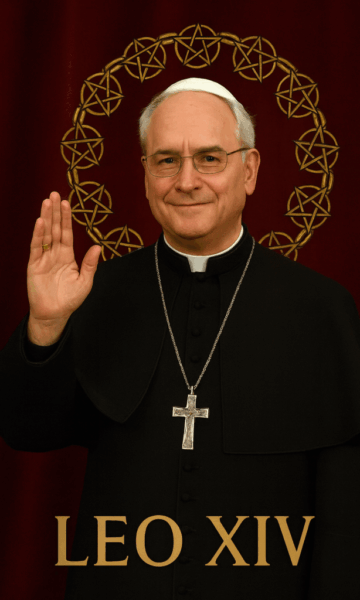
ACI Stampa/EWTN News reports on Leo XIV’s Mass at the Basilica of St. Augustine in Annaba, Algeria (April 14, 2026), where the usurper of Peter’s throne urged Christians to bear witness through “simple gestures, genuine relationships and a dialogue lived out day by day,” presenting the Church’s mission as bringing “reconciliation where there is conflict” while remaining silent on the absolute necessity of converting all nations — including Muslim-majority Algeria — to the one true Catholic Faith and the public social reign of Christ the King.

The Neo-Church Celebrates a “Priest” of Humanitarian Activism and Interreligious Syncretism
National Catholic Register portal reports on the death and memorial of Francis Alappatt, a “priest-physician” from Kerala, India, who built a large hospital and pioneered a blood donation movement. The article presents him as a model figure of the post-conciliar church, highlighting his interreligious outreach, humanitarian service, and “compassion.” Archbishop Andrews Thazhath, Auxiliary Bishop Tony Neelankavil, and Major Archbishop Raphael Thattil are among the conciliar clergy paying tribute. The piece glorifies Alappatt’s work in founding the Jubilee Mission Medical College, promoting “religious harmony,” and his role as chairman of the Indian Red Cross Society. His funeral was attended by half a dozen bishops, and his body was donated to the hospital’s anatomy department. The article is a textbook example of the neo-church’s substitution of supernatural faith with naturalistic humanitarianism, interreligious syncretism, and the cult of man — all hallmarks of the post-conciliar apostasy condemned by the integral Catholic Magisterium.

Leo XIV’s “Common Good” Rhetoric Masks the Usurpation of Christ the King’s Social Reign
The National Catholic Register reports that on April 14, 2026, the antipope Leo XIV addressed the plenary assembly of the Pontifical Academy of Social Sciences, asserting that “true power comes from virtue, not strength.” In his message, he claimed that technological, economic, and military power must be directed toward the “common good,” and that “the legitimacy of authority depends not on the accumulation of economic or technological strength but on the wisdom and virtue with which it is exercised.” He further denounced the “delusion of omnotence” among global leaders and criticized the concentration of power as a threat to democracy, invoking “St. John Paul II’s” Centesimus Annus to affirm that legitimate power “finds one of its highest expressions in authentic democracy.” The article presents these remarks as a continuation of conciliar social teaching, framing them within the context of ongoing global conflicts. This address is yet another manifestation of the post-conciliar apostasy: a usurper of the Chair of Peter, devoid of any legitimate authority, presumes to instruct the world on “power” and “democracy” while remaining utterly silent on the only true source of all legitimate authority — the Social Kingship of Our Lord Jesus Christ and the obligation of all nations to publicly recognize Him as their sovereign Lord. The entire discourse is steeped in naturalistic humanism, reducing the supernatural mission of the Church to a vague philanthropy indistinguishable from the most banal secular humanitarianism.

Special Education Dispute Exposes the Bankruptcy of Conciliar Church Governance
The Pillar portal reports that the Archdiocese of Chicago and the Chicago Public School system have entered into a public dispute over the abrupt cessation of federal funding for special education services provided to students with disabilities in Catholic schools. Both institutions offer contradictory narratives regarding the origin of the funding shortfall, with the archdiocese alleging that the city’s public school system unilaterally terminated the flow of federal dollars, while the public school system presumably advances its own justification. This bureaucratic squabbling — conducted in the language of secular administration, budgetary allocations, and federal compliance — is not merely an institutional embarrassment. It is a revelatory symptom of the theological and spiritual catastrophe wrought by the conciliar revolution, which reduced the Church to a quasi-governmental social service agency dependent upon the largesse of the secular state and incapable of fulfilling her divine mission.
Varia
Announcement:
– News feed –implemented
– Antipopes separate web sites with their all documents refutation – in progress