
Antipopes of the Antichurch
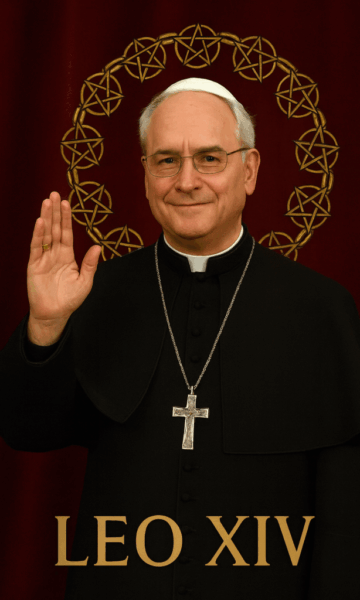
News feed
Leo XIV’s African Pilgrimage: A Journey Through the Wasteland of Post-Conciliar Apostasy
EWTN News reports that on April 13, 2026, the individual occupying the Vatican under the name Leo XIV departed for Algeria, initiating a 10-day “apostolic journey” to four African nations — Algeria, Cameroon, Angola, and Equatorial Guinea — marking the third international trip of his usurpation. The article notes that in Algeria, Catholics number “only a few thousand in a country of about 48 million Muslims,” and that the visit is expected to focus “especially on encounter and fraternity.” Leo XIV described himself upon his appearance on the central balcony of St. Peter’s Basilica as “a son of St. Augustine,” making this the first papal visit to the land of St. Augustine. The article further details that Leo XIV sent a telegram to Italian President Sergio Mattarella expressing “the lively desire to meet the brothers and sisters in the faith and the inhabitants of those dear nations.” This so-called journey is not a mission of evangelization but a diplomatic spectacle that perfectly encapsulates the post-conciliar Church’s abandonment of its divine mandate to convert all nations to the Catholic Faith.
Leo XIV’s African Pilgrimage: A Diplomatic Tour Disguised as Apostolic Mission
Vatican News portal reports that the usurper Robert Prevost, calling himself “Pope Leo XIV,” departed Rome’s Fiumicino Airport on a 10-day journey to Algeria, Angola, Cameroon, and Equatorial Guinea—his third and longest such trip. The article frames this as an “Apostolic Journey” centered on themes of peace, migration, the environment, young people, and the family, including meetings with civil authorities, a visit to an Augustinian community, and a stop at a monument commemorating the Algerian War (1954–1962). The article notes personal significance for Prevost, as Annaba (ancient Hippo) was the episcopal see of St. Augustine, and highlights his prior visits to Africa as head of the Augustinian order. What the article presents as spiritual leadership is, upon examination, merely the diplomatic itinerary of a globalist functionary dressed in ecclesiastical vestments—a journey devoid of supernatural purpose and saturated with the very errors Pius XI condemned in *Quas Primas*: the relegation of Christ the King to irrelevance in public life.

When Caesar Attacks the Vicar: Trump’s Broadside and the Neo-Church’s Nakedness
EWTN News Staff Vatican reports that on April 12, 2026, President Donald Trump publicly attacked the usurper on Peter’s throne, Leo XIV (Robert Prevost), calling him “WEAK on Crime, and terrible for Foreign Policy” in a social media post, and telling reporters: “I don’t think he’s doing a very good job. … I am not a fan of Pope Leo,” adding: “He’s a very liberal person.” Trump accused Leo of being soft on Iran and criticized his opposition to U.S. military operations, writing: “I don’t want a Pope who thinks it’s OK for Iran to have a Nuclear Weapon,” and claimed credit for Leo’s election in May 2025, asserting: “He wasn’t on any list to be Pope, and was only put there by the Church because he was an American,” and “If I wasn’t in the White House, Leo wouldn’t be in the Vatican.” The president of the U.S. Conference of Catholic Bishops, Archbishop Paul S. Coakley of Oklahoma City, responded that he was “disheartened” by Trump’s attack, defending Leo as “the Vicar of Christ who speaks from the truth of the Gospel and the care of souls.” Trump also posted an image commentators said depicted him as Jesus Christ, wearing a biblical-style robe and laying hands on a bedridden man as light emanated from his fingers. This spectacle of a secular ruler mocking a false pontiff, while the latter’s own defenders scramble to invoke titles that no longer correspond to any spiritual reality, lays bare the complete theological and spiritual bankruptcy of the post-conciliar edifice.

Trump’s Attack on Pope Leo Exposes the Bankruptcy of the Conciliar Sect
EWTN News reports that Donald Trump publicly attacked Pope Leo XIV on social media Sunday evening, calling the pontiff “weak on crime, and terrible for foreign policy” in a lengthy post reacting to the Holy Father’s recent appeals for peace and an end to war. Trump told reporters at Joint Base Andrews: “I don’t think he’s doing a very good job. … I am not a fan of Pope Leo. He’s a very liberal person.” The president accused Leo of being soft on Iran, opposed the pope’s stance on Venezuela, and even claimed credit for Leo’s election, writing: “He wasn’t on any list to be pope, and was only put there by the Church because he was an American. If I wasn’t in the White House, Leo wouldn’t be in the Vatican.” Archbishop Paul S. Coakley of Oklahoma City, president of the U.S. Conference of Catholic Bishops, responded that he was “disheartened” by Trump’s attack, defending the pontiff as “the vicar of Christ who speaks from the truth of the Gospel and for the care of souls.” The public clash comes after weeks of growing friction between the White House and Catholic leaders since the United States and Israel launched military operations against Iran on Feb. 28. This spectacle of a secular ruler openly disparaging a man he calls “pope,” while the conciliar structures scramble to defend their usurper, exposes the complete inversion of the divine order — the very disorder condemned by Pius XI in *Quas Primas*.
Varia
Announcement:
– News feed –implemented
– Antipopes separate web sites with their all documents refutation – in progress