
Antipopes of the Antichurch
News feed

The Viral Parish: When the World Admires the Shell While Missing the Substance
National Catholic Register portal reports on the phenomenon of young adults flocking to select Manhattan parishes, particularly the Church of St. Joseph in Greenwich Village, and the subsequent viral media coverage this has generated. The article by Kayla Bartsch, a parishioner at St. Joe’s, attempts to move beyond superficial explanations for this trend, arguing that the true draw is not social status or self-improvement but the Real Presence of Christ in the Eucharist and the traditional liturgical atmosphere. She contrasts the “orthodox and normal” character of these parishes with both “hardcore ‘trads'” and “kumbaya boomers,” suggesting a unique appeal to “mainstream, urban-dwelling normies.” The piece highlights the role of Dominican priests, their intellectual programming, and the vibrant community as factors in this resurgence. However, beneath the optimistic veneer of a “Gen Z revival” lies a profound theological deficit that renders the entire narrative spiritually perilous, exposing it as nothing more than another manifestation of the conciliar church’s inability to grasp the true nature of faith, conversion, and the Church’s mission.

When “Catholic Curiosity” Becomes a Carnival for the Digitally Lost
The National Catholic Register portal reports on a peculiar spectacle orchestrated by Father Leo Patalinghug, a Voluntas Dei “priest” and EWTN personality, who organized a pilgrimage for so-called “Catholic-curious” social media influencers to sacred sites in Baltimore, Maryland. The article, dated April 13, 2026, describes how non-Catholics, evangelicals, pagans, and spiritual seekers were invited to experience Catholicism through a curated three-day event featuring church tours, meals at a restaurant called “The Gastro Social,” Catholic trivia games, and the distribution of sacramentals as gifts. Patalinghug frames this as a response to a “positive trend” of online curiosity about the Catholic faith, attributing it to the intercession of Carlo Acutis and Pier Giorgio Frassati. He describes the influencers as being “like kids in a candy shop, hungry for the Catholic Church’s spiritual sweetness” and celebrates how the event created an “OCIA in 3D, Technicolor and scratch-and-siff.” The article reveals not a genuine work of evangelization but a symptom of the post-conciliar Church’s capitulation to digital culture, its reduction of sacred realities to experiential entertainment, and its abandonment of the supernatural mission of the Church in favor of marketing Catholicism as a consumer product for the spiritually restless masses.

Leo XIV in Algiers: Venerating “Martyrs” of a False Peace While the True Faith Is Betrayed
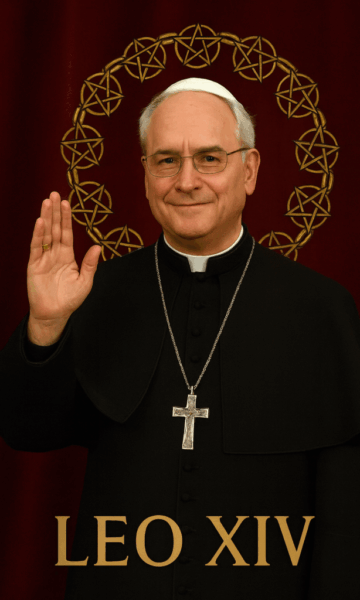
Vatican News portal reports that on April 13, 2026, the antipope Leo XIV, during his apostolic journey to Algeria, made a private visit to the Centre for Welcome and Friendship run by the Missionary Augustinian Sisters in Algiers. The stated purpose was to “render homage” to two religious sisters, Sr. Esther Paniagua Alonso and Sr. Caridad Álvarez Martín, assassinated during the Algerian Civil War, and to thank the Sisters for their charitable work. The report highlights Leo XIV’s reflection on their “witness, even to the point of martyrdom,” linking it to Augustinian spirituality and promoting a message of “respect for the dignity of each person” and the possibility to “live in peace, valuing differences.” This visit, coupled with his earlier visit to the Mosque of Algiers, epitomizes the post-conciliar obsession with interreligious dialogue and a naturalistic “peace” that utterly betrays the supernatural mission of the Catholic Church and the true meaning of martyrdom.

When the Worldly Judge the Holy: Trump, Leo XIV, and the Bankruptcy of Conciliar Catholicism
The National Catholic Register (April 13, 2026) reports that U.S. President Donald Trump called Pope Leo XIV “weak on crime and terrible for foreign policy” in a social media post on April 12, 2026, prompting responses from various “Catholic” bishops and public figures. The article details reactions from “Bishop” Robert Barron, “Bishop” Michael Burbidge, and others who criticized Trump’s remarks as “disrespectful,” while also noting Trump’s posting of an AI-generated image depicting himself as Jesus Christ. The piece presents the controversy as a clash between political authority and religious leadership, with various “Catholic” voices weighing in on both sides. What this spectacle truly reveals is not merely a diplomatic spat, but the complete theological and spiritual bankruptcy of the post-conciliar structure — a counterfeit church incapable of asserting true spiritual authority, reduced to issuing polite requests for “civility” while its usurper “pope” presides over the systematic destruction of the Faith.
Varia
Announcement:
– News feed –implemented
– Antipopes separate web sites with their all documents refutation – in progress